The process
From paper to impossible
Paper, paste, volume and paint.
Cartonería is a craft of layers and patience; each creature is built from the inside out, without a mold, with pure paper.
From paper to creature
How a piece is built
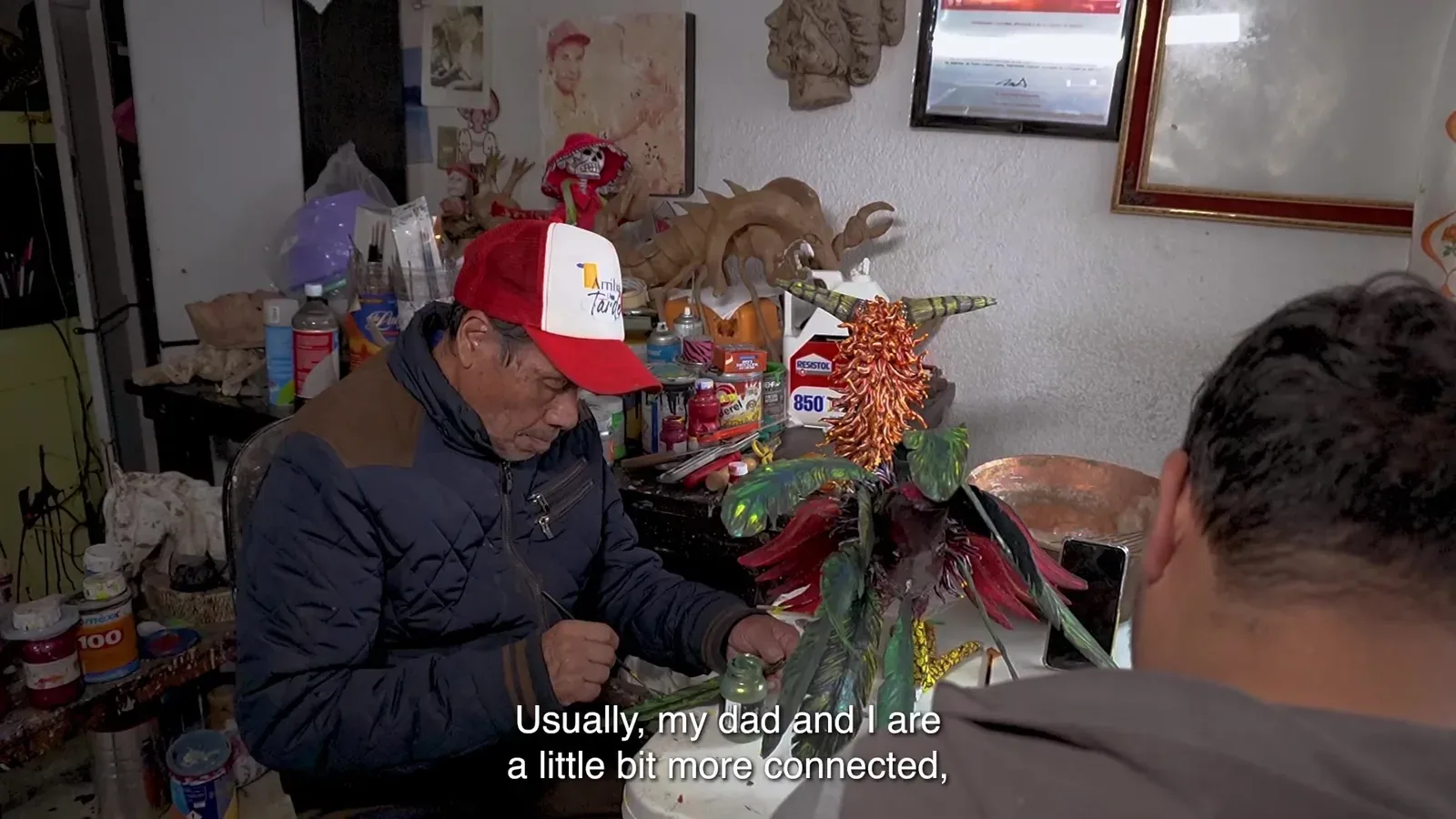
The Linares family works in the Merced Balbuena area, east of downtown Mexico City, near the Sonora market, where the houses are also workshops. Each member has their own. On these tables, jars of paint, brushes, half-dried pieces and finished figures awaiting their recipients live side by side.
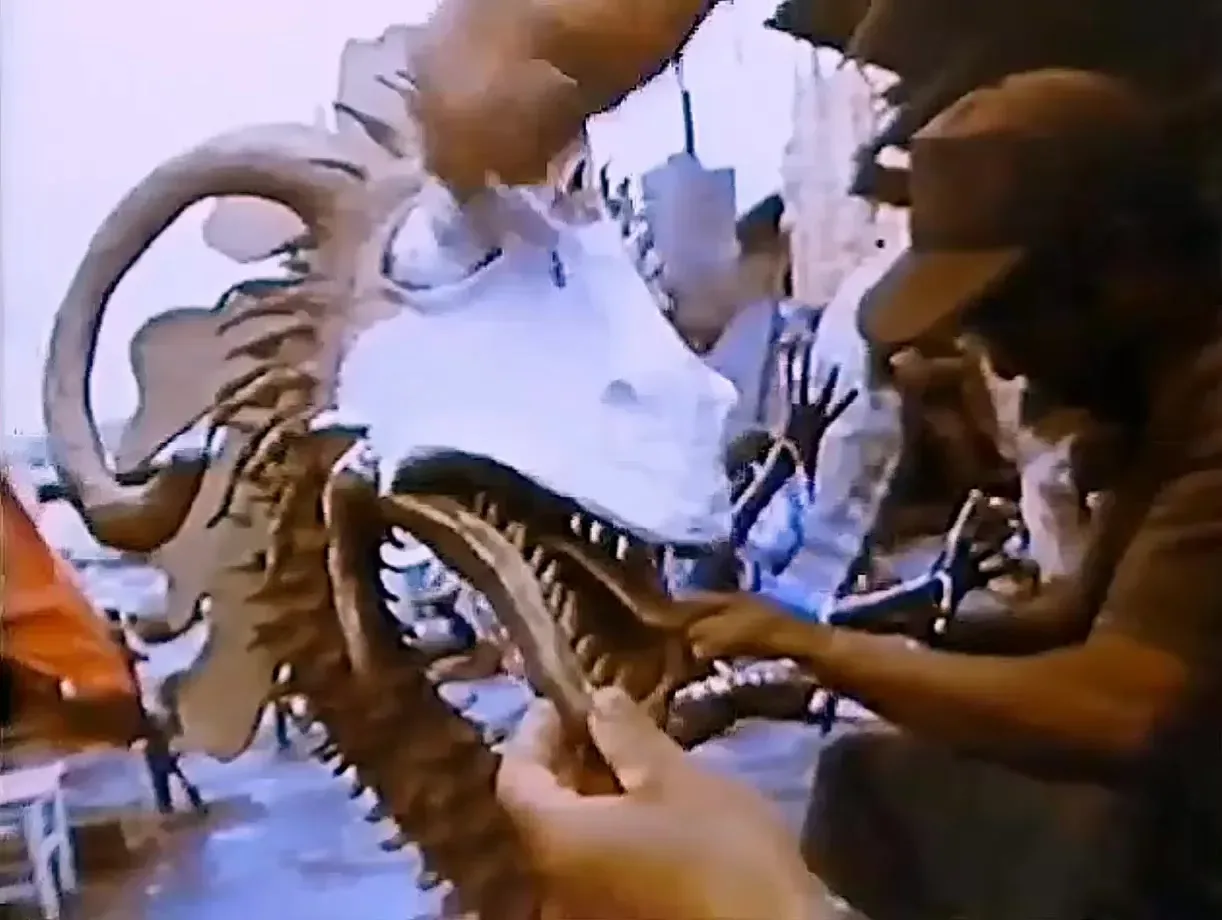
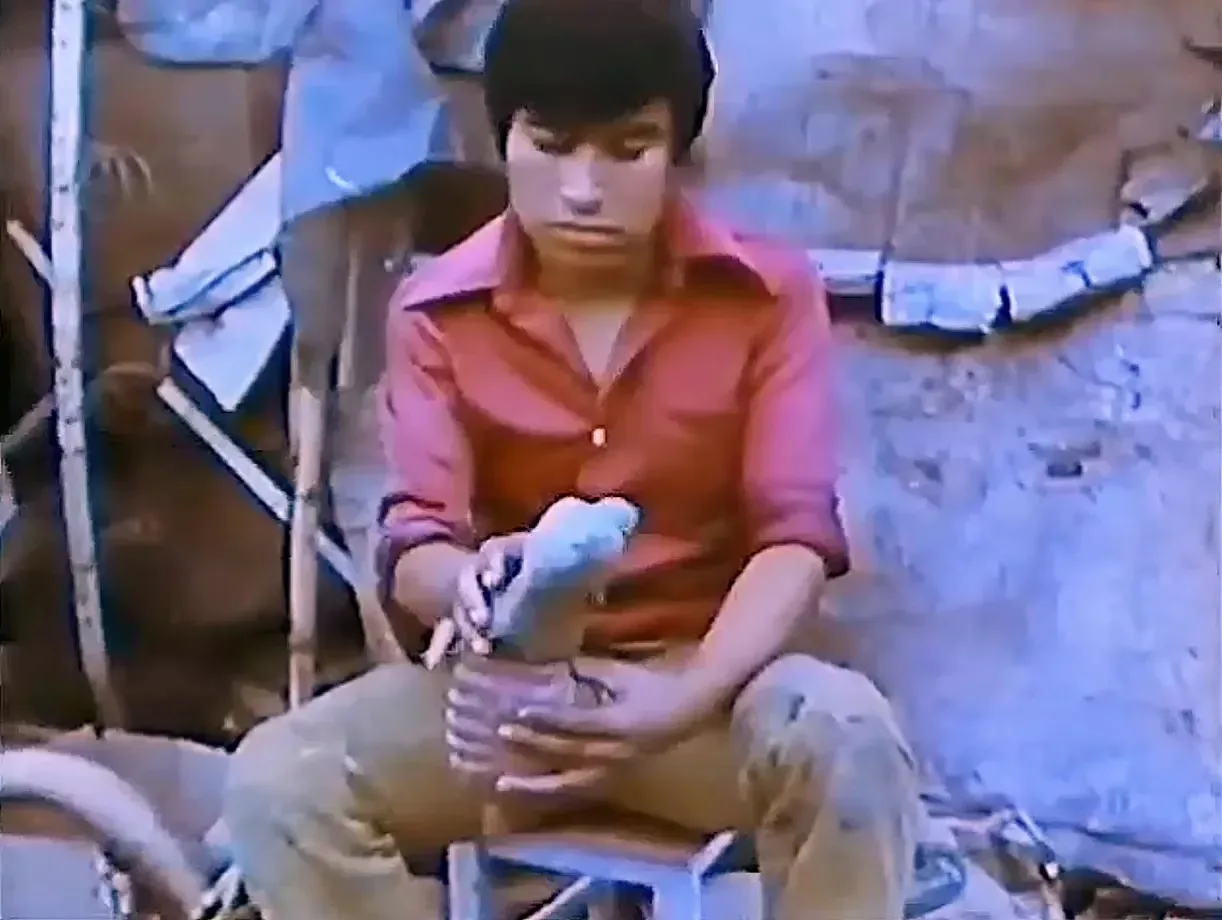
The six stations that follow describe the cartonería process as Felipe Linares Mendoza and his sons tell it and as the stills from the programs that have visited the workshop show it, from the 1975 documentary to recent reports. The images document the craft in general: they do not show the continuous making of a single piece. Each still is credited with its program, producer, year and timestamp.
-
Materials
Newspaper, manila paper, tissue paper, kraft paper, flour-and-water paste, wire or reed for the frame, brushes and acrylic paints. It all fits on a worktable. The workshop’s rule, as Leonardo Linares Vargas explains it, is that anything that is paper is allowed and anything that is not paper is not: no polystyrene, no plastics, no fabrics, no glass eyes. The material is humble on purpose; the hands supply the extraordinary.
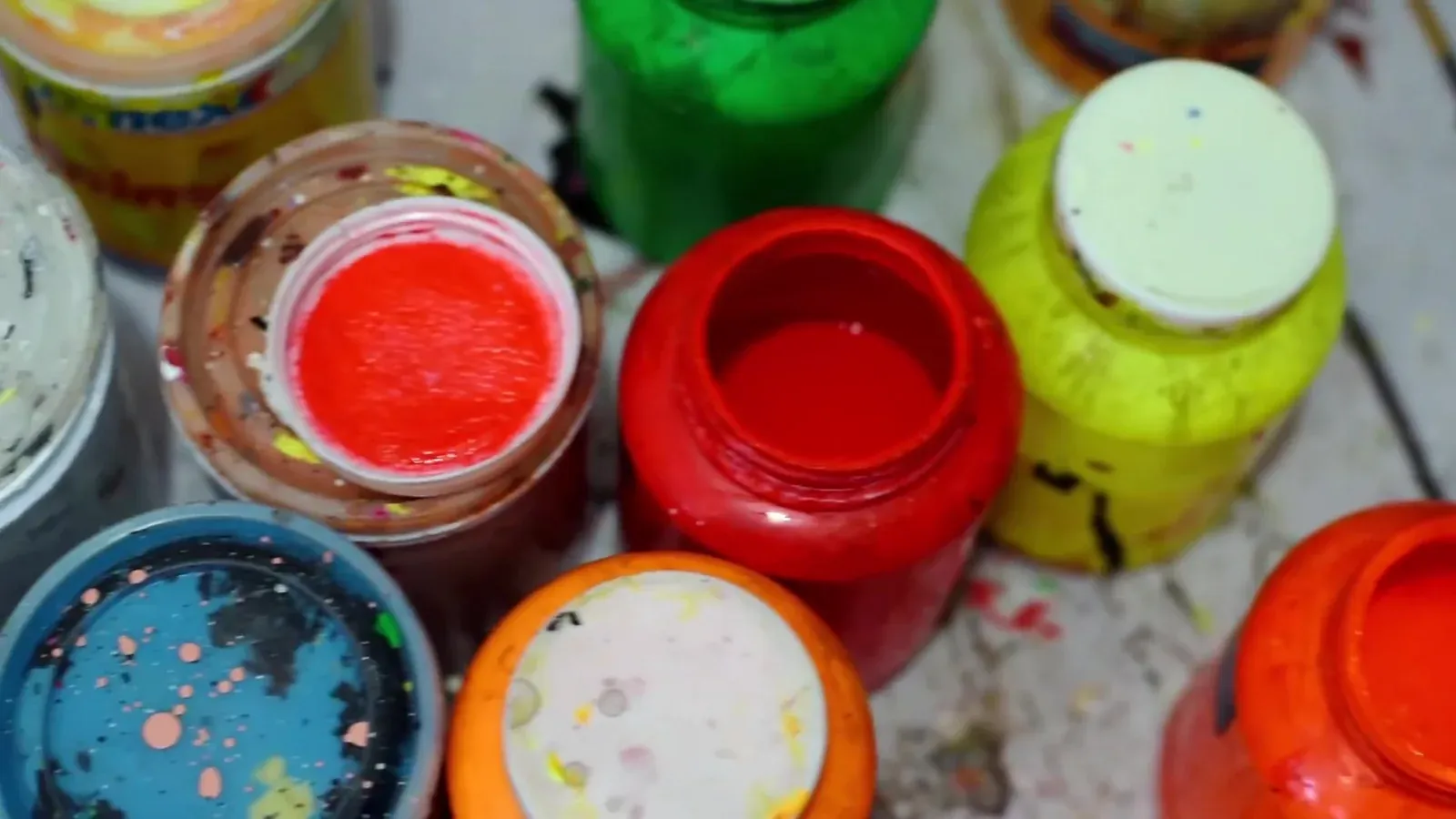
Still from “Leonardo Linares, el heredero de los alebrijes”, Distrito Arte, 00:42 -
Structure
Each creature begins as a light frame of reed or wire that fixes the posture and supports whatever protrudes: wings, antlers, claws, tails. It is the most important decision of the piece, although no one sees it afterwards. Monumental pieces carry a tied reed armature, like the Judas figures of Holy Week.
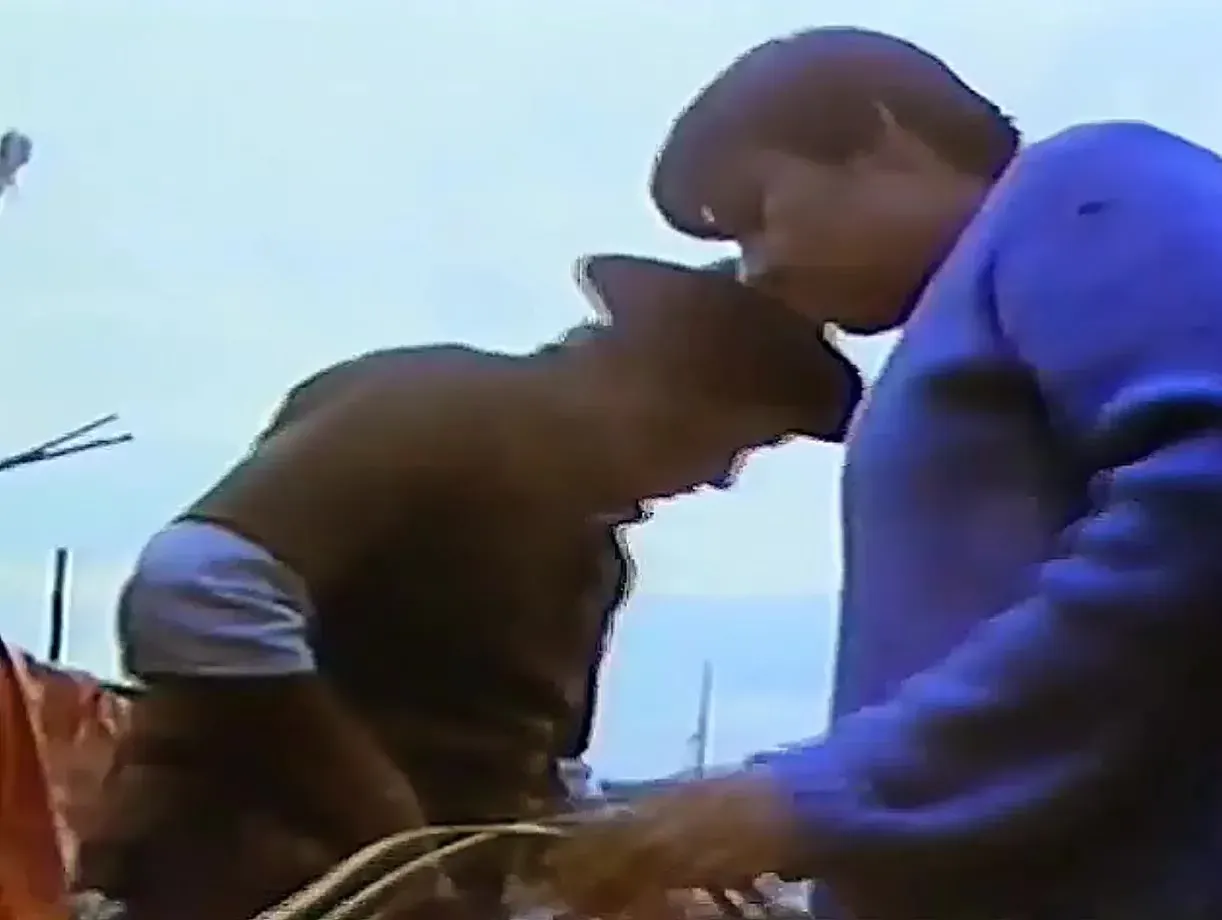
Still from “Pedro Linares: Artesano Cartonero”, Judith Bronowski, 1975, 15:50 -
Volume
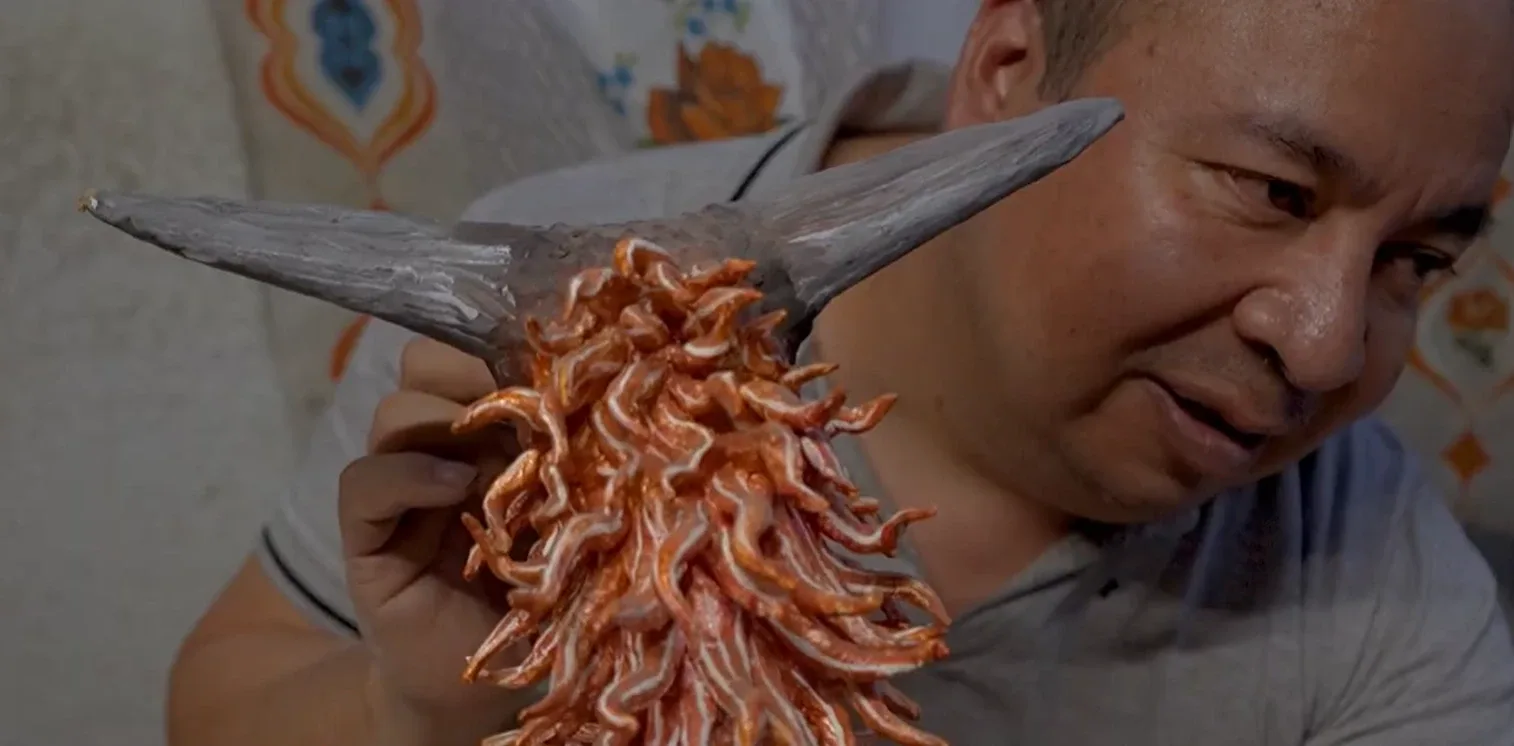
Over the frame, layers of paper are applied with paste. There is no mold: “it is raised with paper, pure paper,” says Felipe Linares Mendoza. Each layer dries before the next, sometimes for days. With the hands and simple tools the snout, eyes and claws are refined until the surface is continuous and, in Felipe’s pieces, polished like a sculpture.
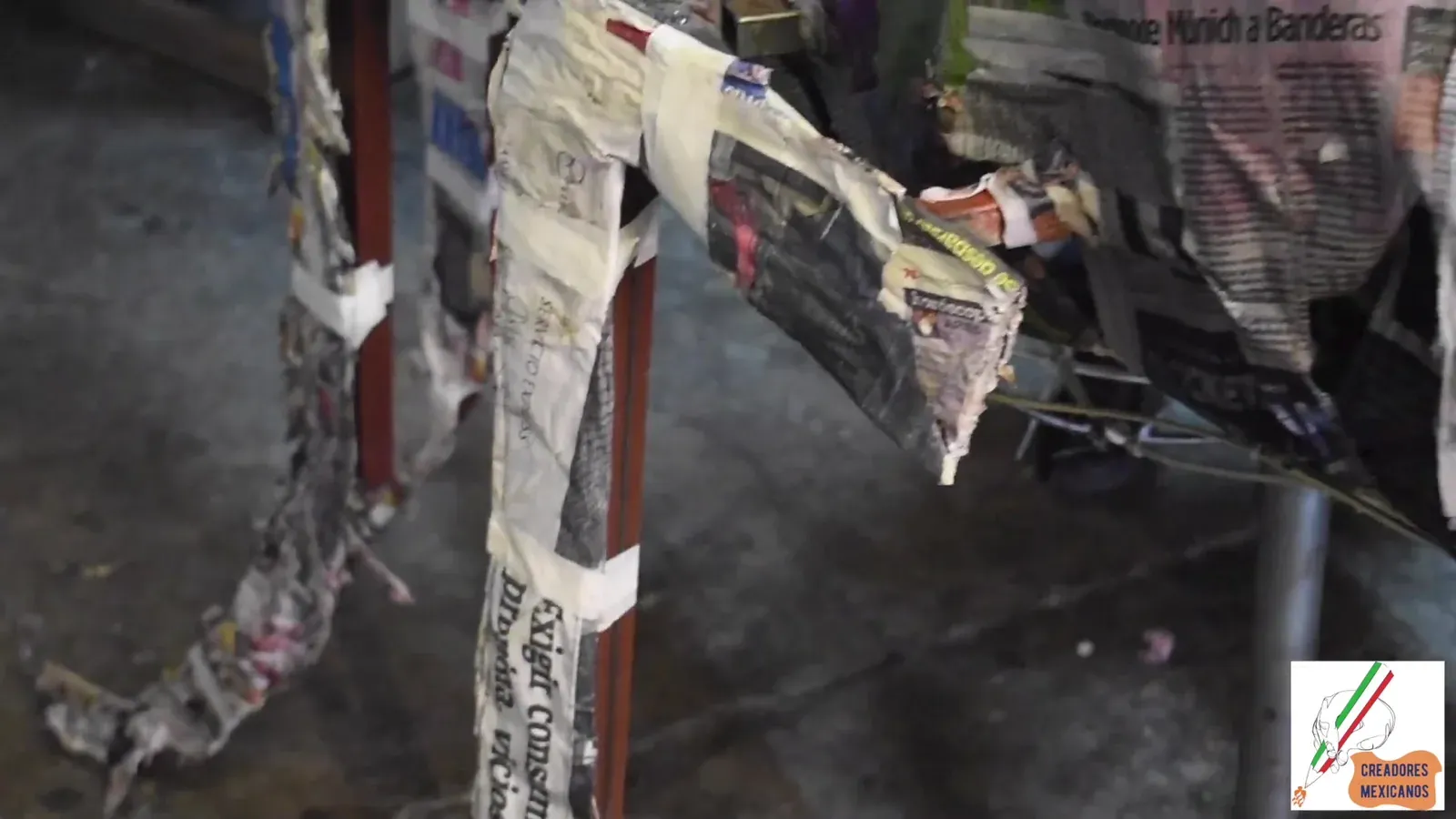
Still from “#CreadoresMexicanos: Familia Linares”, El Tizoncito, 05:05 -
Whitening
Before painting, the dry piece is covered with a coat of white that unifies the paper and leaves a clean ground for color. It is the task with which the sons began to help: Felipe Linares Vargas remembers his father asking exactly that: “help me whiten, help me decorate”.
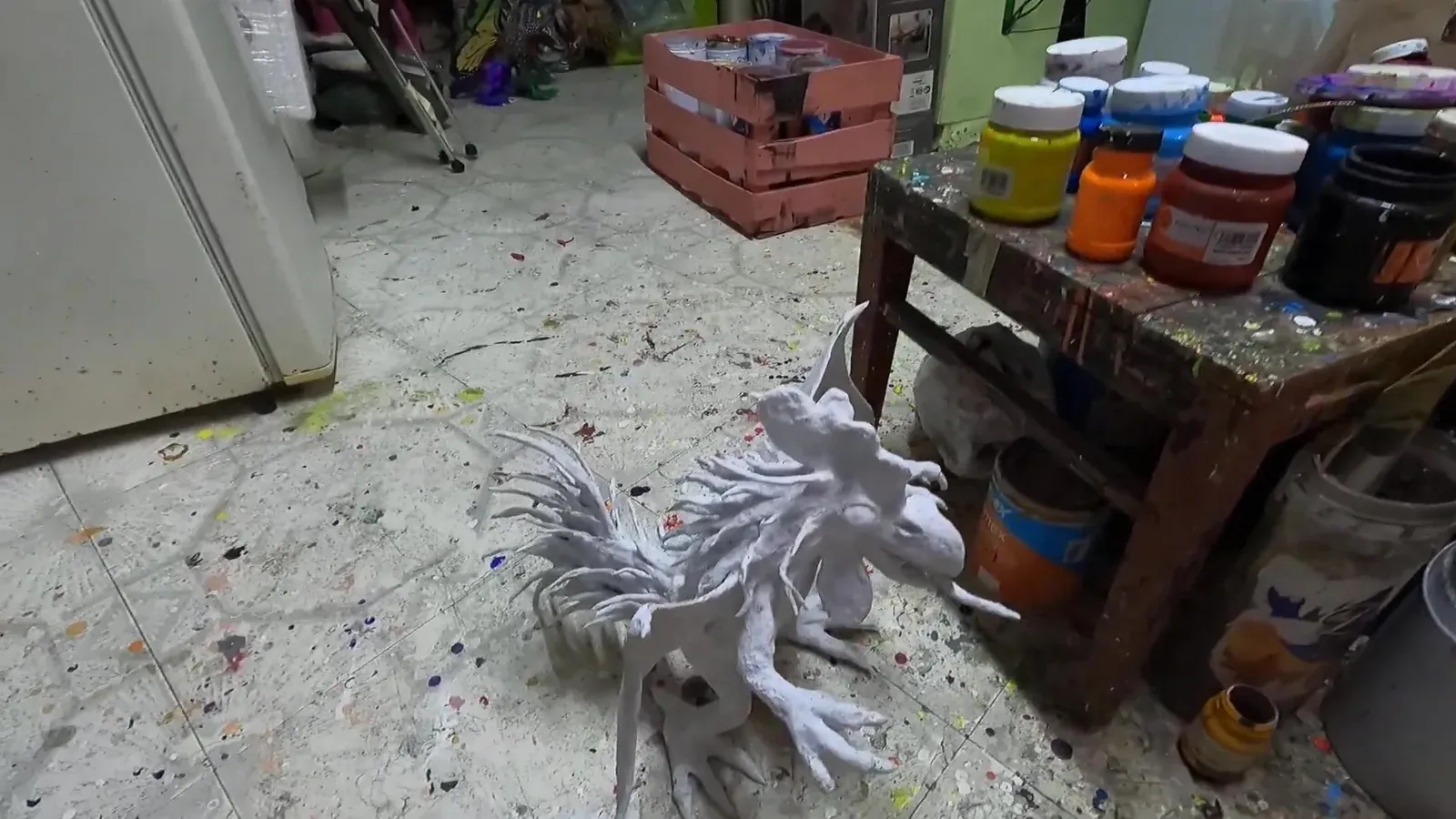
Still from “Los originales Alebrijes, familia Linares”, Plus Ultra MX, 03:15 -
Painting
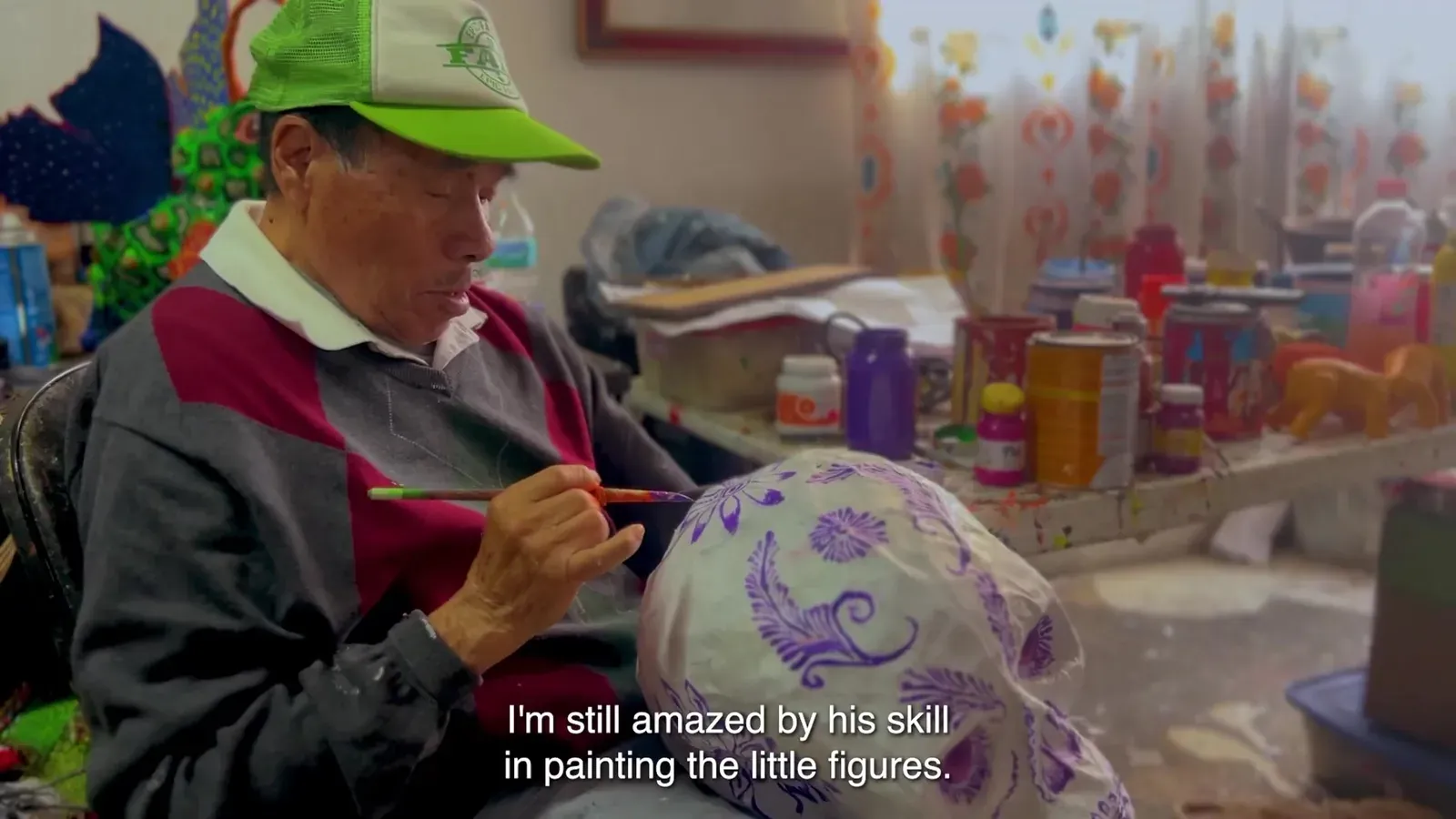
Over the white ground, first a base color; then the large fields that distinguish each part of the body; finally, feathers, scales, frets, crests and eyes painted one by one. It is the longest stage and the one that gives each piece its character. It is also where the family recognizes the hand of Felipe Linares Mendoza: meticulous in detail, with a skill of the wrist that his son Leonardo says he has still not surpassed.
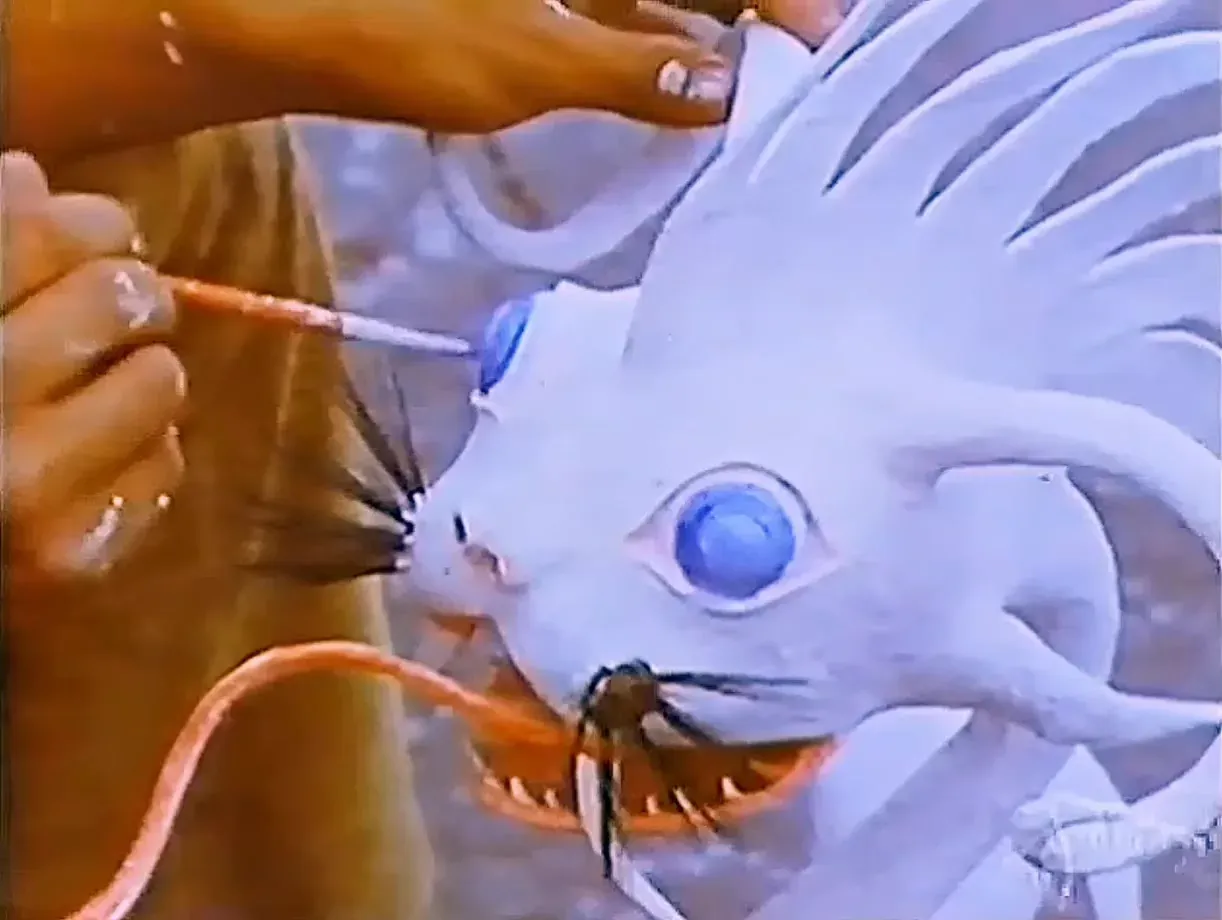
Still from “Pedro Linares: Artesano Cartonero”, Judith Bronowski, 1975, 11:30 -
Finished work
A final varnish fixes the color and gives the surface its shine; according to Leonardo, the workshop prepares its own with a formula of its own. The creature, complete, leaves the workshop with all its extensions intact: nothing is trimmed to fit in a box. A small alebrije takes fifteen to twenty days; a large one, a month or more.
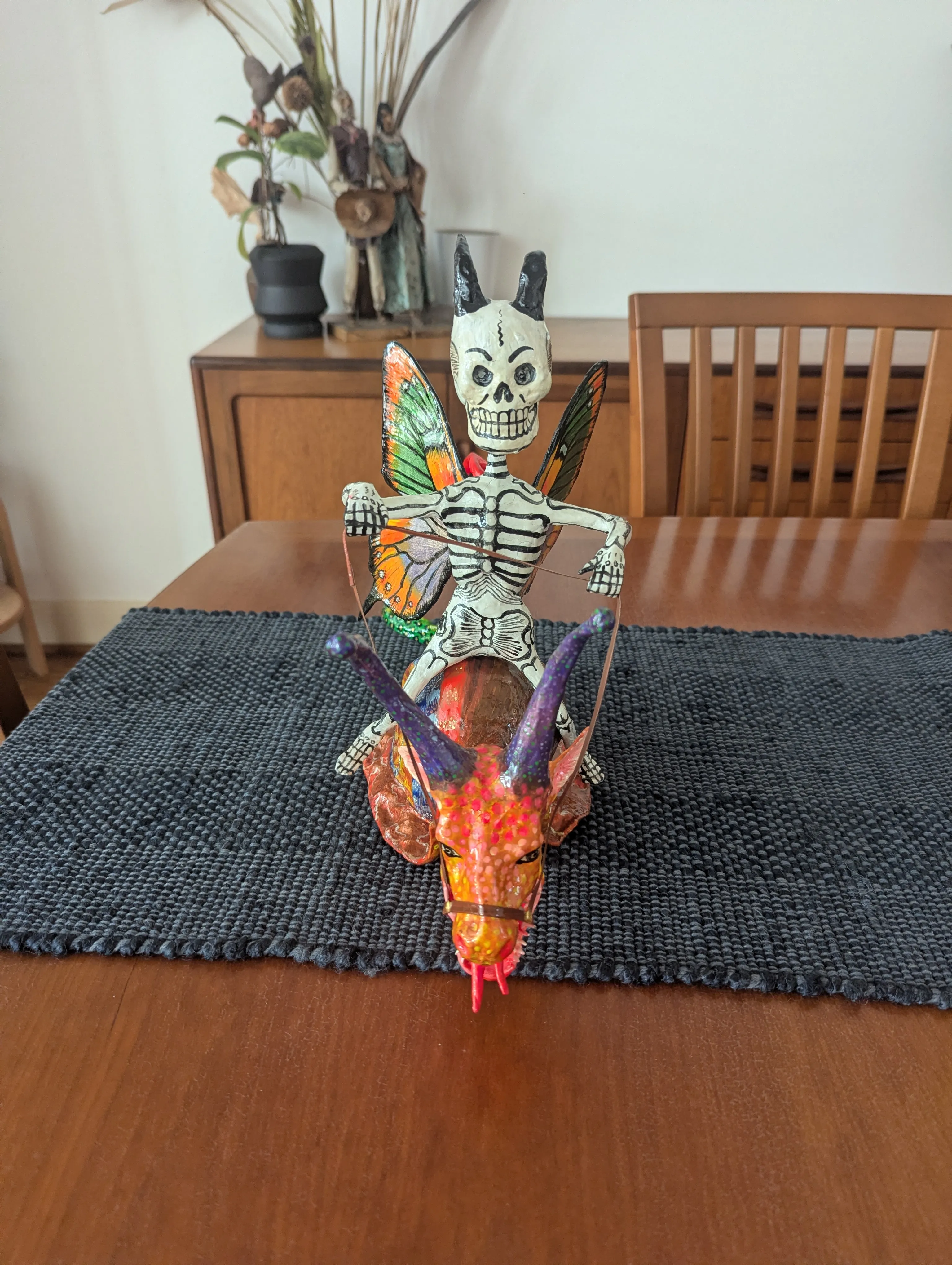
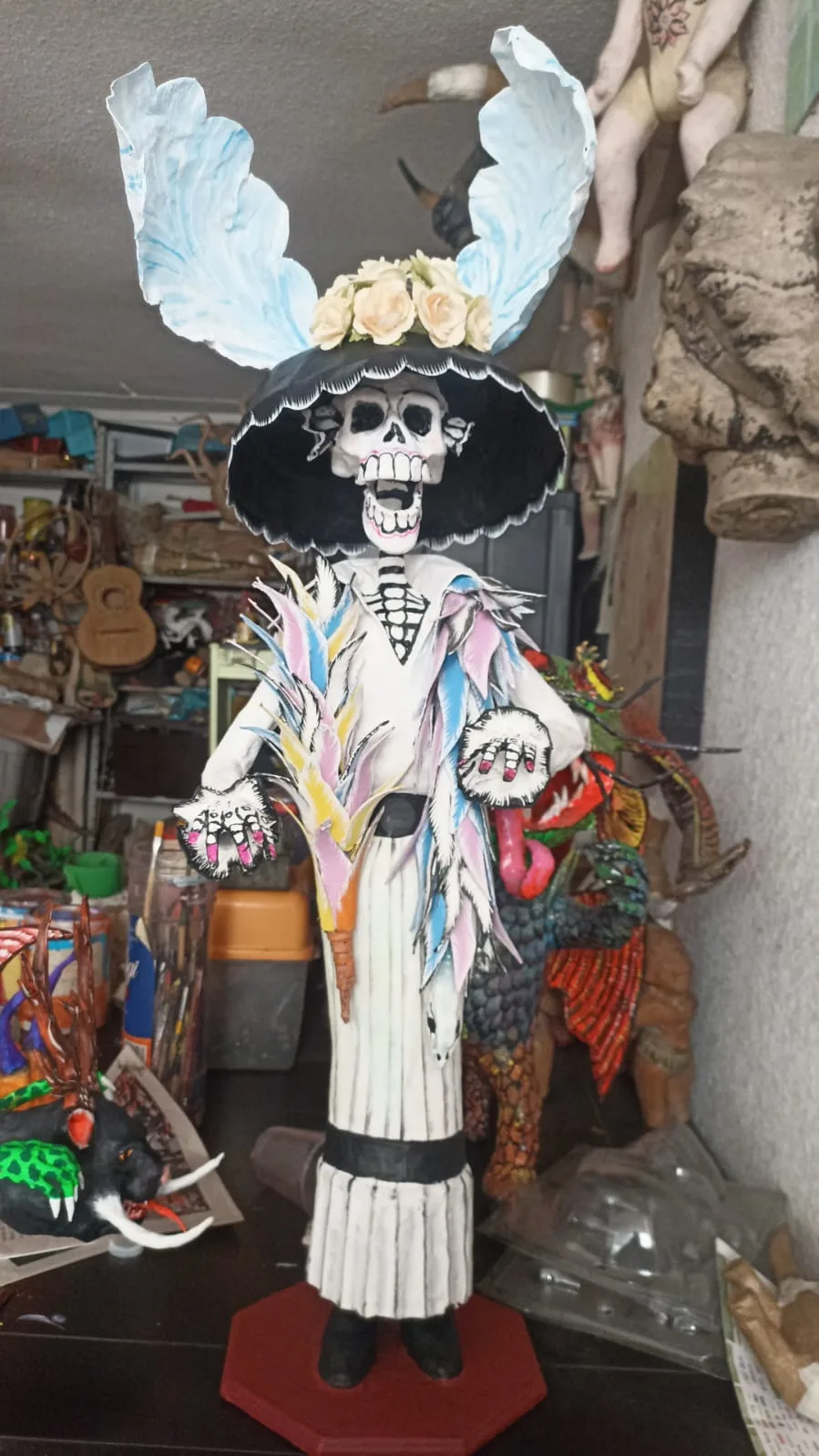
Photograph provided by the Linares family; photographer to be confirmed
How long does a piece take? Each layer of paper dries before the next, sometimes for days. A small alebrije takes fifteen to twenty days; large pieces need weeks of drying and painting.
In detail
Close-ups of the painting
Crops from photographs of works from the family workshop, without artificial enlargement.
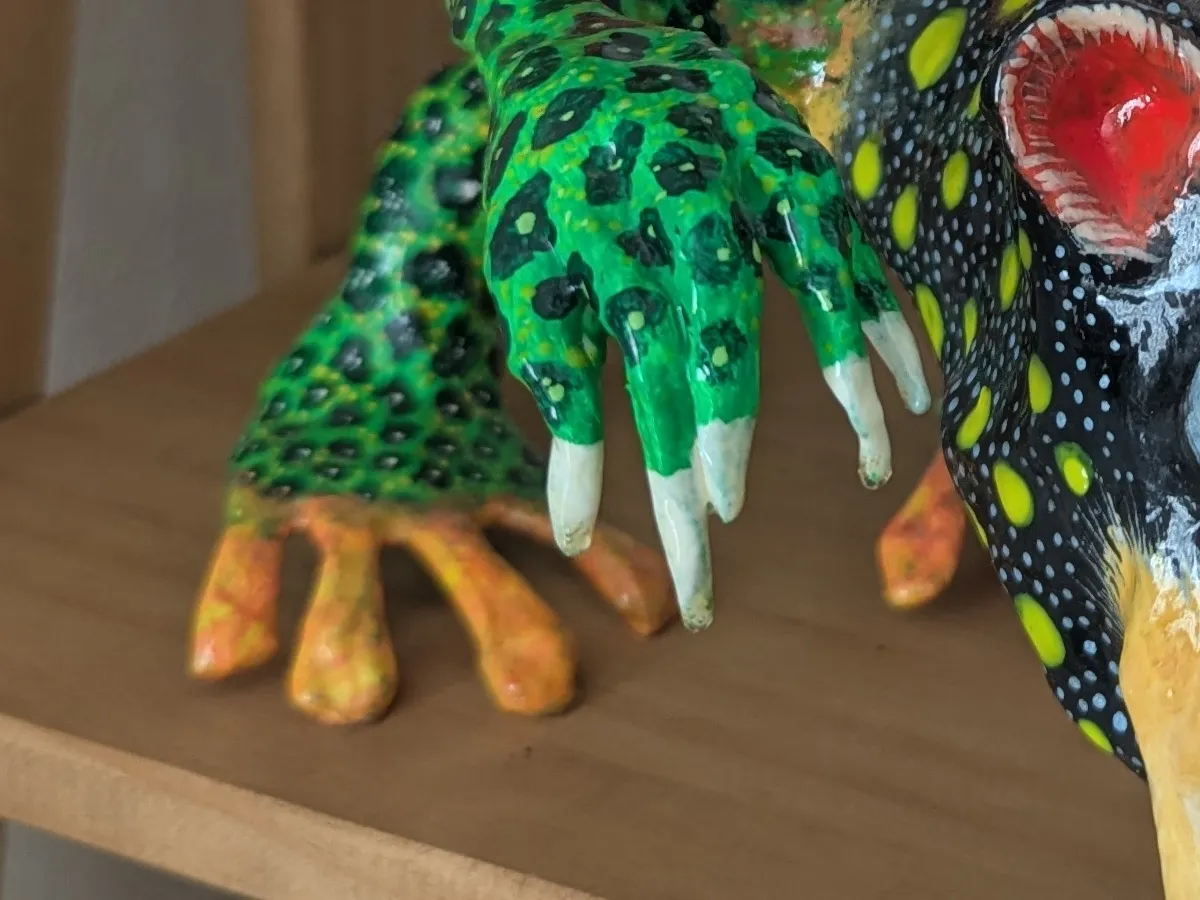
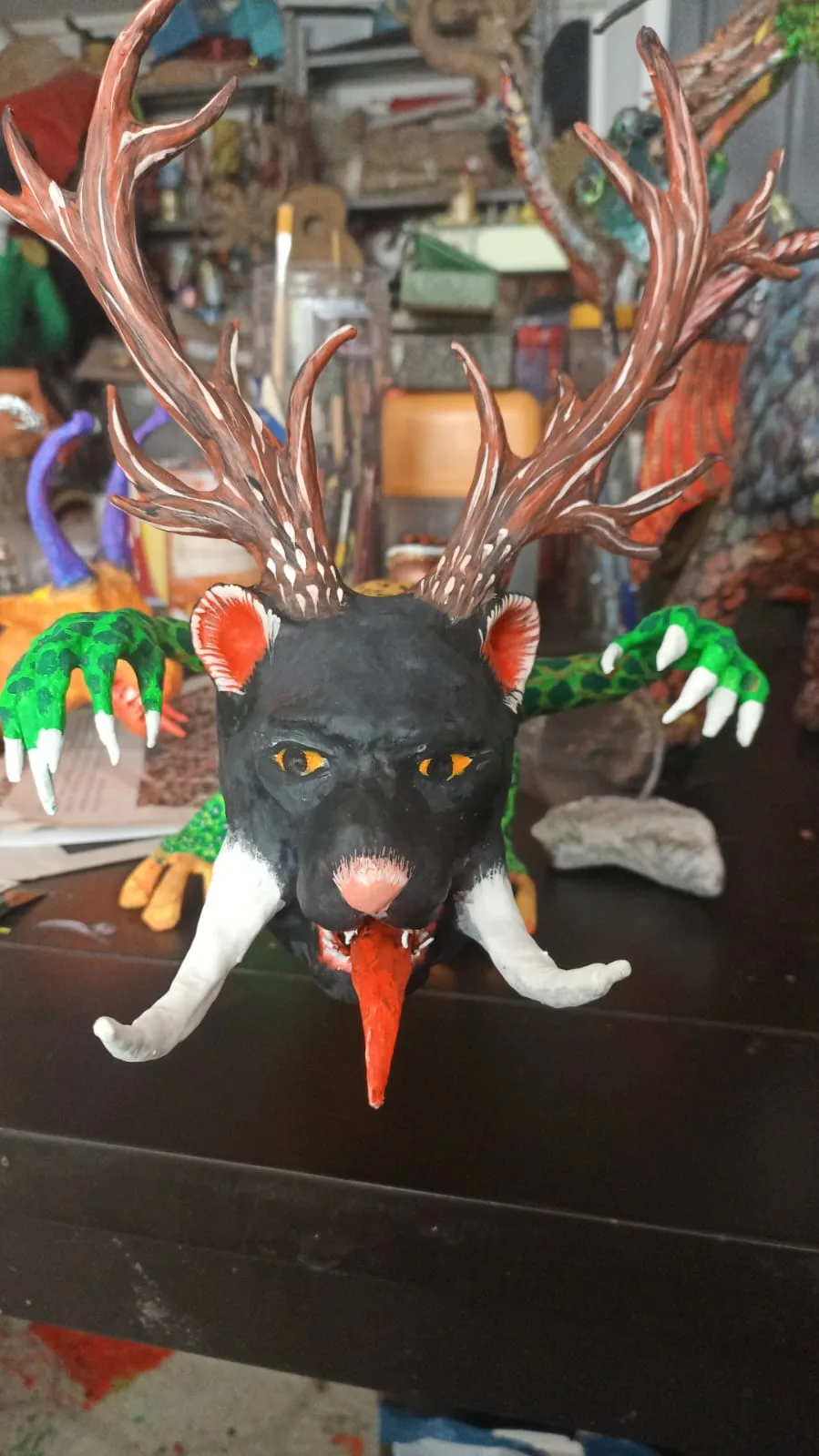
Scales and nailsGreen claws covered in scales painted one by one; ivory nails. 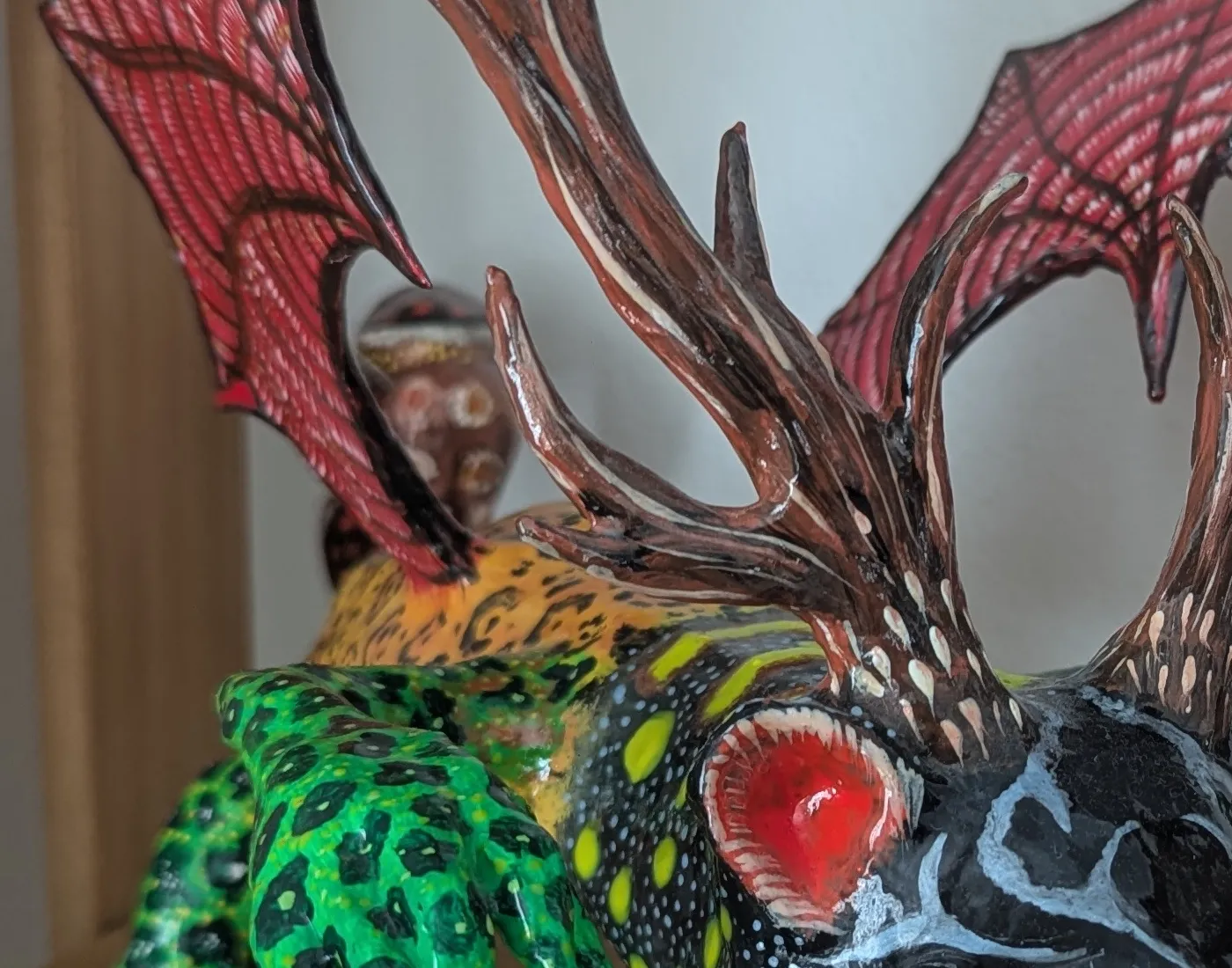
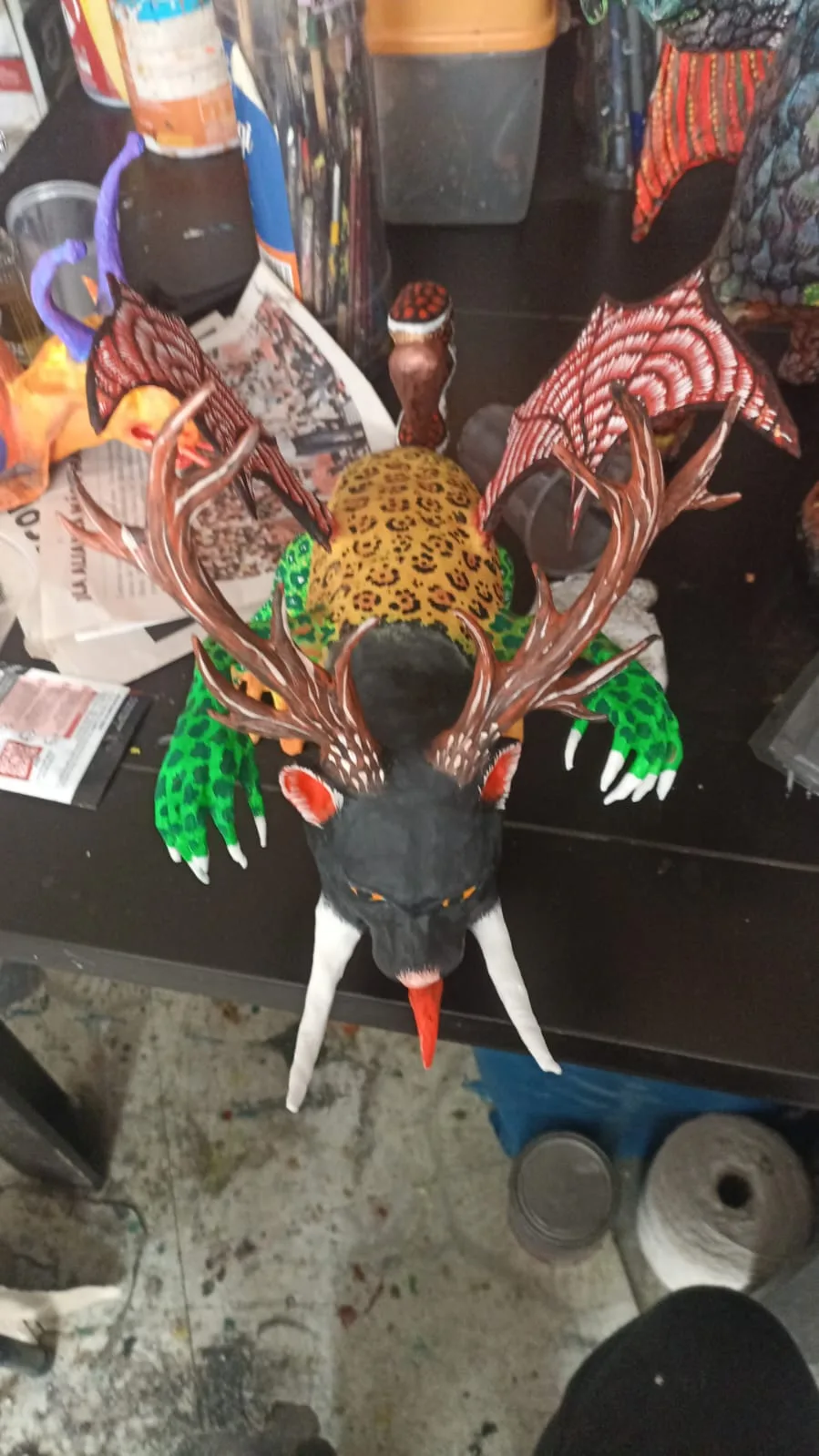
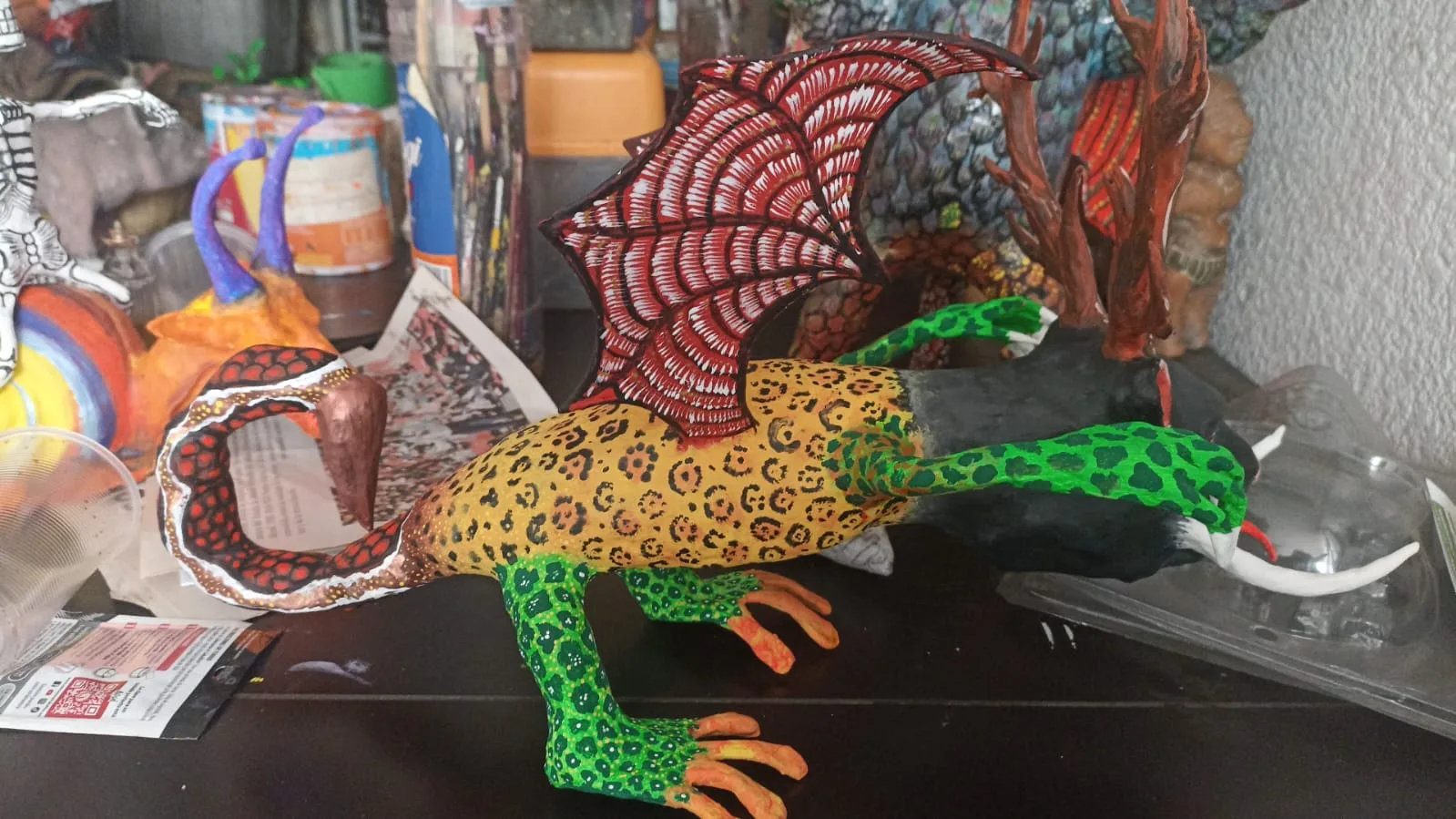
Wing veinsRed bat wings with veins traced in white over the dry paint. 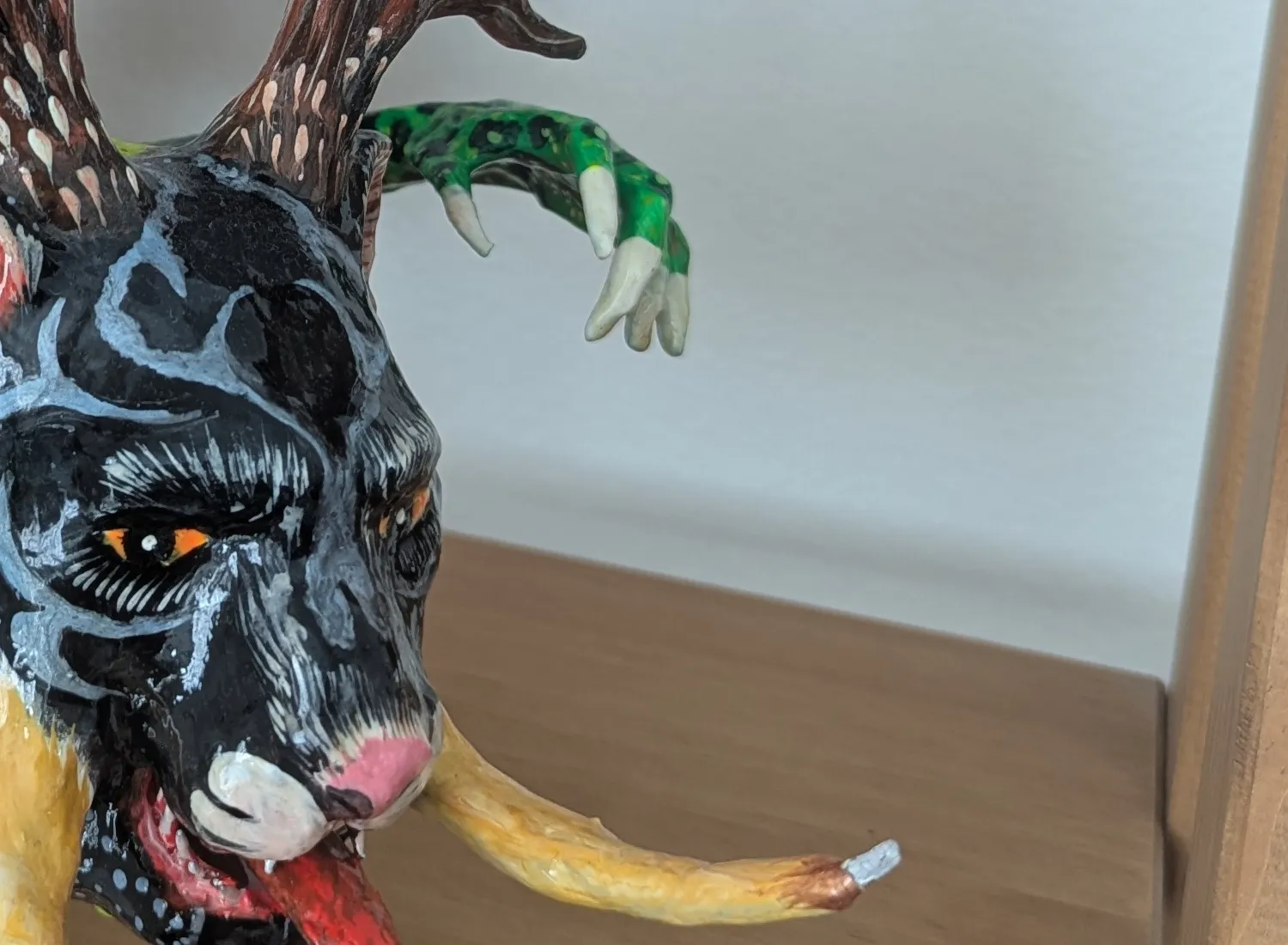
Tusks and tongueCurved tusks modeled in paper and a long vermilion tongue. 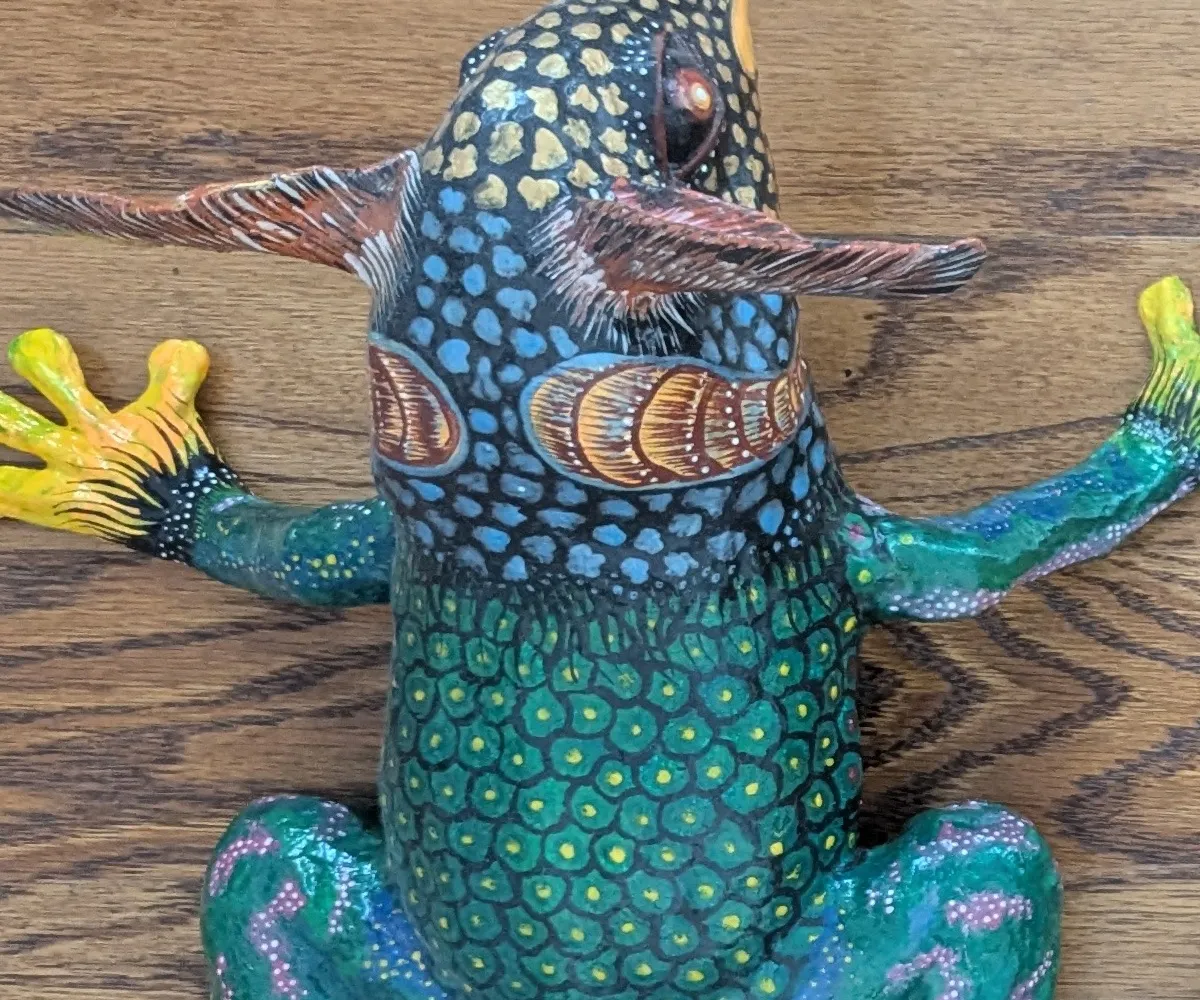
Dots on greenDots of two sizes giving texture to a smooth volume. 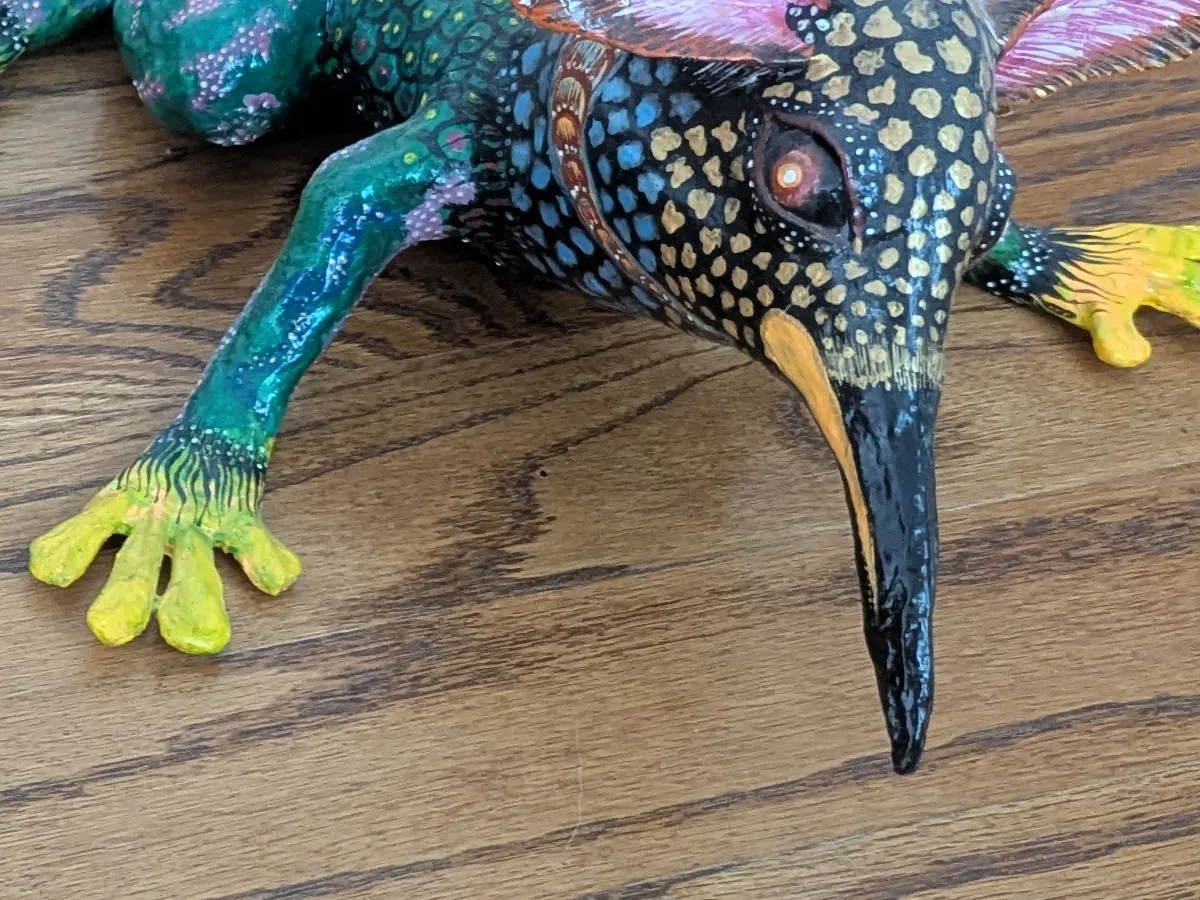
Eye and beakA bird’s head on a frog’s body; the neck scaled in blue and gold. 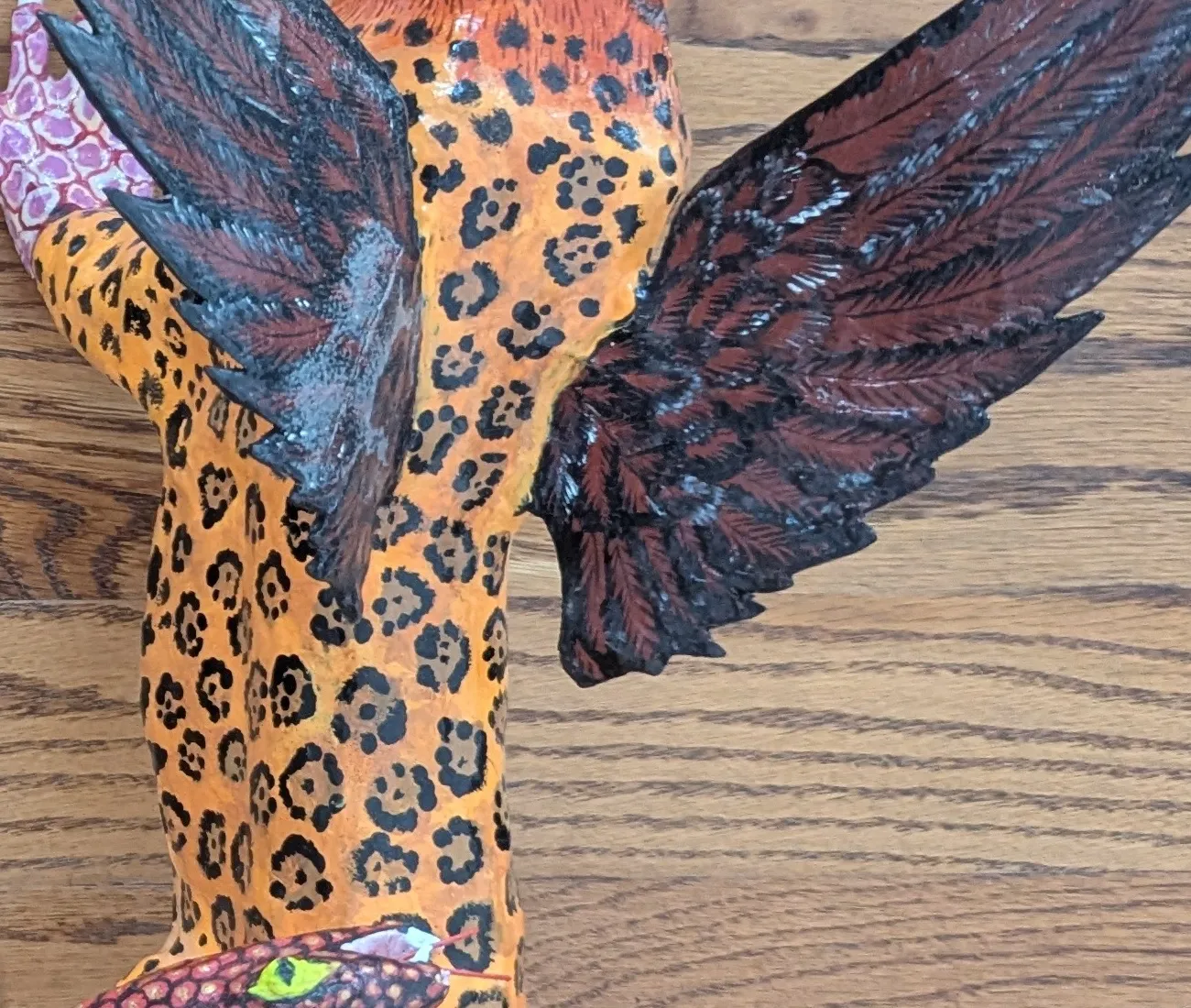
Jaguar spotsBlack rosettes on orange along the whole body. 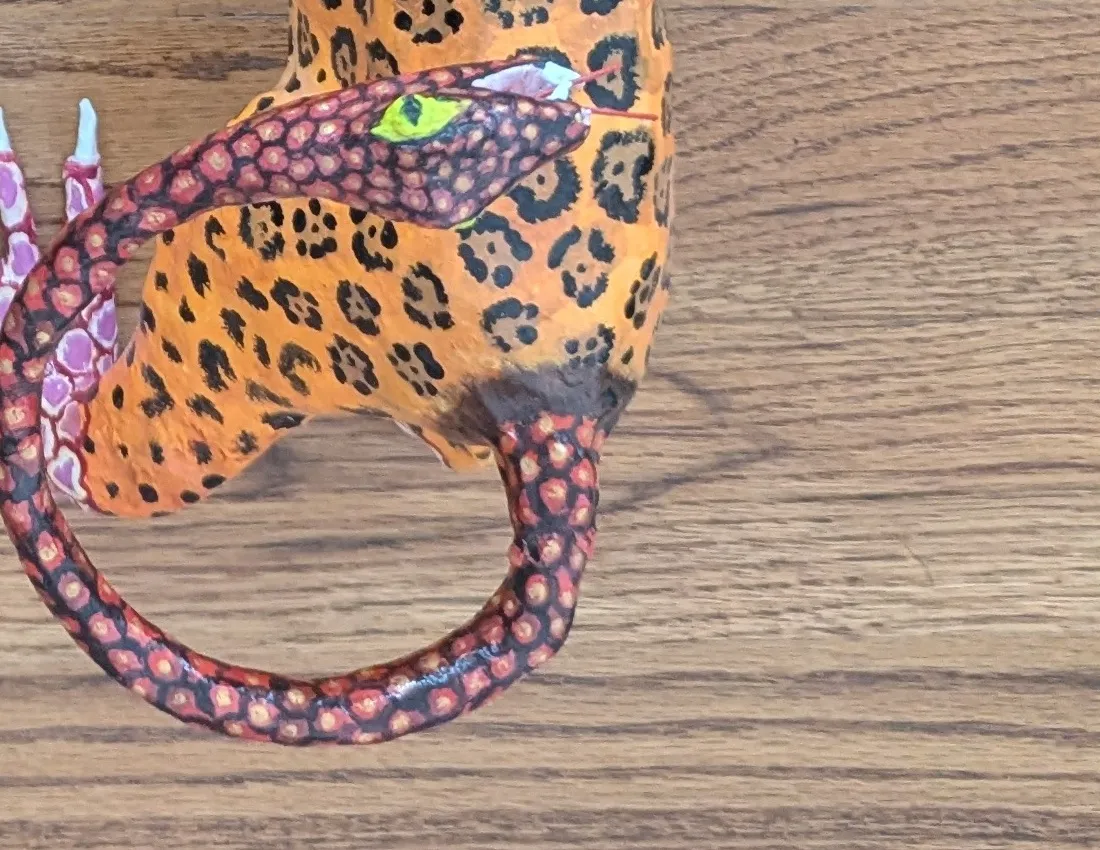
Serpent tailThe tiger’s tail ends in a yellow-eyed serpent head. 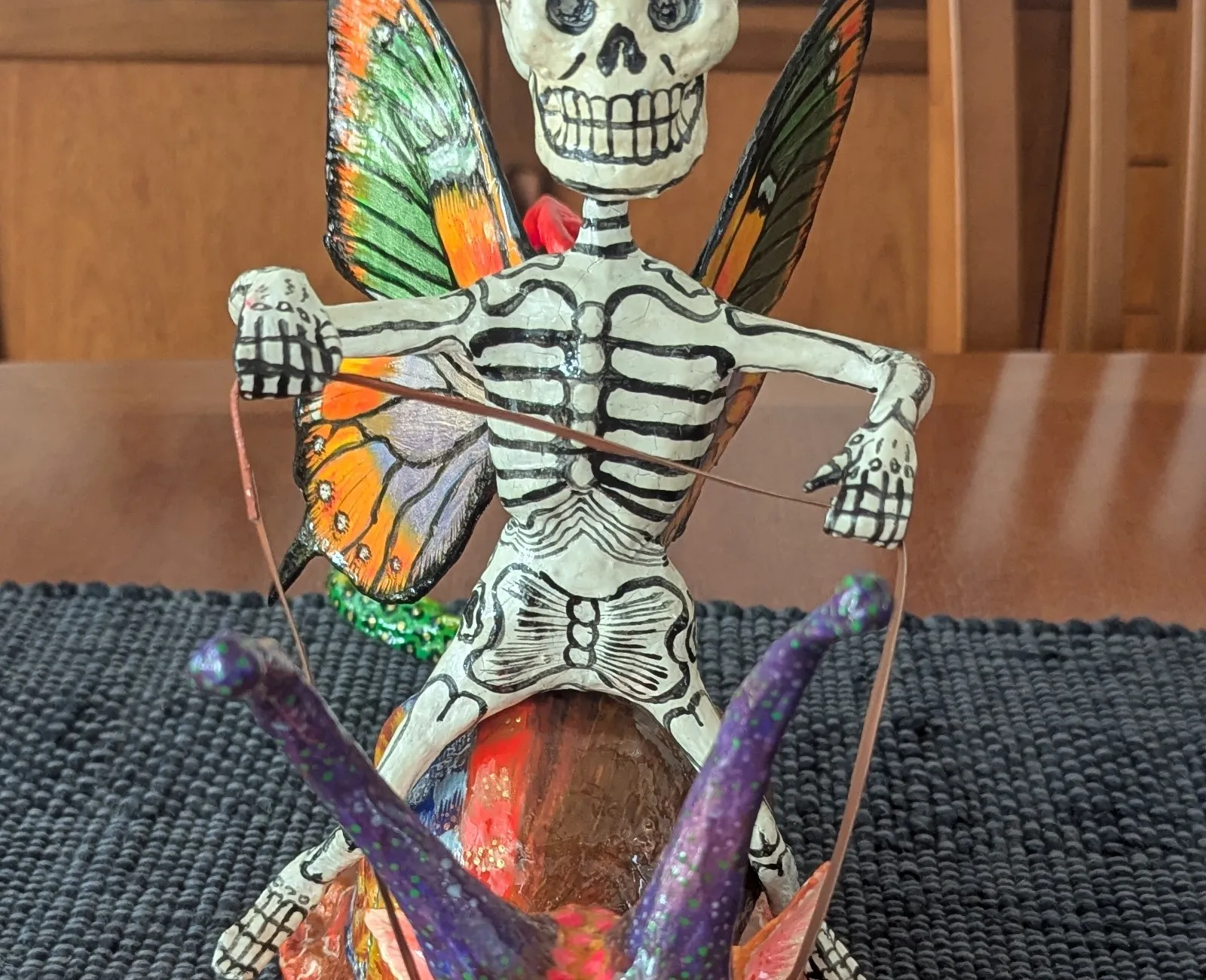
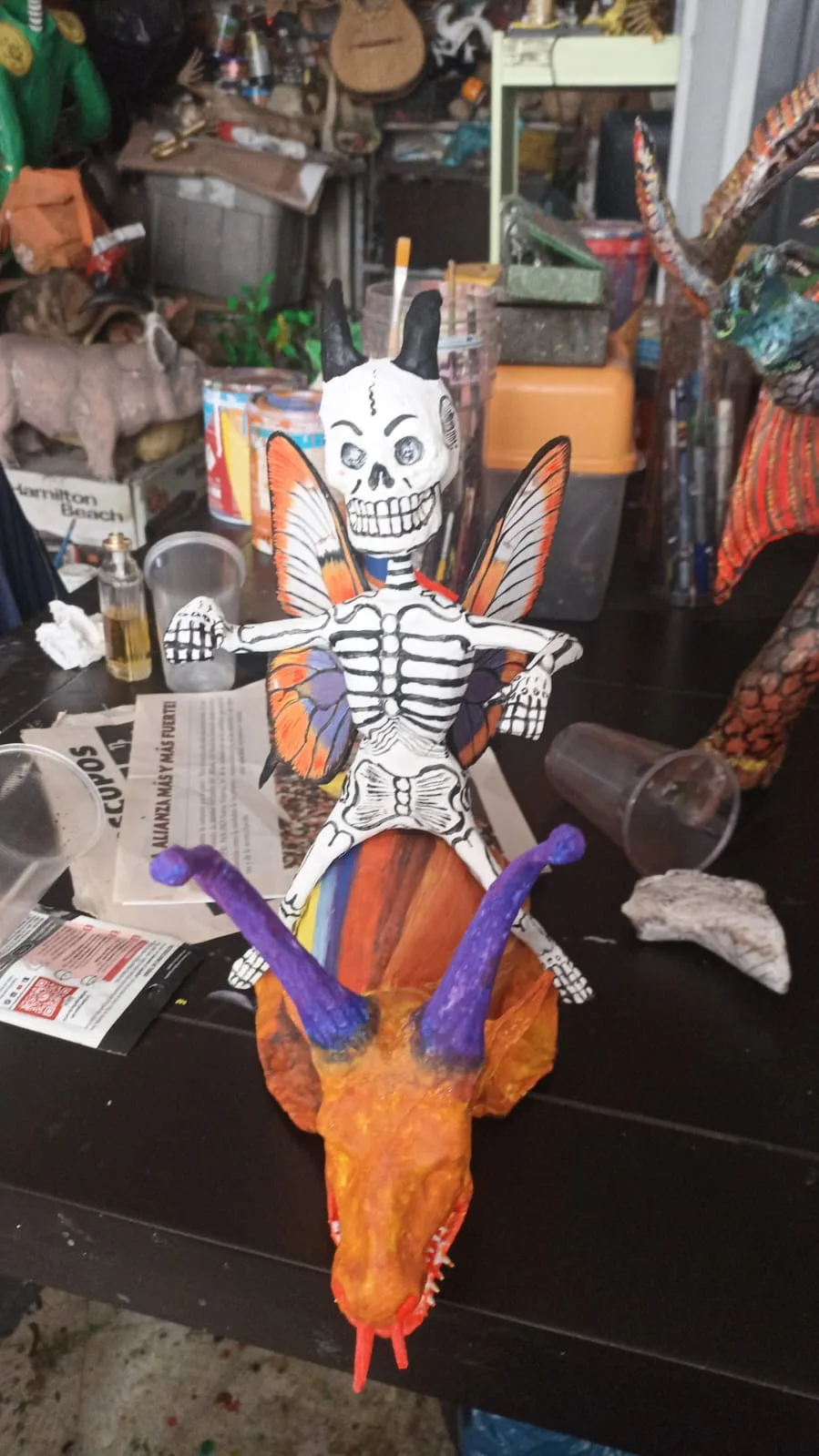
Monarch wingsA skull with monarch-butterfly wings in orange, black and violet.
Workshop photographs
Among jars, brushes and half-dried pieces
The photographs document the craft in general; they do not show the continuous making of a single piece.
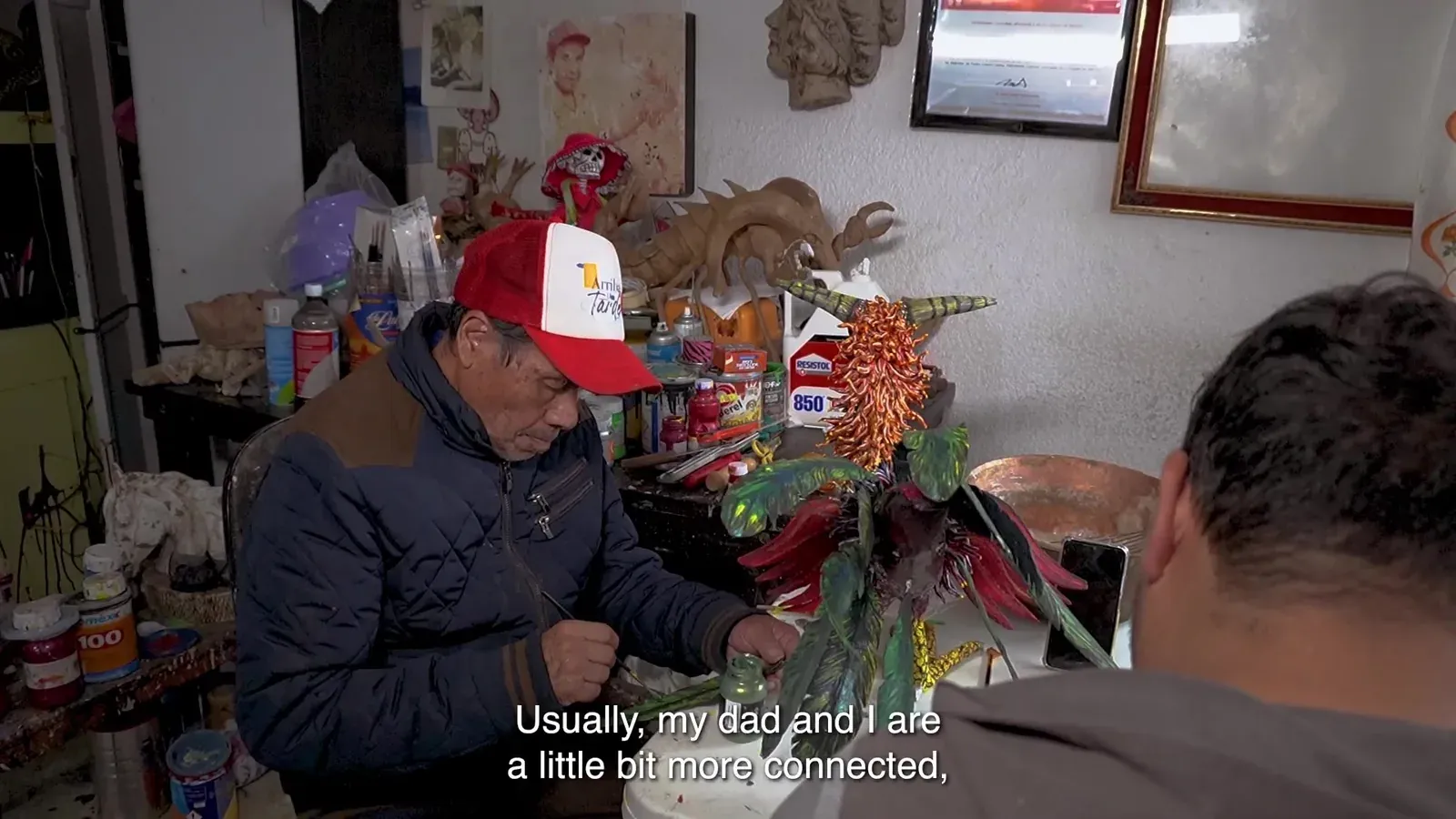
Still from “Alebrijes: A Linares Family Tradition”, Museum of International Folk Art, 05:55
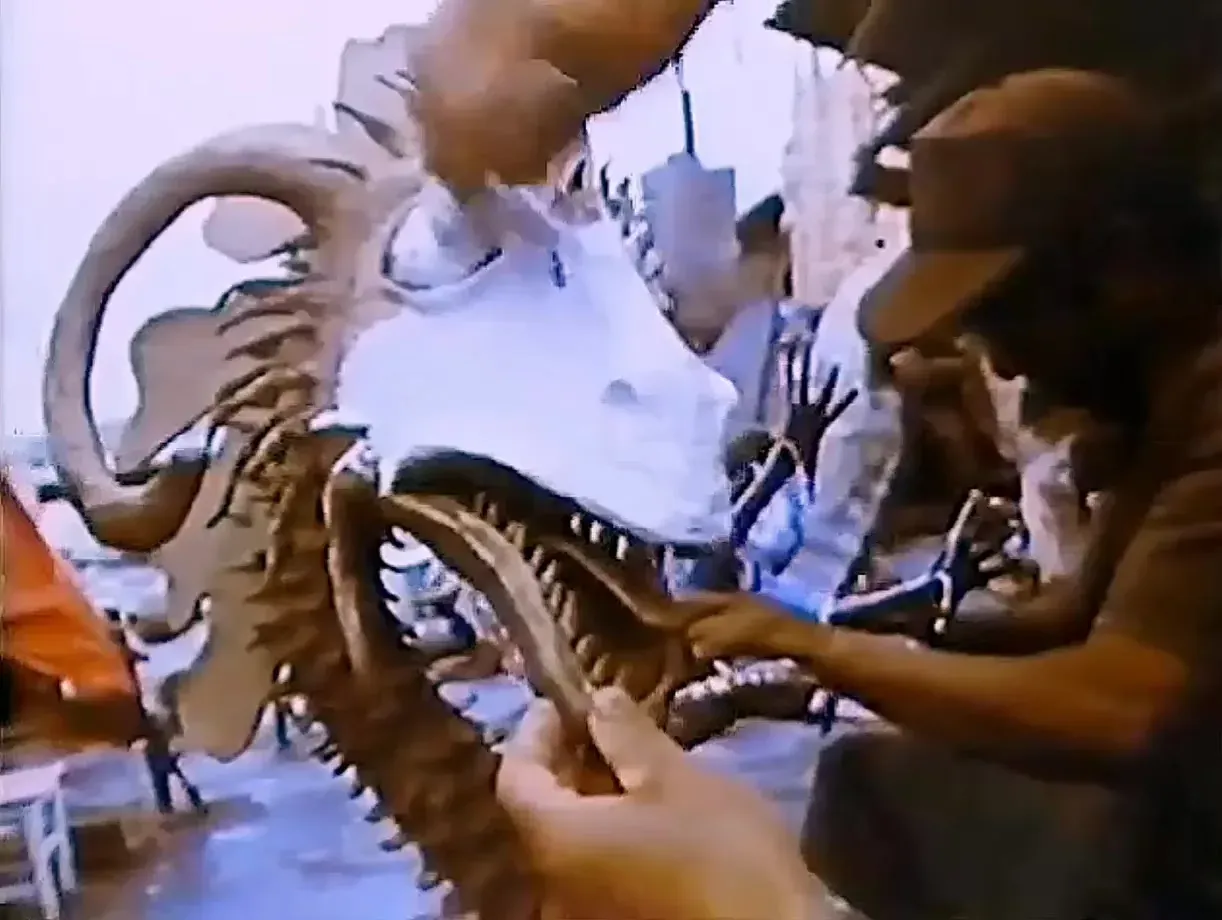
Still from “Pedro Linares: Artesano Cartonero”, Judith Bronowski, 1975, 12:10
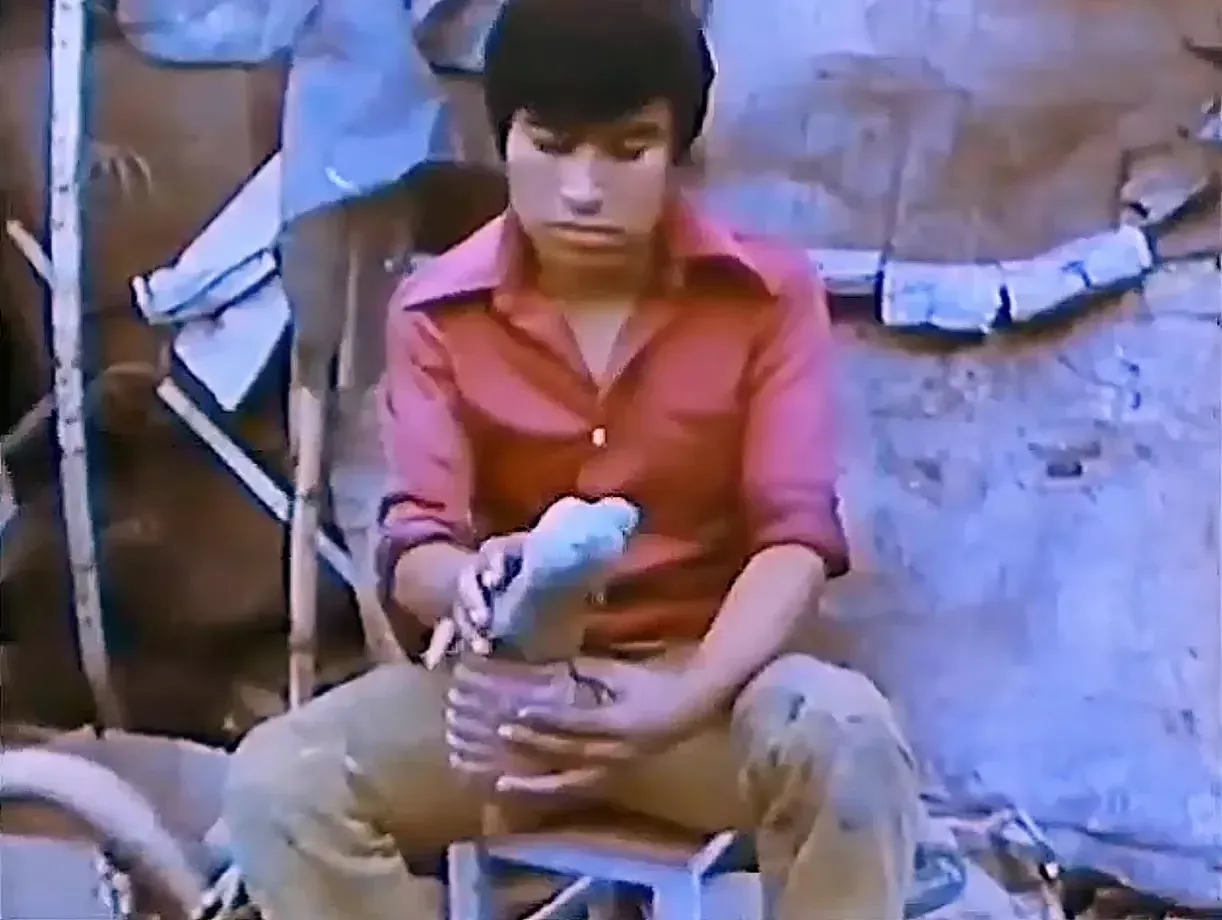
A son of Pedro Linares in the workshop; the documentary does not name him and the family has not confirmed his identity · Still from “Pedro Linares: Artesano Cartonero”, Judith Bronowski, 1975, 09:00
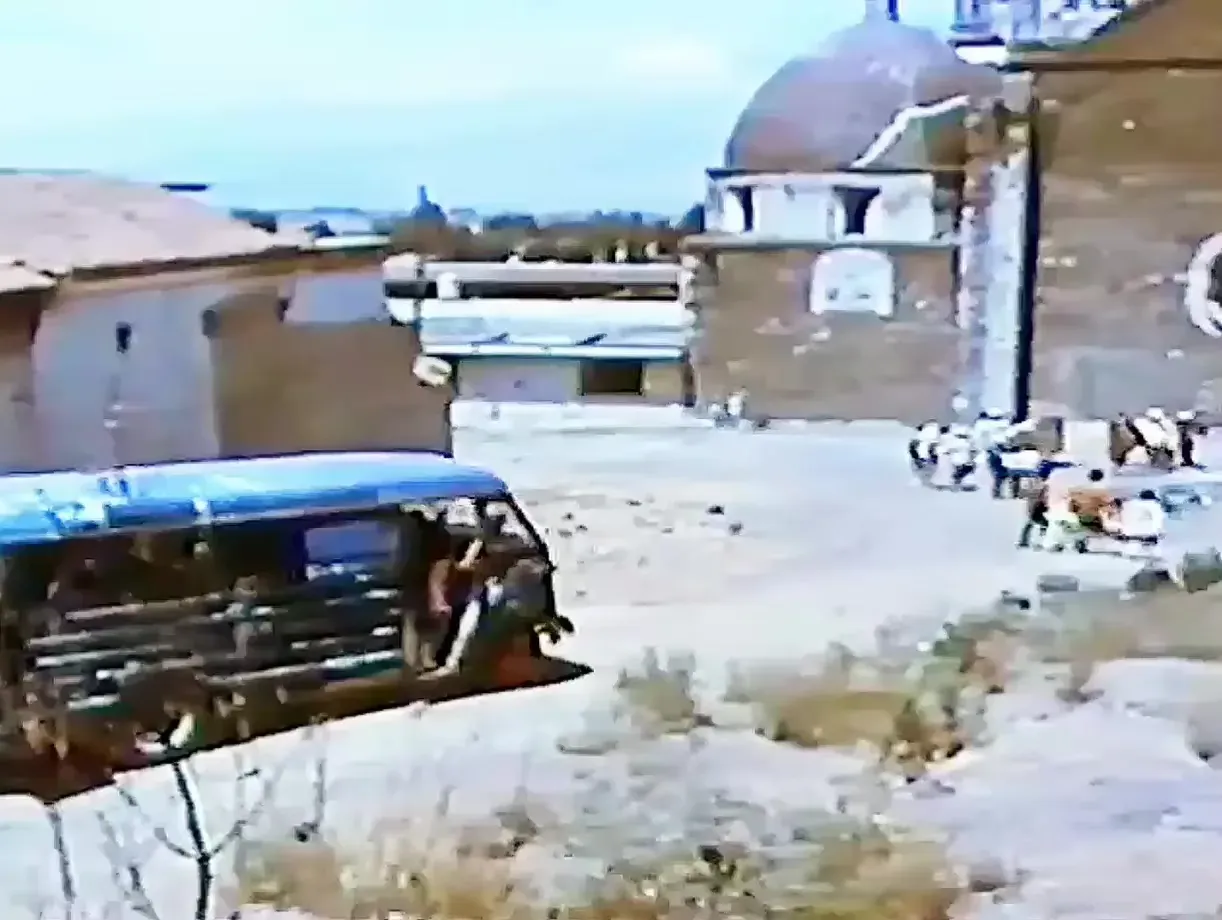
Still from “Pedro Linares: Artesano Cartonero”, Judith Bronowski, 1975, 19:00
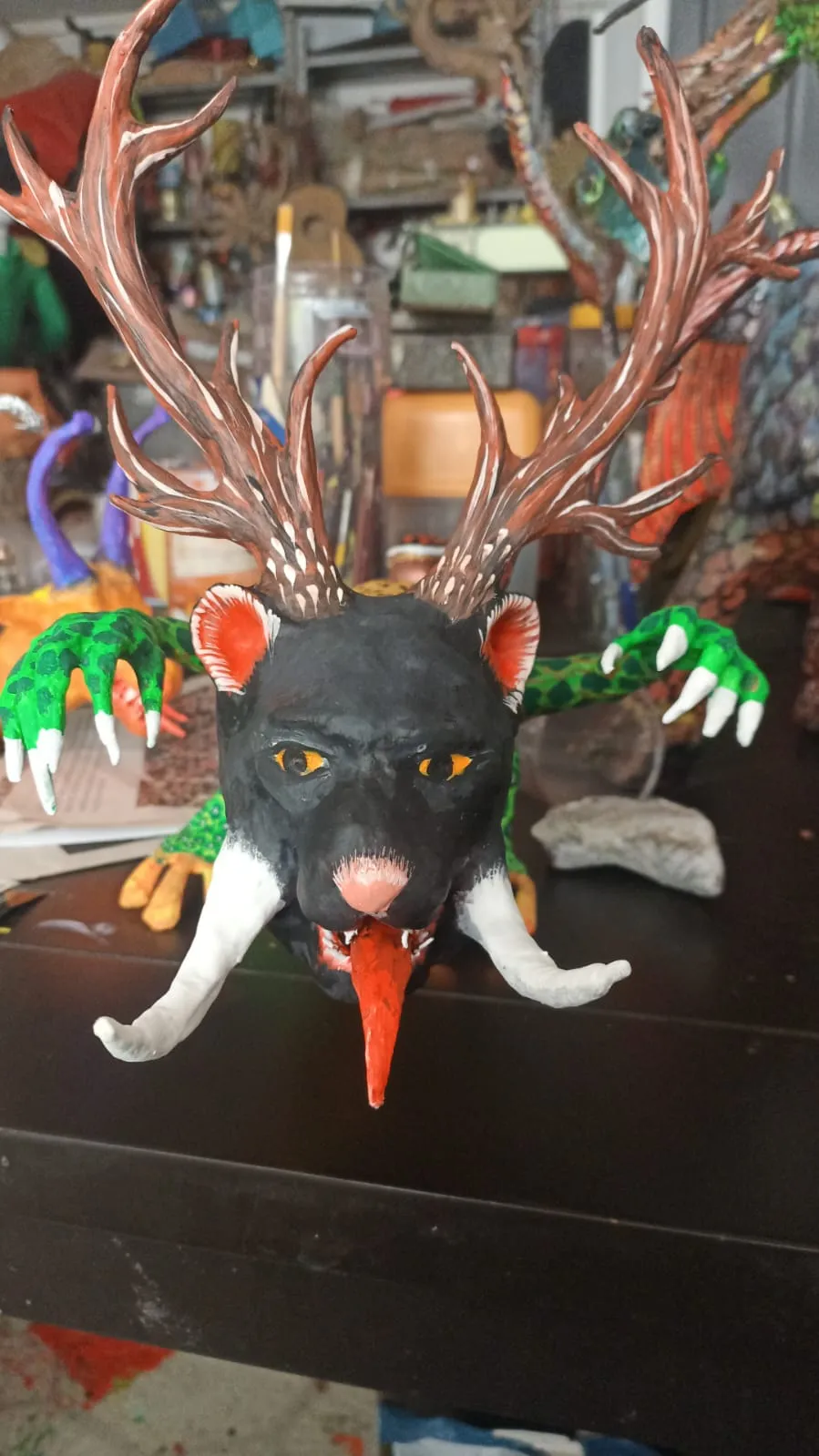
Felipe Linares Vargas’s workshop · photograph provided by the family
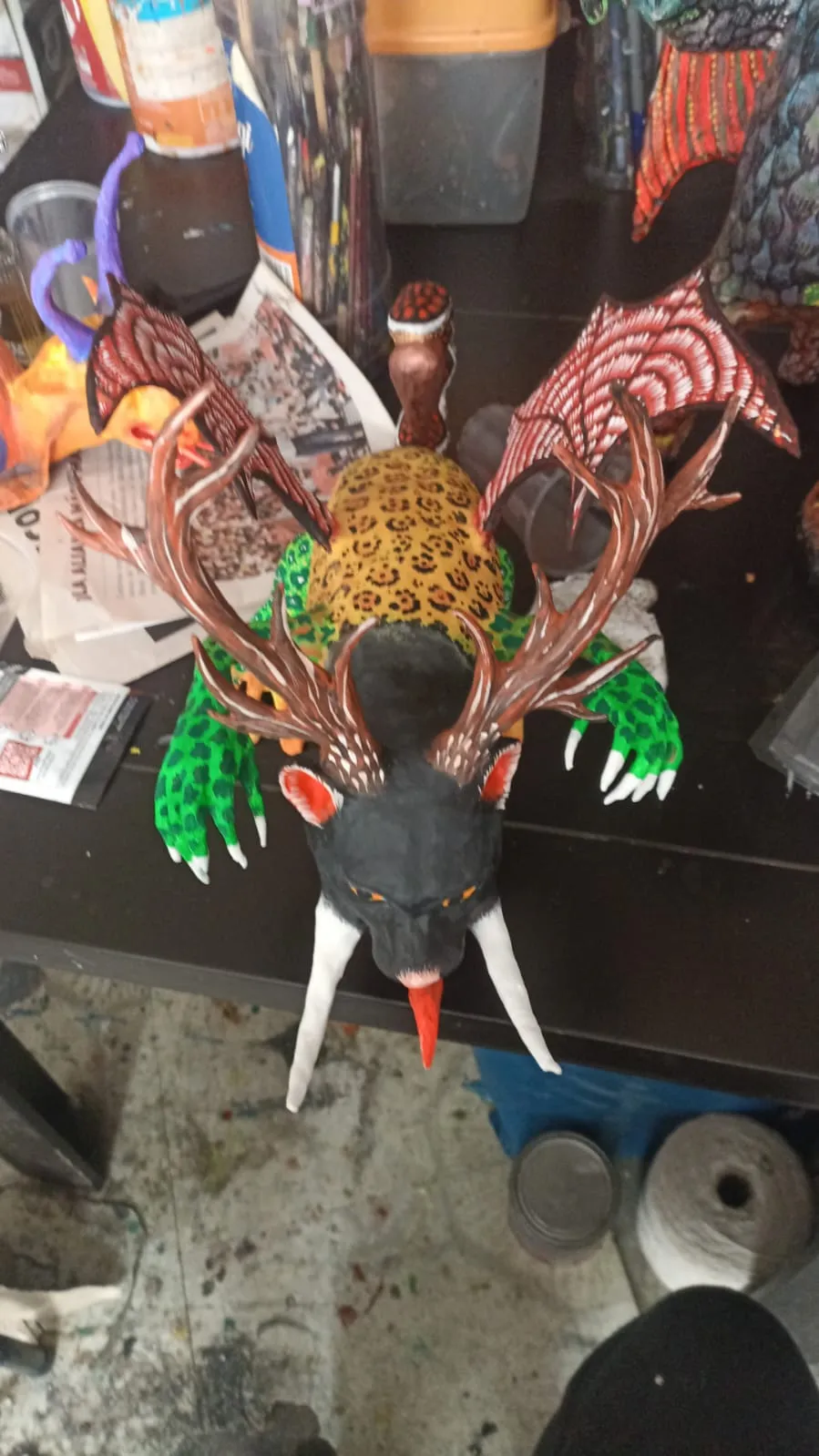
Felipe Linares Vargas’s workshop · photograph provided by the family
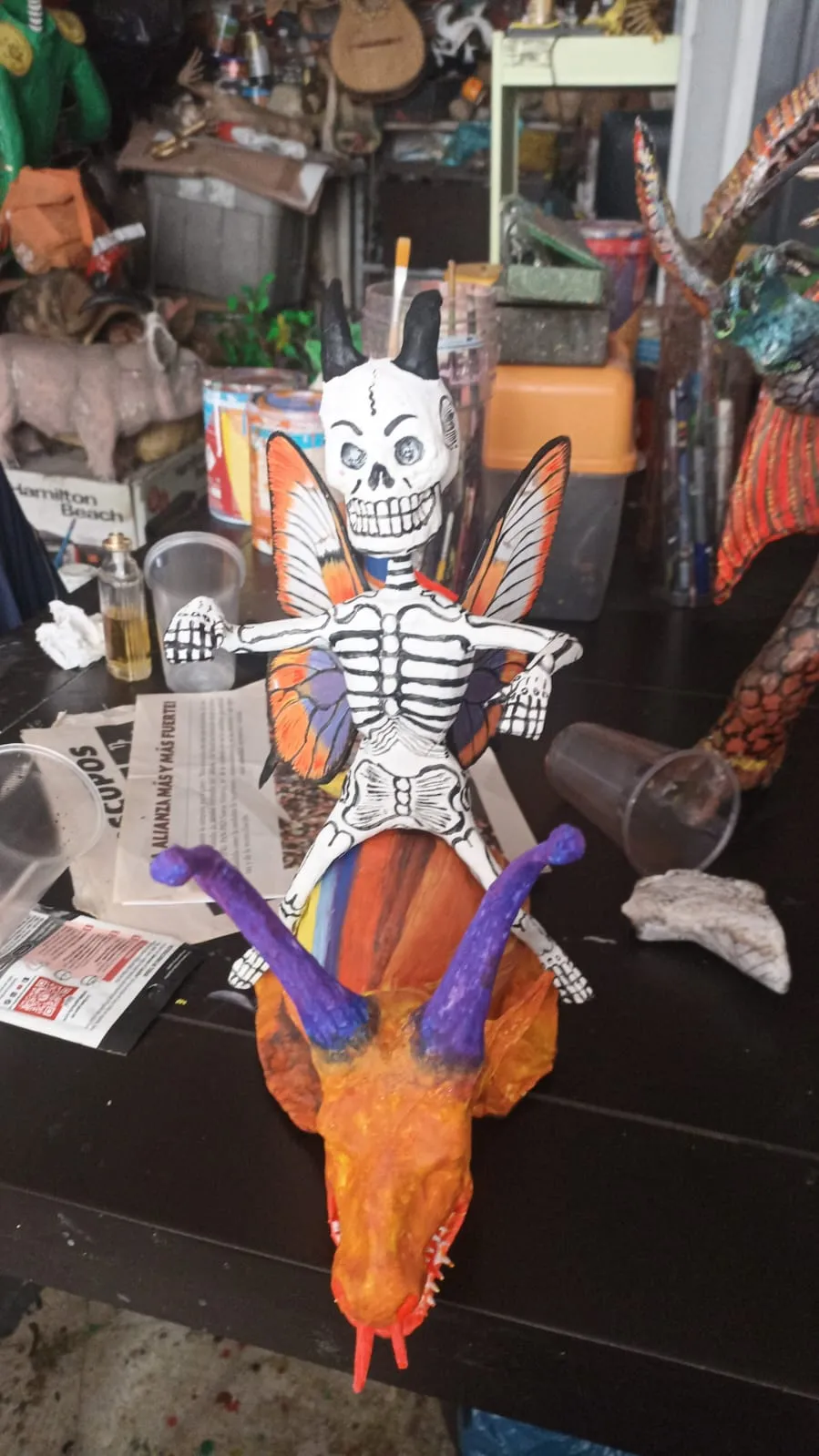
Felipe Linares Vargas’s workshop · photograph provided by the family
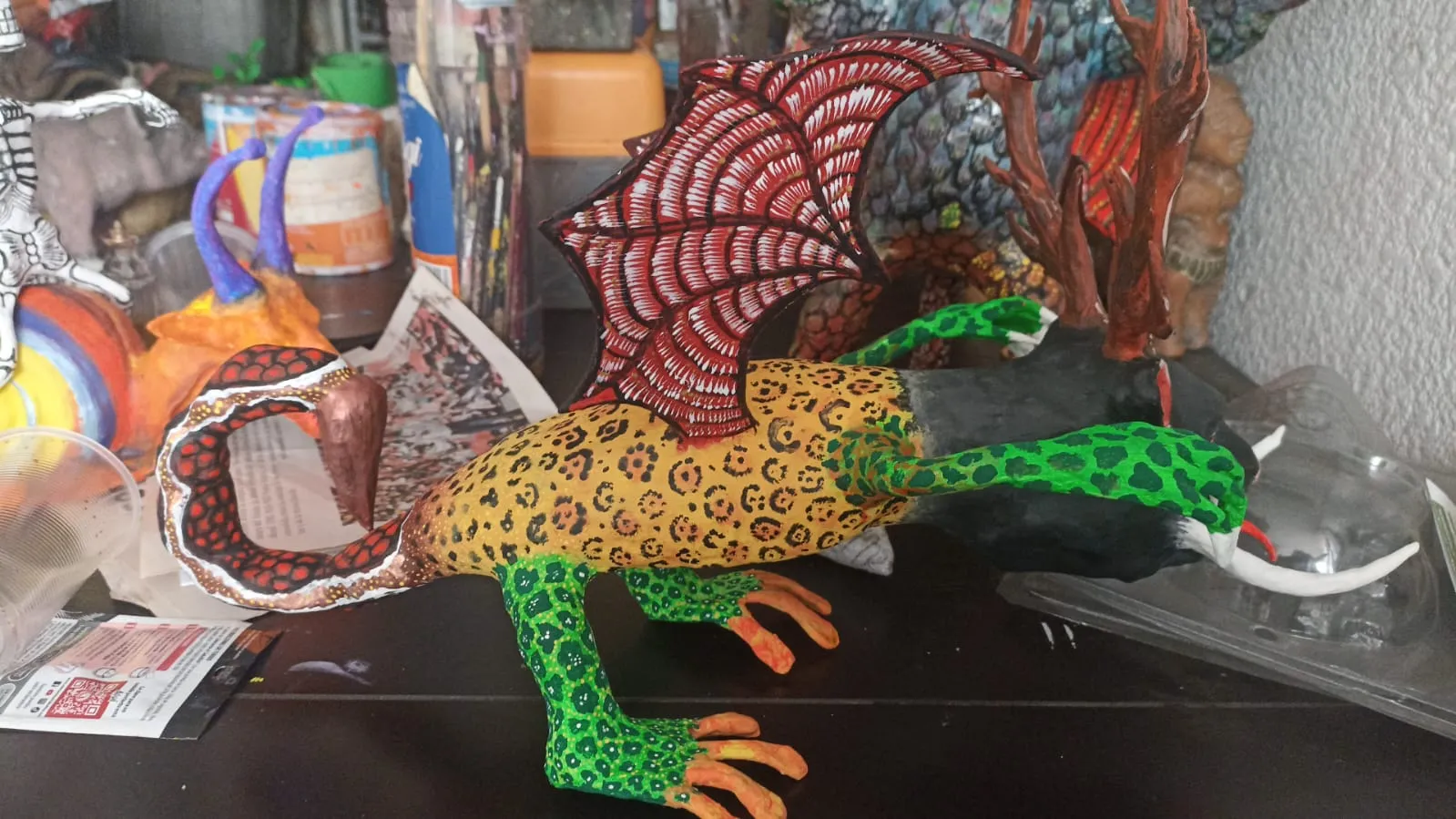
Felipe Linares Vargas’s workshop · photograph provided by the family
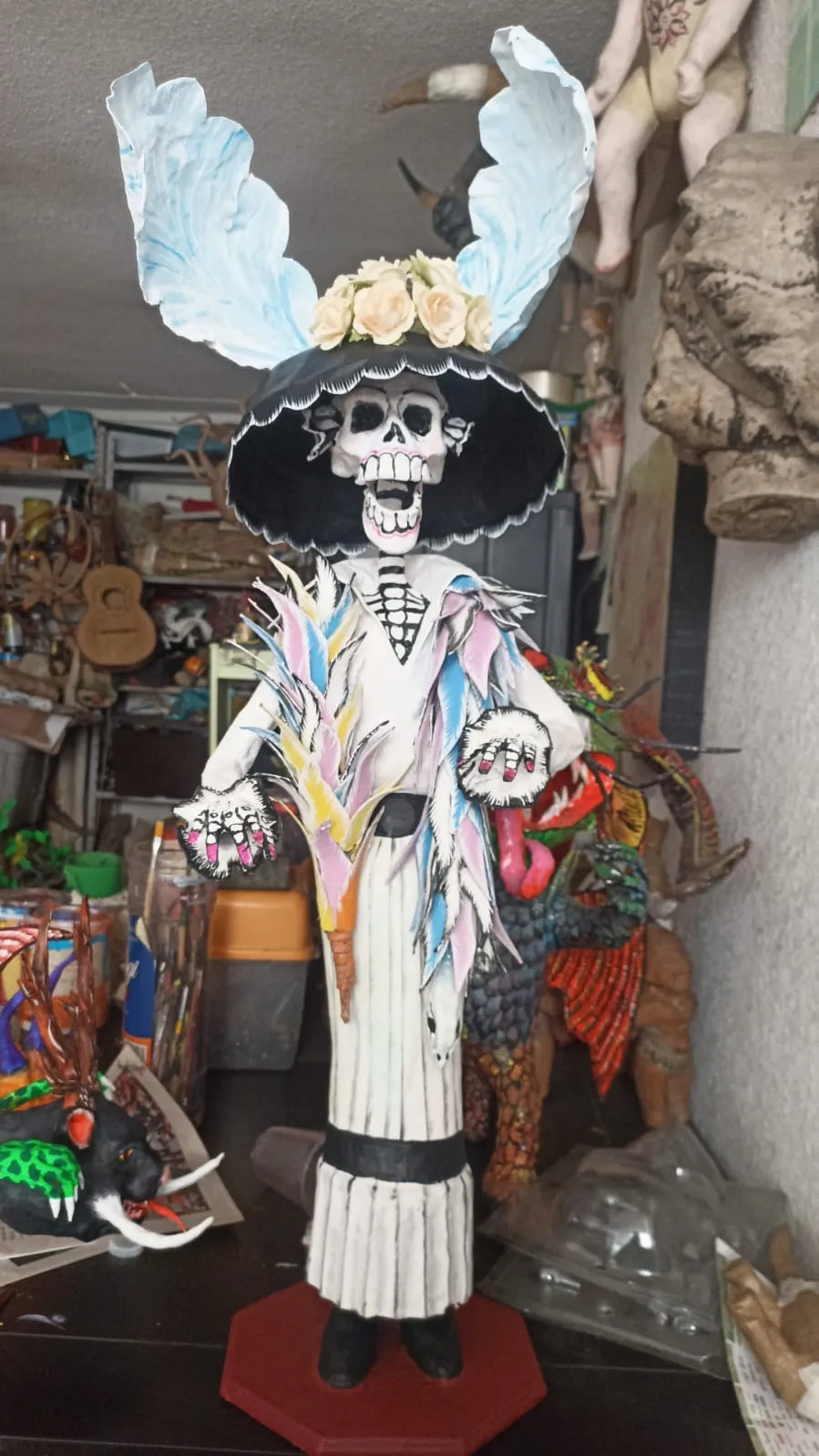
Felipe Linares Vargas’s workshop · photograph provided by the family
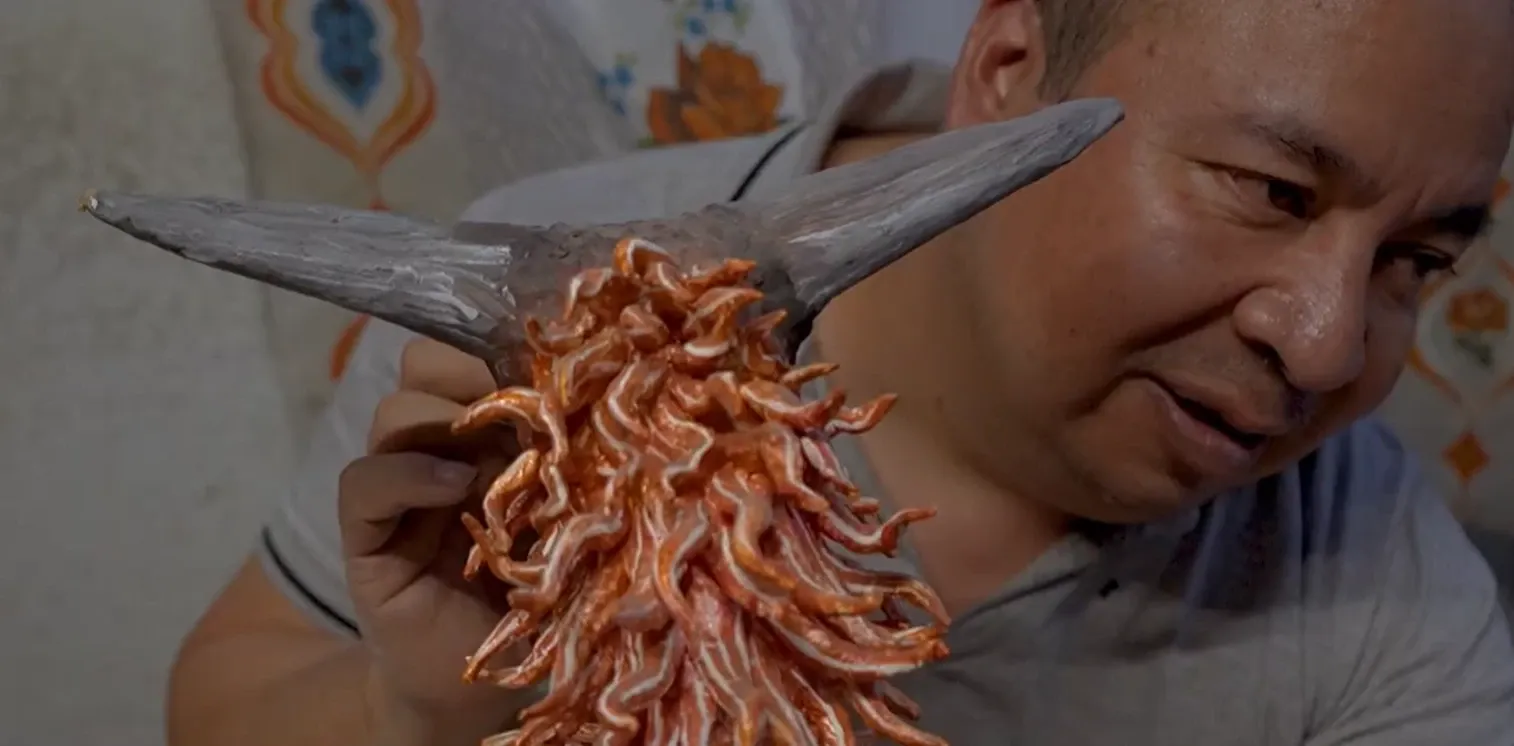
Felipe Linares Vargas with a head in progress · still provided by the family
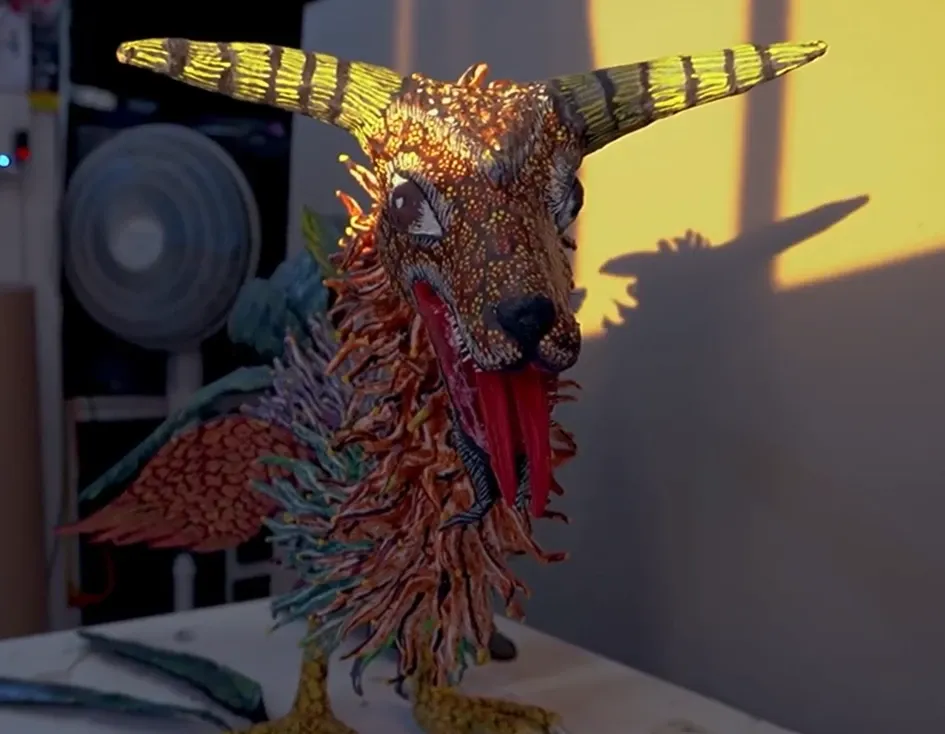
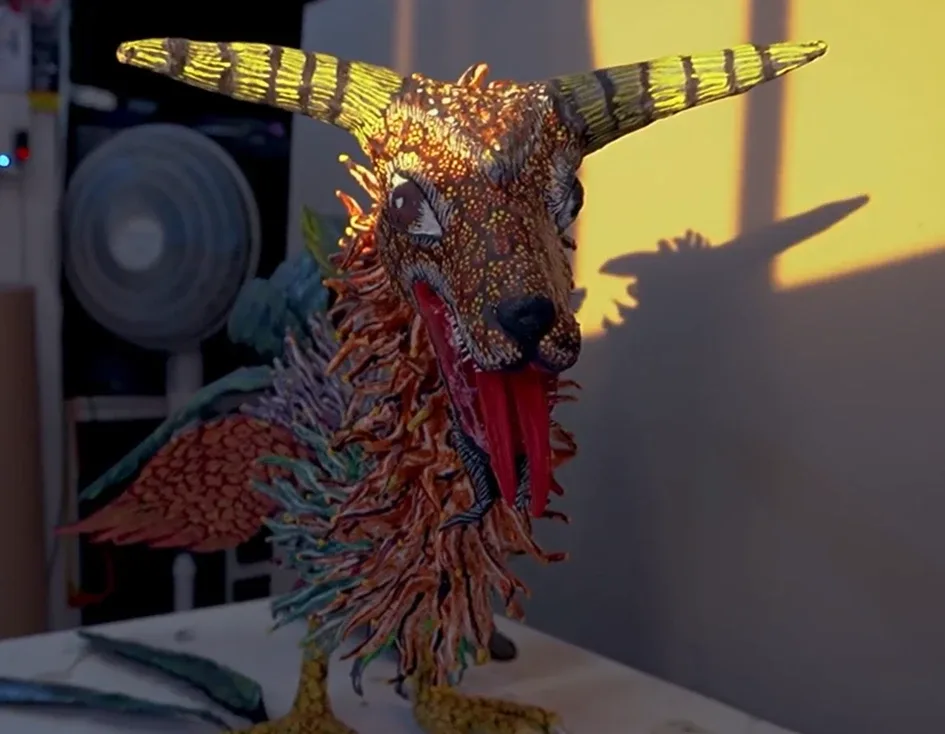
Horned alebrije against the light · still provided by the family