Museo Nacional de Culturas Populares
“Alebrije” (1993), in the collection
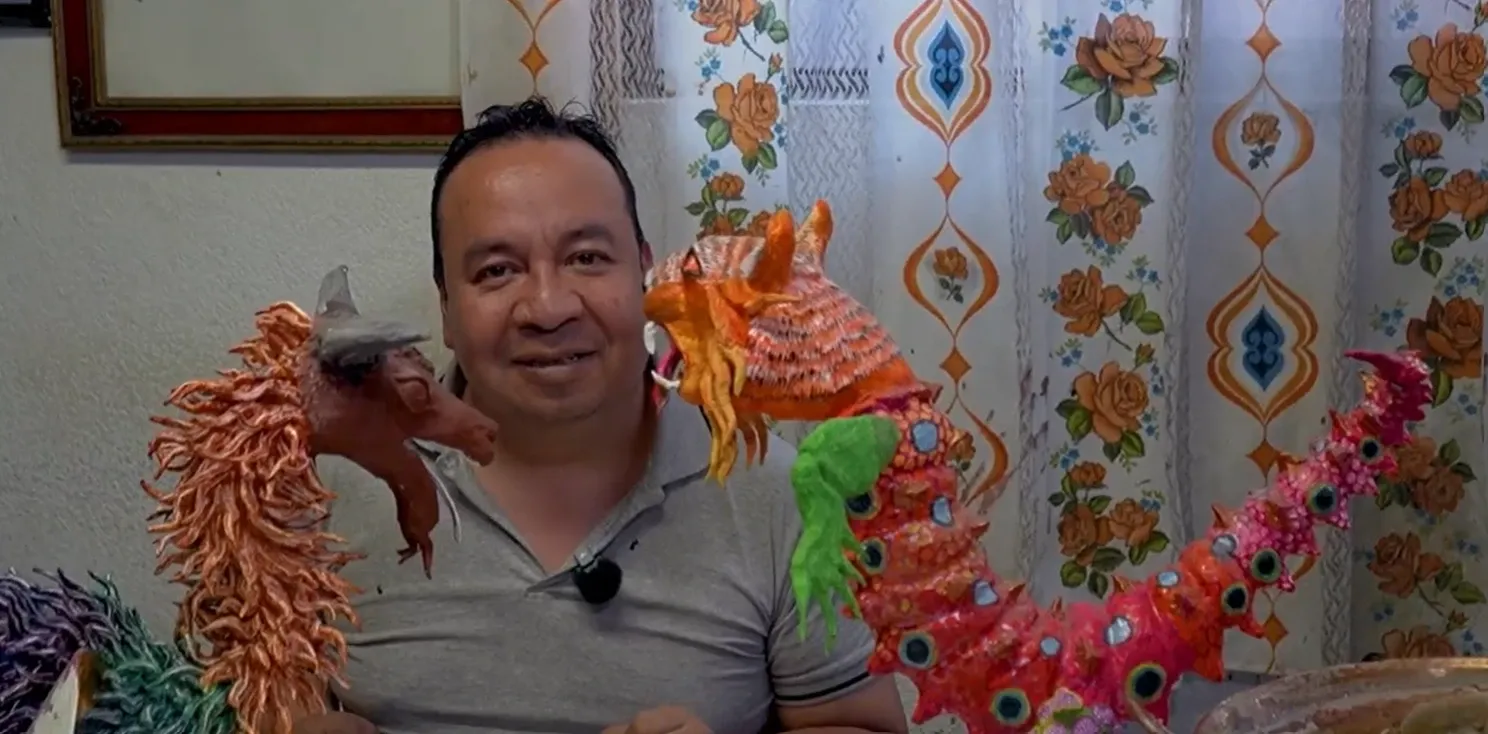
Record MX-SC-MNCP-001501_A under Felipe Linares Mendoza: kraft paper, paste, wire and vinyl paints; “a feline face and wings”.
View the object recordSee on the museum siteMaster cartonero · Mexico City
A life devoted to imagining the impossible.
Son of Pedro Linares López, the creator of the alebrijes, and father of Leonardo, Felipe and David Linares Vargas. He has worked paper and cardboard in Mexico City since childhood; his work is held by the Museo Nacional de Culturas Populares, the Brooklyn Museum and the Fowler Museum.
The master
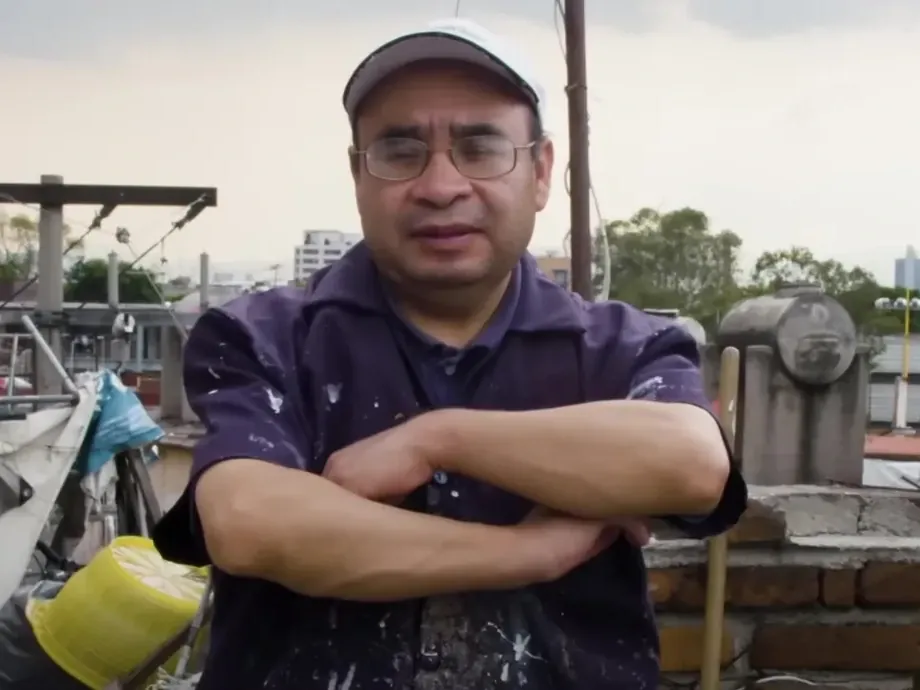
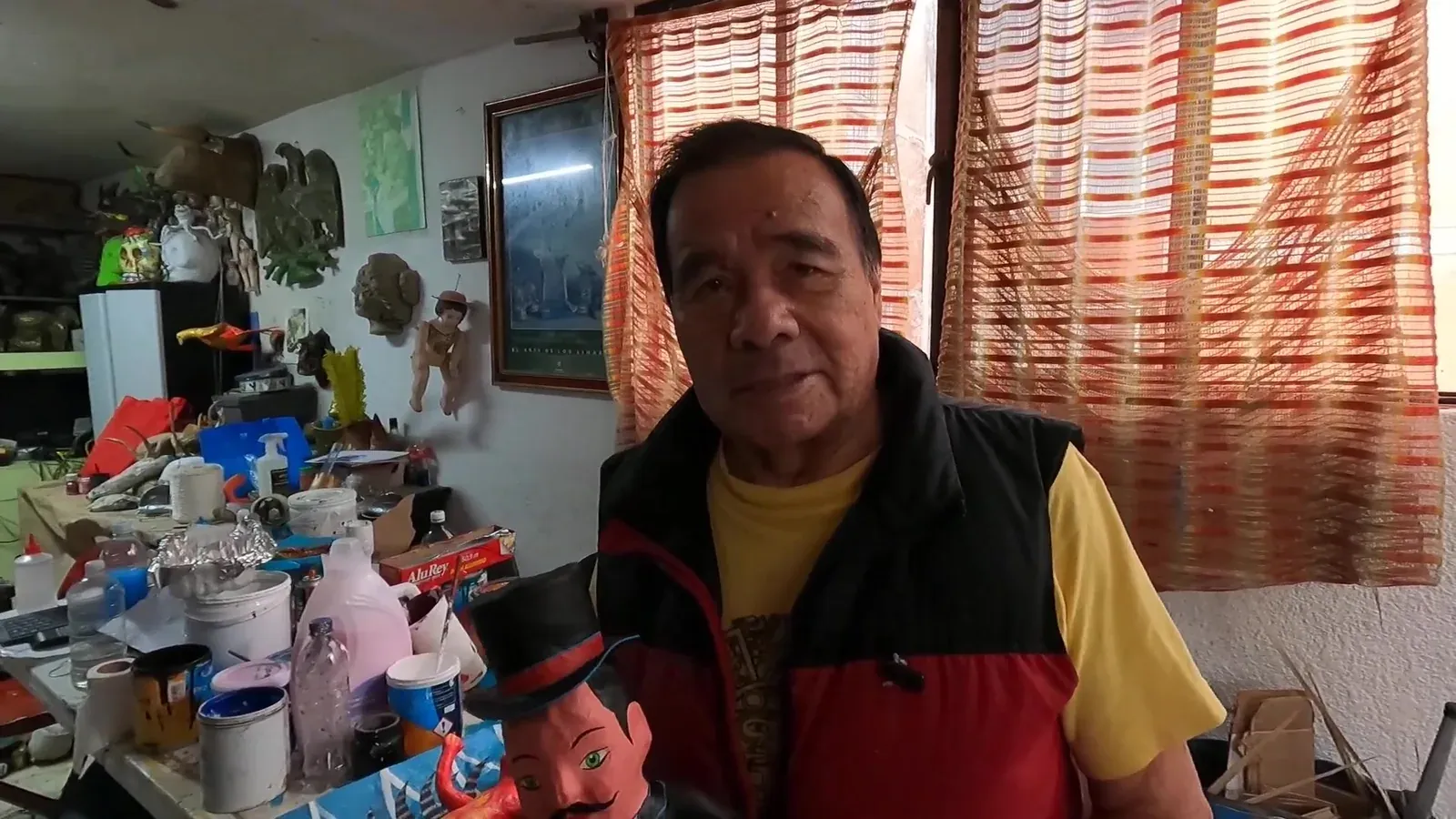
Felipe Linares Mendoza was born in 1936 in Mexico City, in the house-workshop in La Merced where his father, Pedro Linares López, made Judas figures, masks, skeletons and cardboard toys. He began working paper at about ten and, he says, has worked the paper craft since 1947. He is the second generation of the alebrijes and the link between their creator and today’s cartoneros: a master who carried his father’s creatures toward sculpture, movement and meticulous painting.
There were no lessons. There was paste, newspaper and a father at work. Felipe remembers that watching his father handle paper “felt like a game”. Before the alebrijes, the workshop lived by the calendar: masks, skeletons for November, hats for September 15, figures for the fireworks makers. Don Pedro’s customers were mostly pyrotechnicians. The work was seasonal.
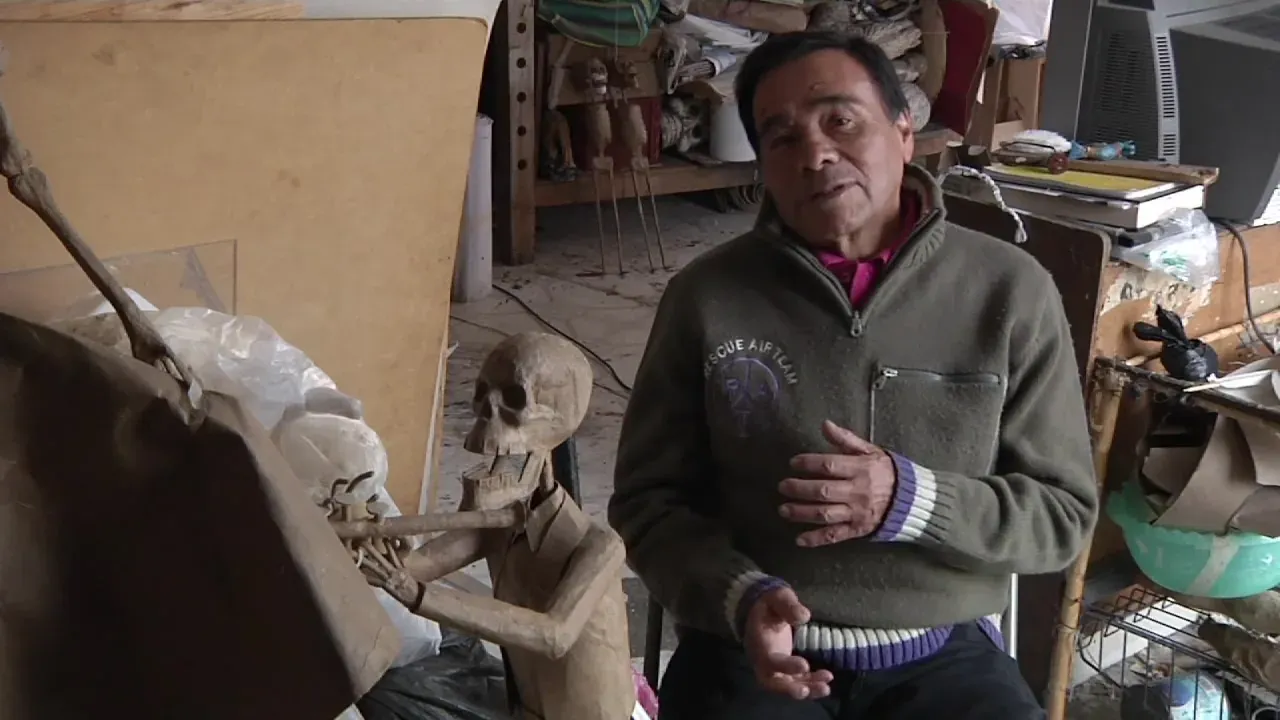
“I watched what my father did and always tried to do it better.”
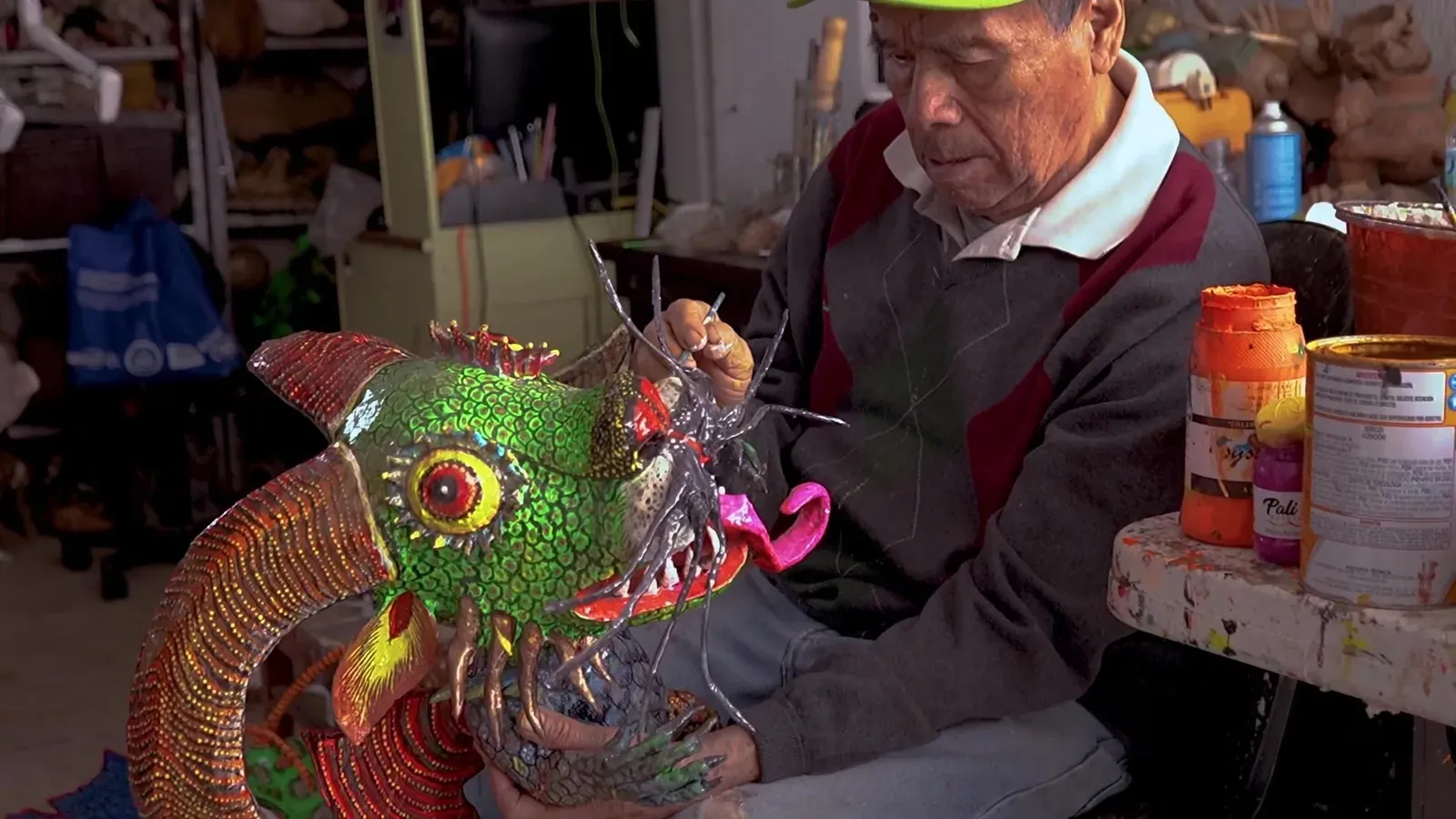
Second generation of the alebrijes
When his father began making alebrijes, Felipe decided to add more to them: horns, scales, “whatever came to mind”. His first alebrije, he recalls, had an armadillo body, a rooster head and a skull mounted on top. “I watched what my father did and always tried to do it better,” he says. The alebrijes also gave the workshop work all year round: it was no longer seasonal.
His sons describe his contribution precisely. Leonardo Linares Vargas: “My father, Felipe, contributes above all the polish, working them as if they were sculptures; he is meticulous in the detail of the painting.” Photographs of his pieces show it: polished surfaces, feathers and scales painted one by one, crests and eyes that give character, bodies that seem to move.
Alebrijes are cartonería
The name, the concept and the technique (the dream, the paper and the cardboard) belong to Mexico City and to the Linares family. Pedro Linares López created them after an illness around 1936; according to the family, the first ones appeared around 1947–1948. Since 2019 they are cultural heritage of the city.
The family’s works
This site gathers the family’s works with the maker identified wherever the evidence allows: Felipe Linares Mendoza’s pieces in museums, his sons’ pieces and those the workshop has not yet attributed. Everything is made of paper: newspaper, manila paper, tissue paper, kraft paper, paste, wire or reed. “To make an alebrije there is no mold, there is nothing,” Felipe explains. “It is raised with paper, pure paper.”
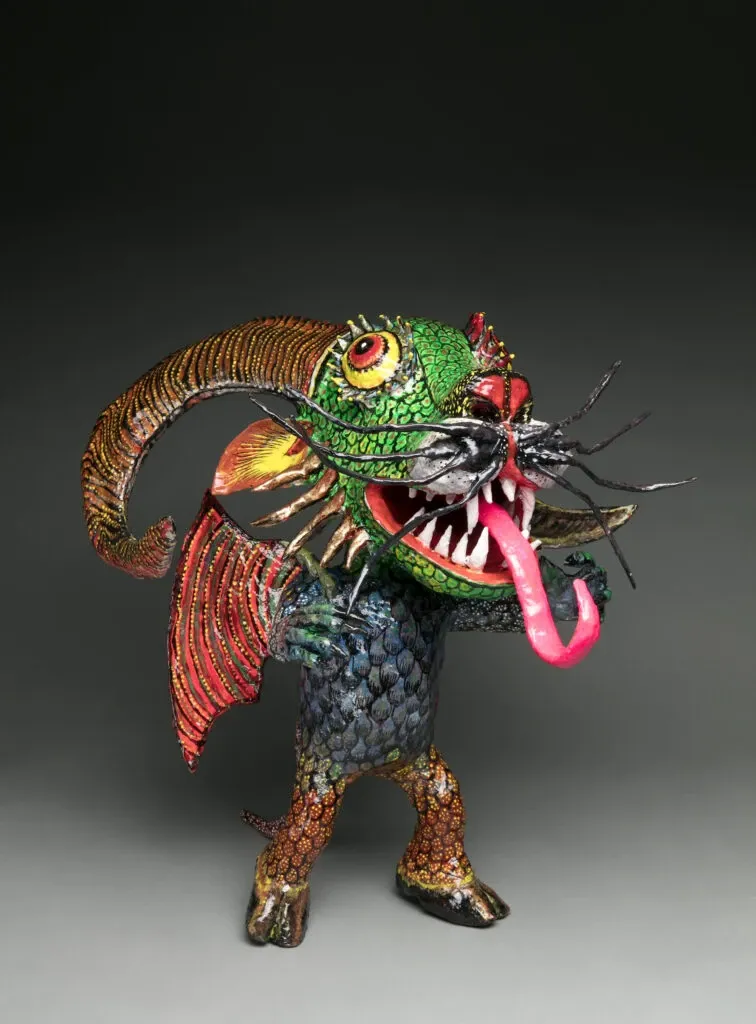
Goat hornsFelipe Linares Mendoza · Alebrijes
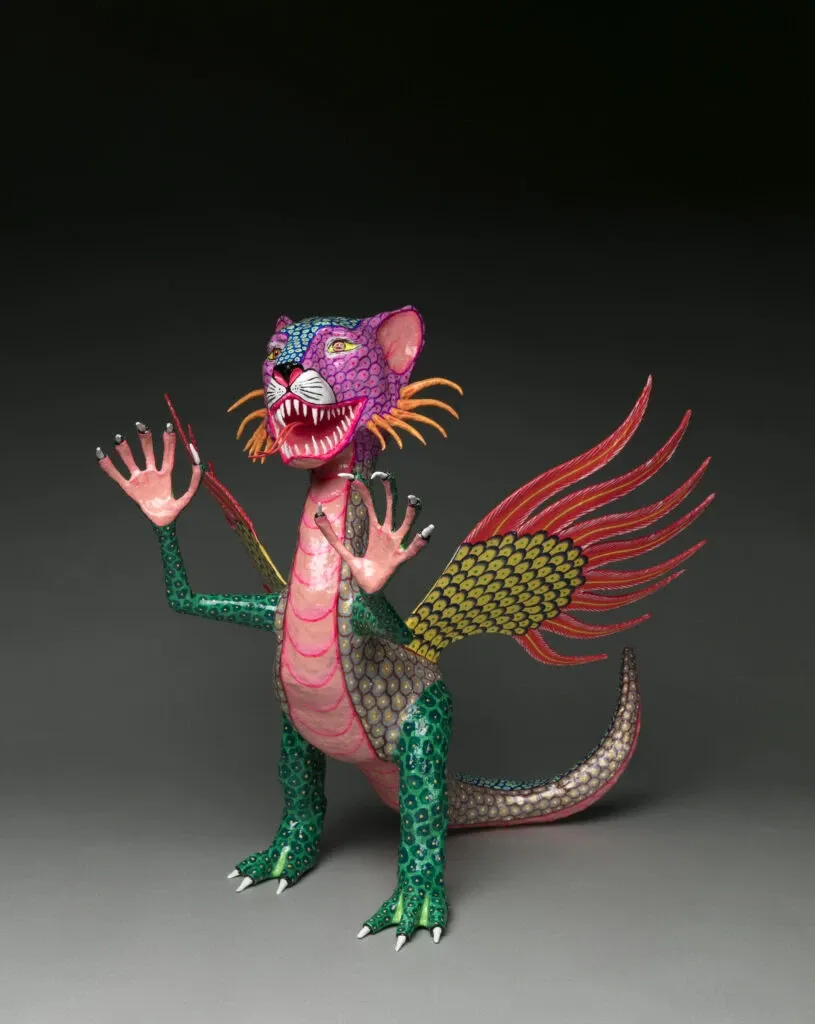
Lion with wingsLeonardo Linares Vargas · Alebrijes
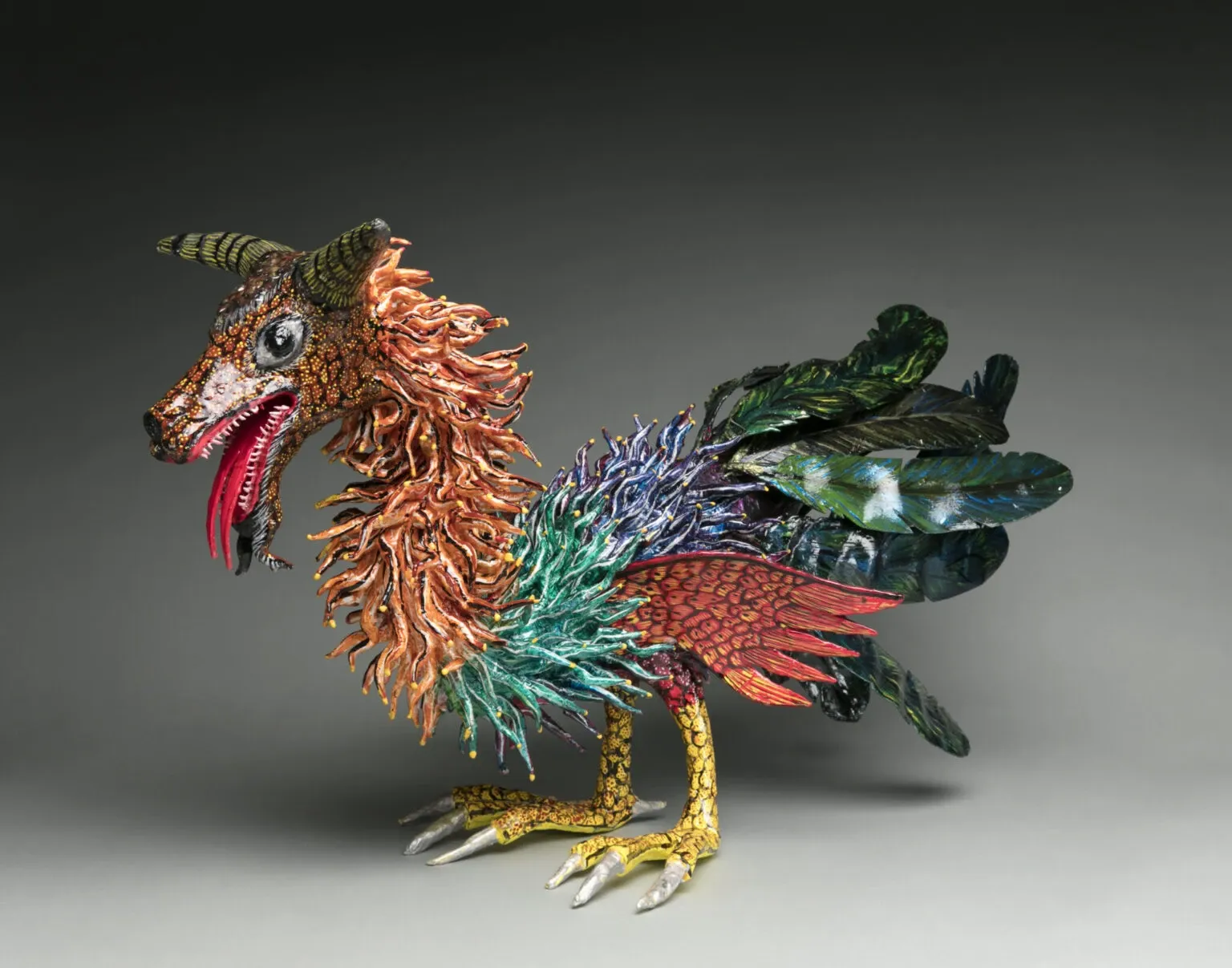
Barbas (Beard)Felipe Linares Vargas · Alebrijes · Commissions and collaborations
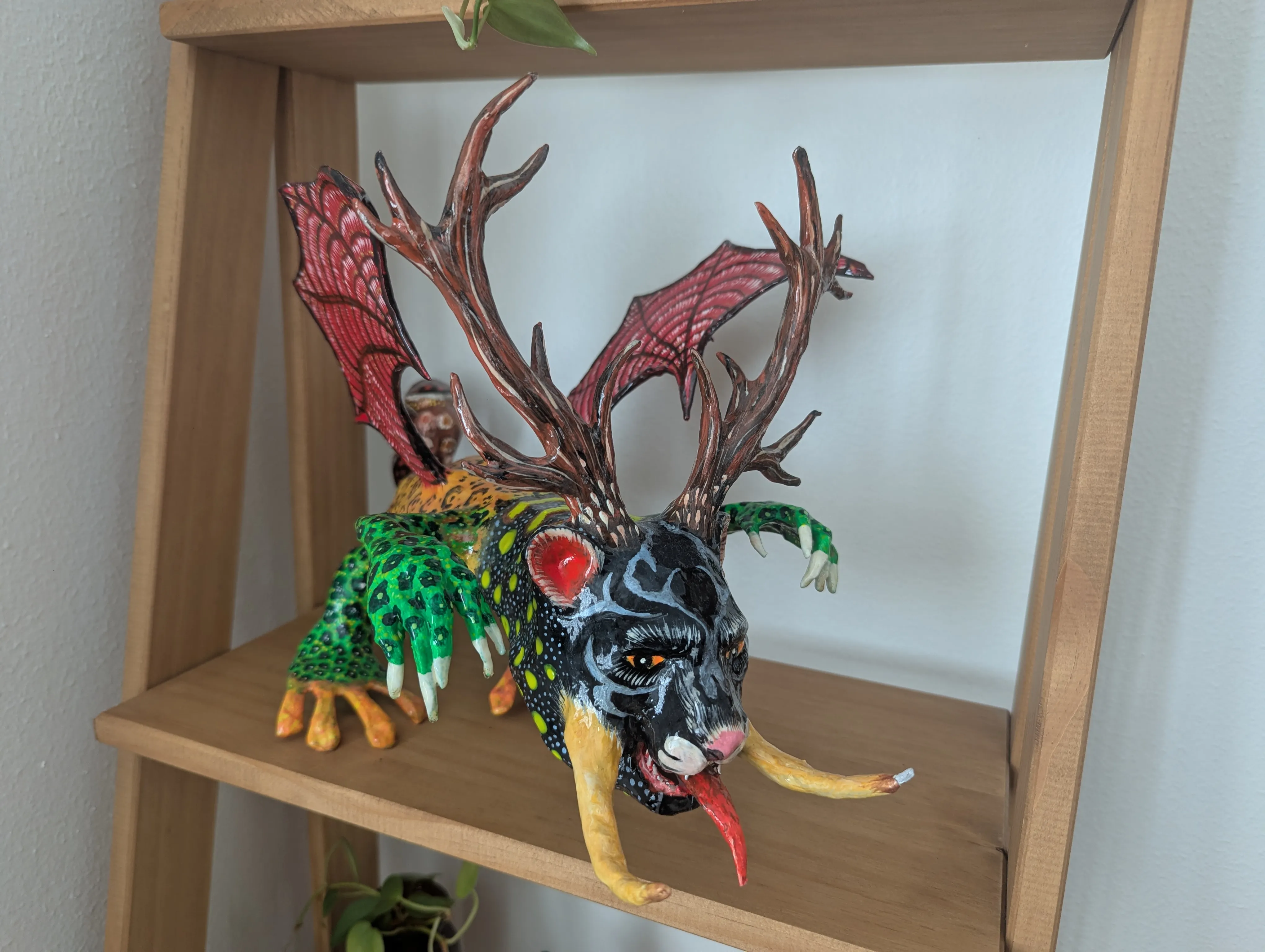
Jaguar alebrije with deer antlers*Felipe Linares Vargas · Alebrijes
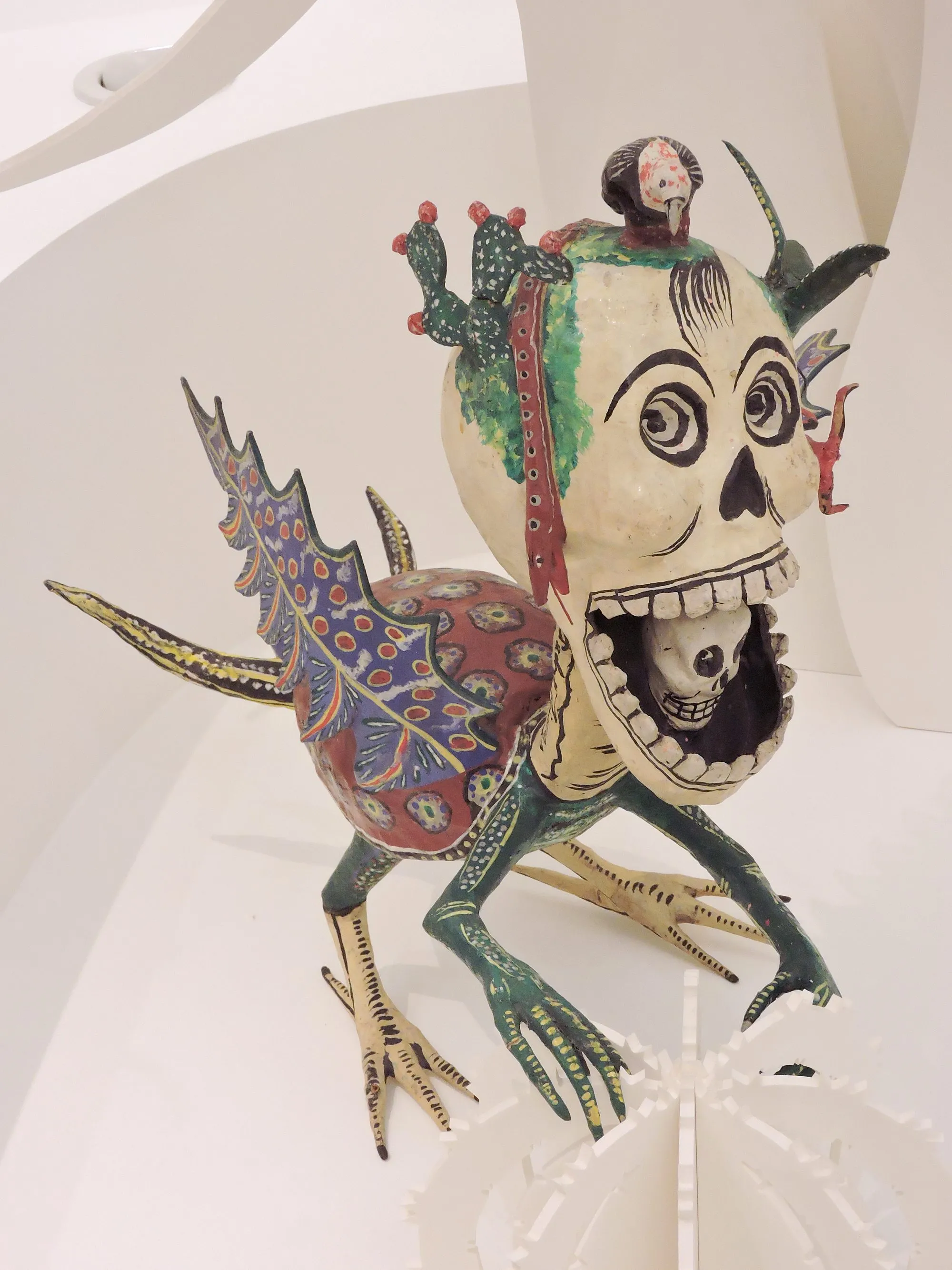
Alebrije by Pedro Linares, Museo de Arte Popular*Pedro Linares · Alebrijes · Works in collections“Alebrije de Pedro Linares”, photograph by Centro de Documentación MAP, via Wikimedia Commons (opens in a new tab) · LicenseCC BY-SA 4.0 (opens in a new tab)
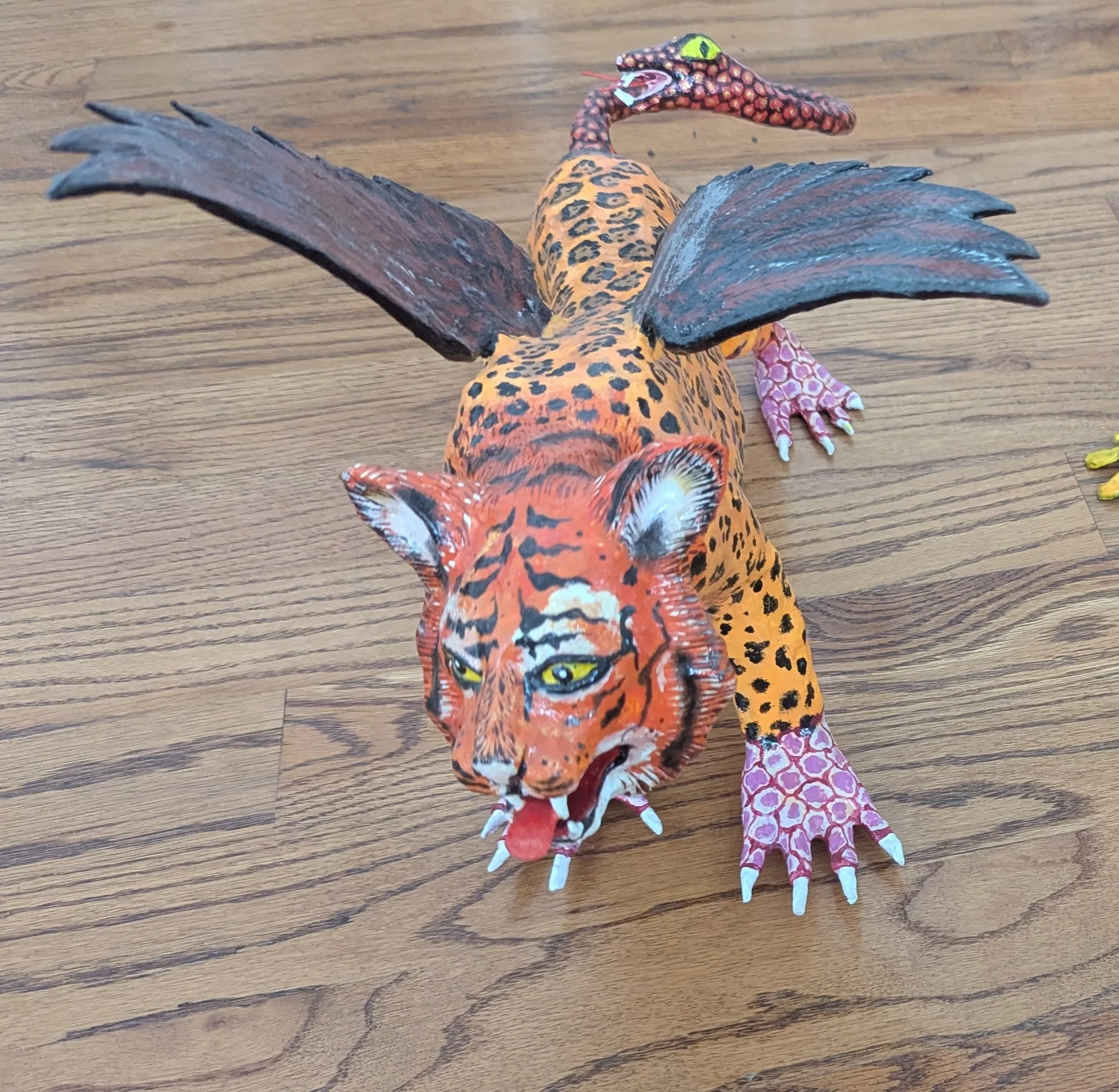
Winged tiger alebrije with serpent tail*Felipe Linares Vargas · Alebrijes
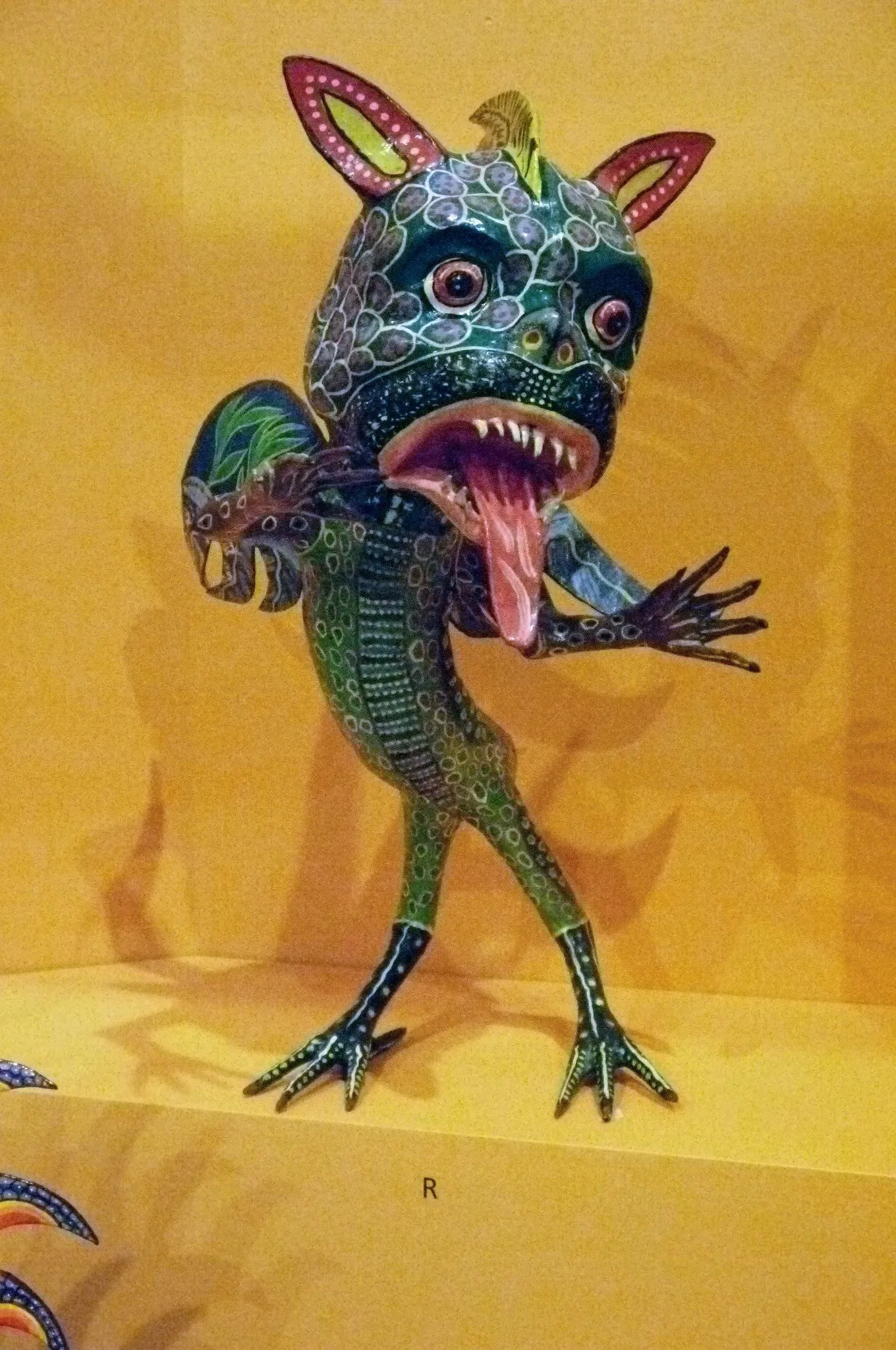
Sculpture by Pedro Linares*Pedro Linares · Alebrijes“Alebrije sculpture”, photograph by Eden, Janine and Jim, via Wikimedia Commons (opens in a new tab) · LicenseCC BY 2.0 (opens in a new tab)
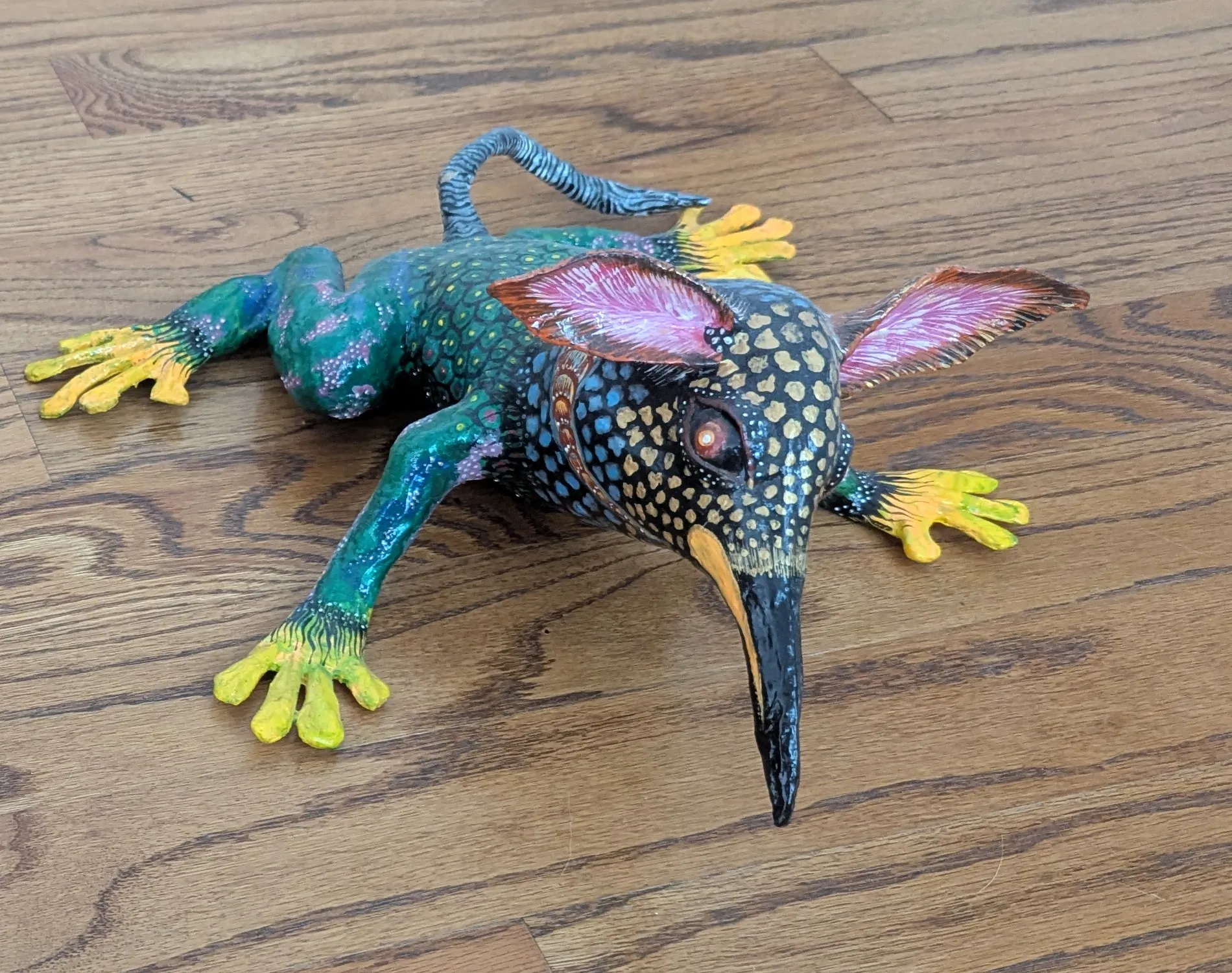
Frog alebrije with bird beak*Felipe Linares Vargas · Alebrijes
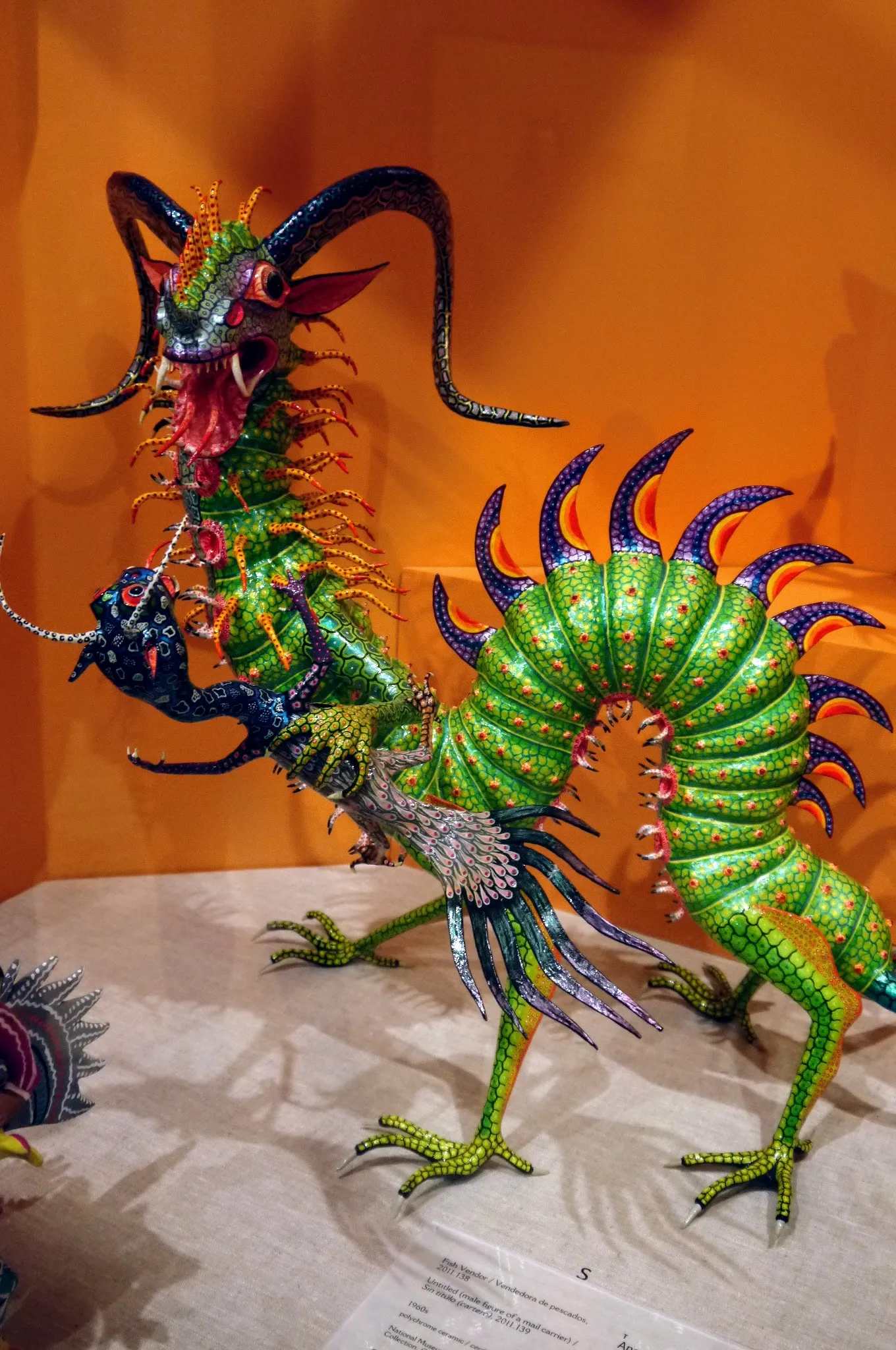
Worm dragon with ram’s horns*Pedro Linares · Alebrijes“The Worm”, photograph by Eden, Janine and Jim, via Wikimedia Commons (opens in a new tab) · LicenseCC BY 2.0 (opens in a new tab)
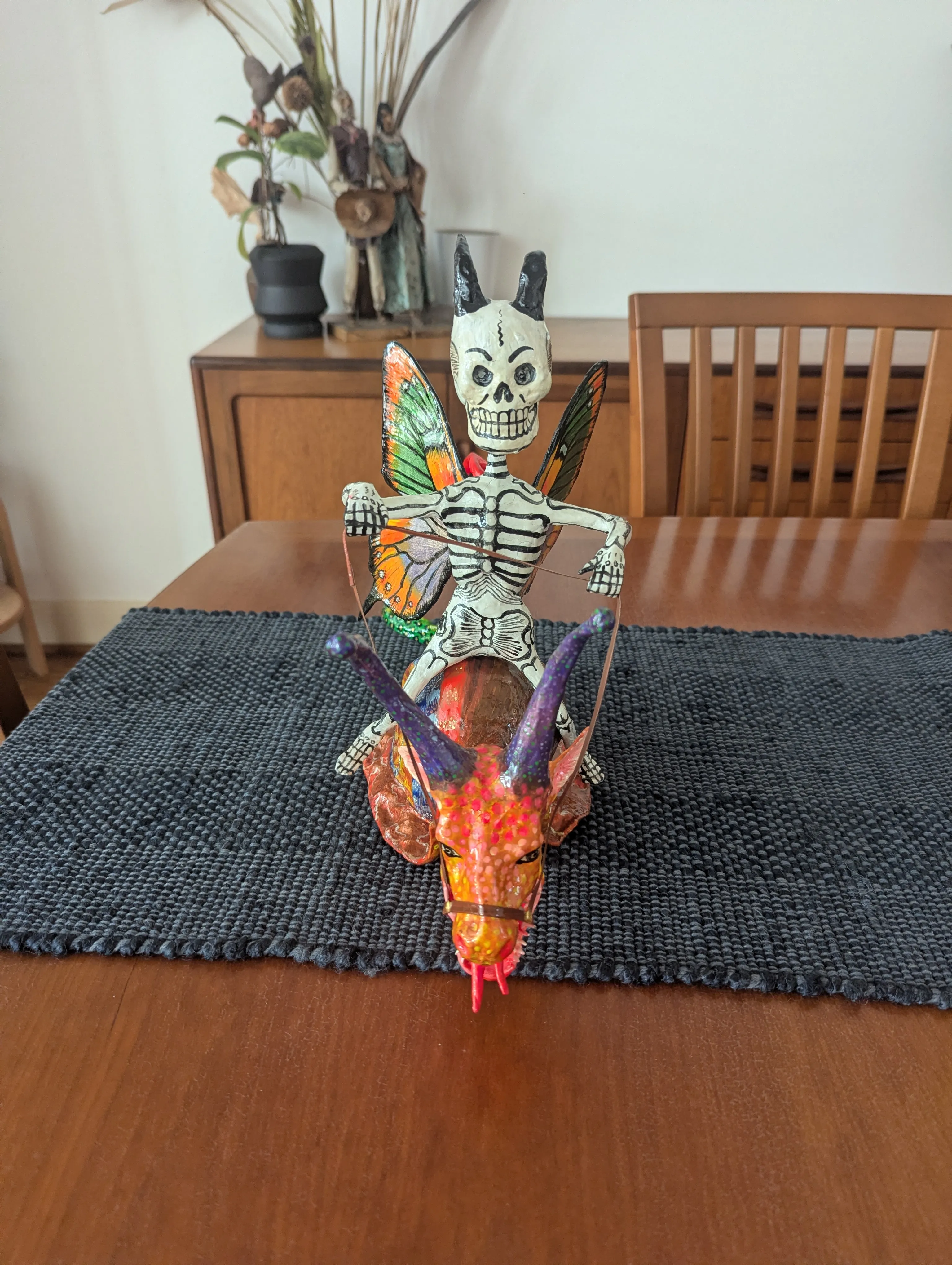
Skeleton with butterfly wings riding an alebrije*Felipe Linares Vargas · Skulls and skeletons · Alebrijes
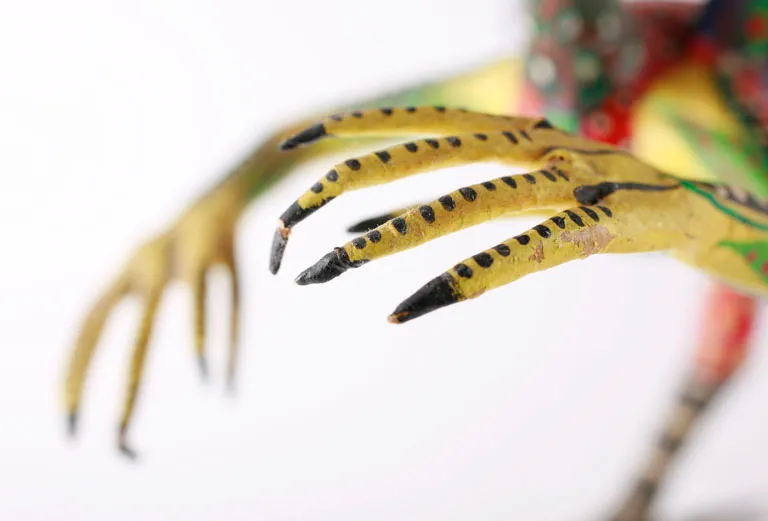
Bird alebrije, Children’s Museum of Indianapolis*Pedro Linares · Alebrijes · Works in collections“Alebrije bird sculpture – detail”, photograph by Michelle Pemberton, The Children’s Museum of Indianapolis, via Wikimedia Commons (opens in a new tab) · LicenseCC BY-SA 3.0 (opens in a new tab)
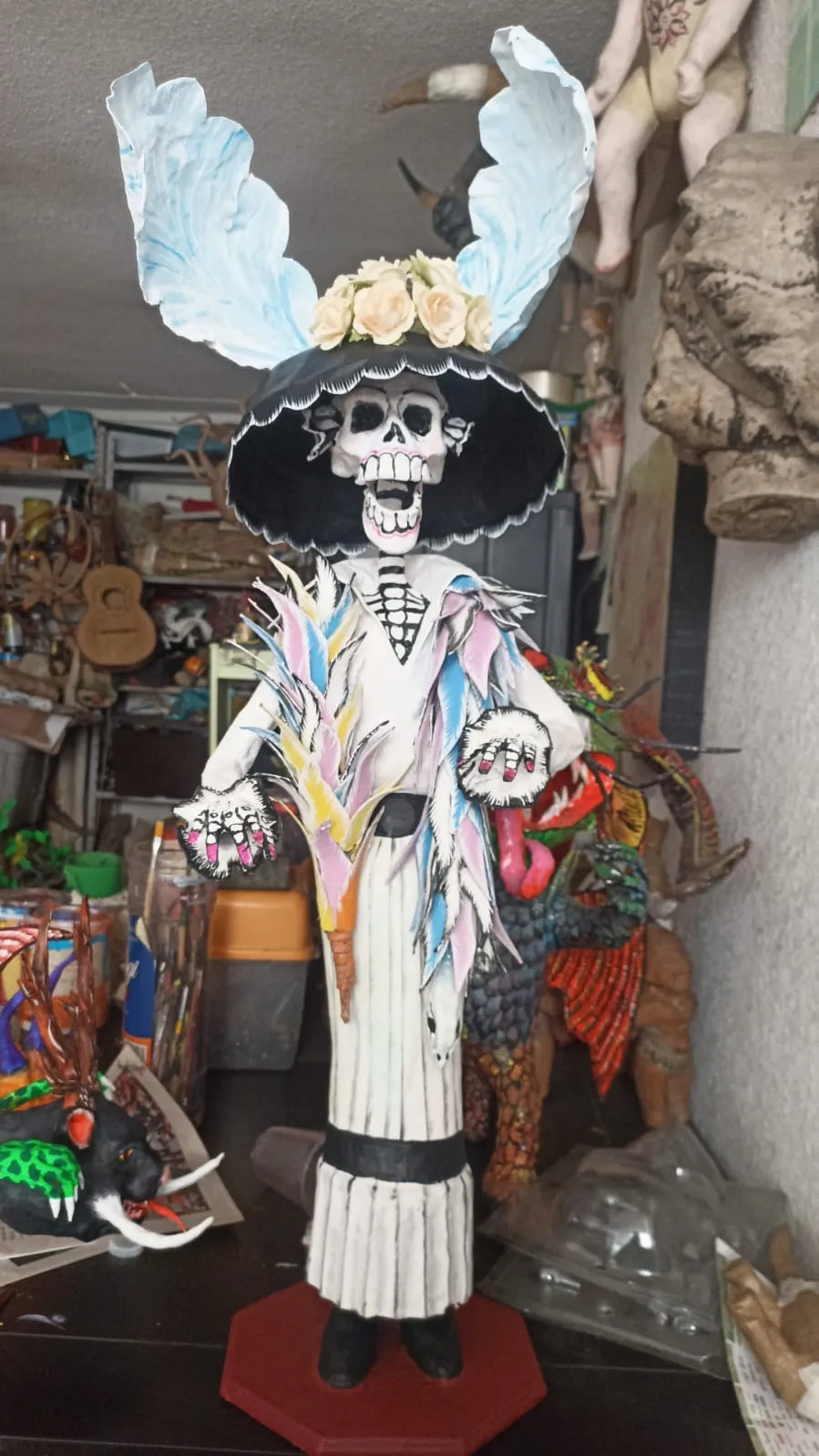
Catrina with feathered headdress*Felipe Linares Vargas · Skulls and skeletons
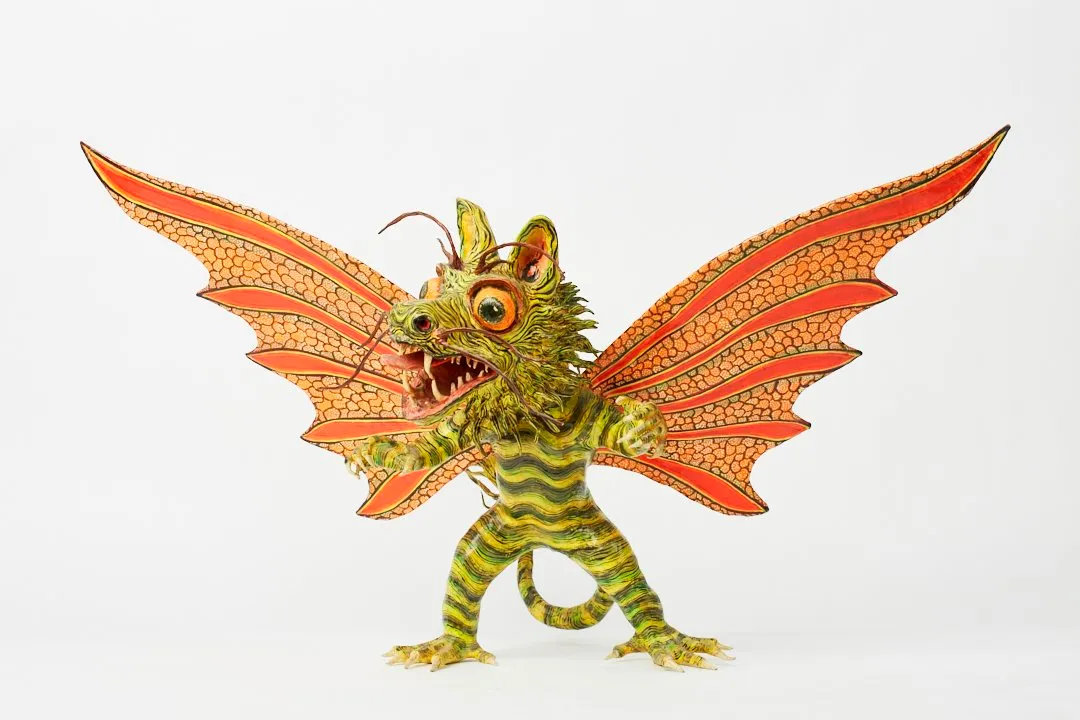
Striped alebrije with orange wings*Family workshop · maker to be identified · Alebrijes
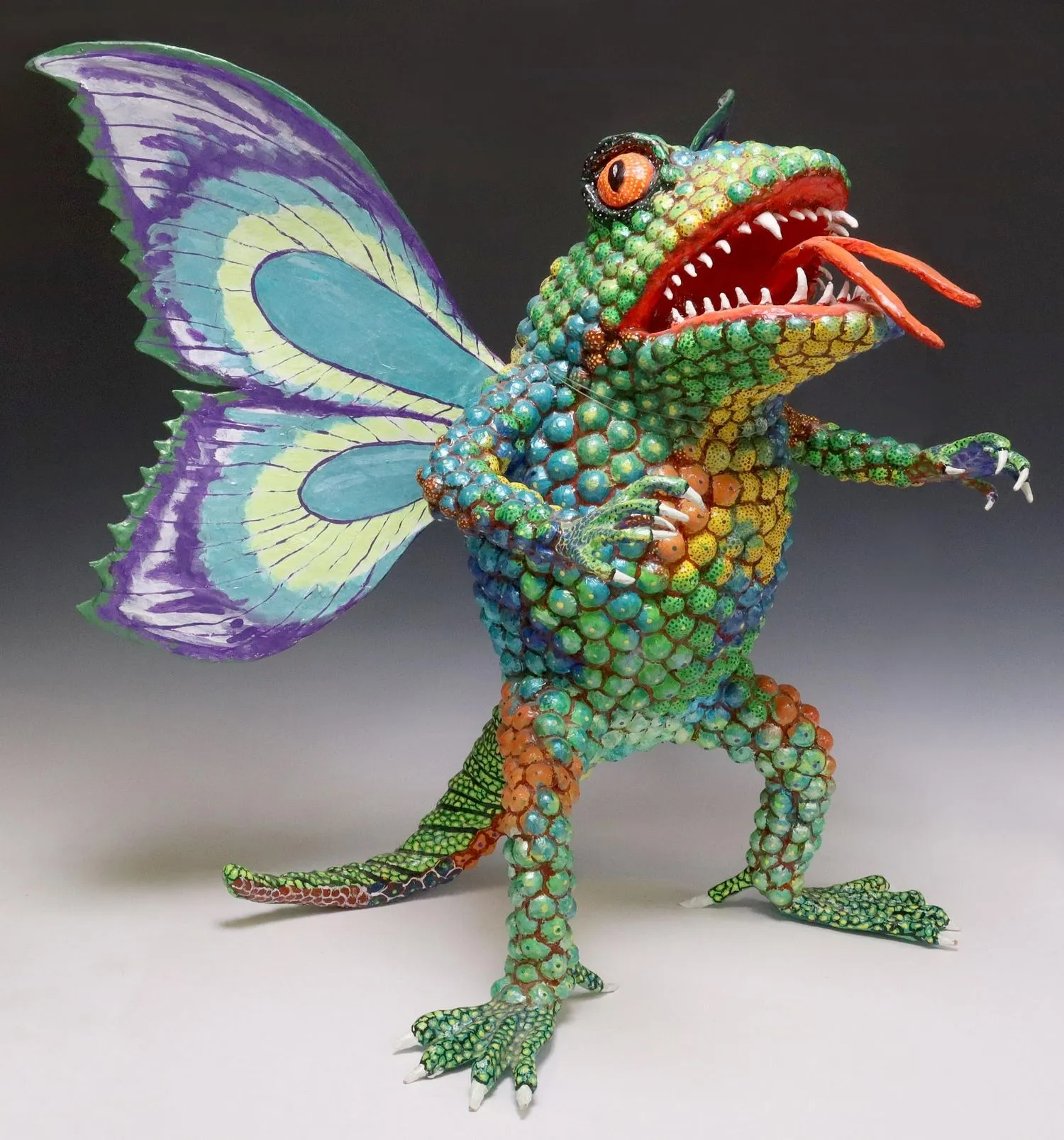
Frog alebrije with butterfly wings*Family workshop · maker to be identified · Alebrijes
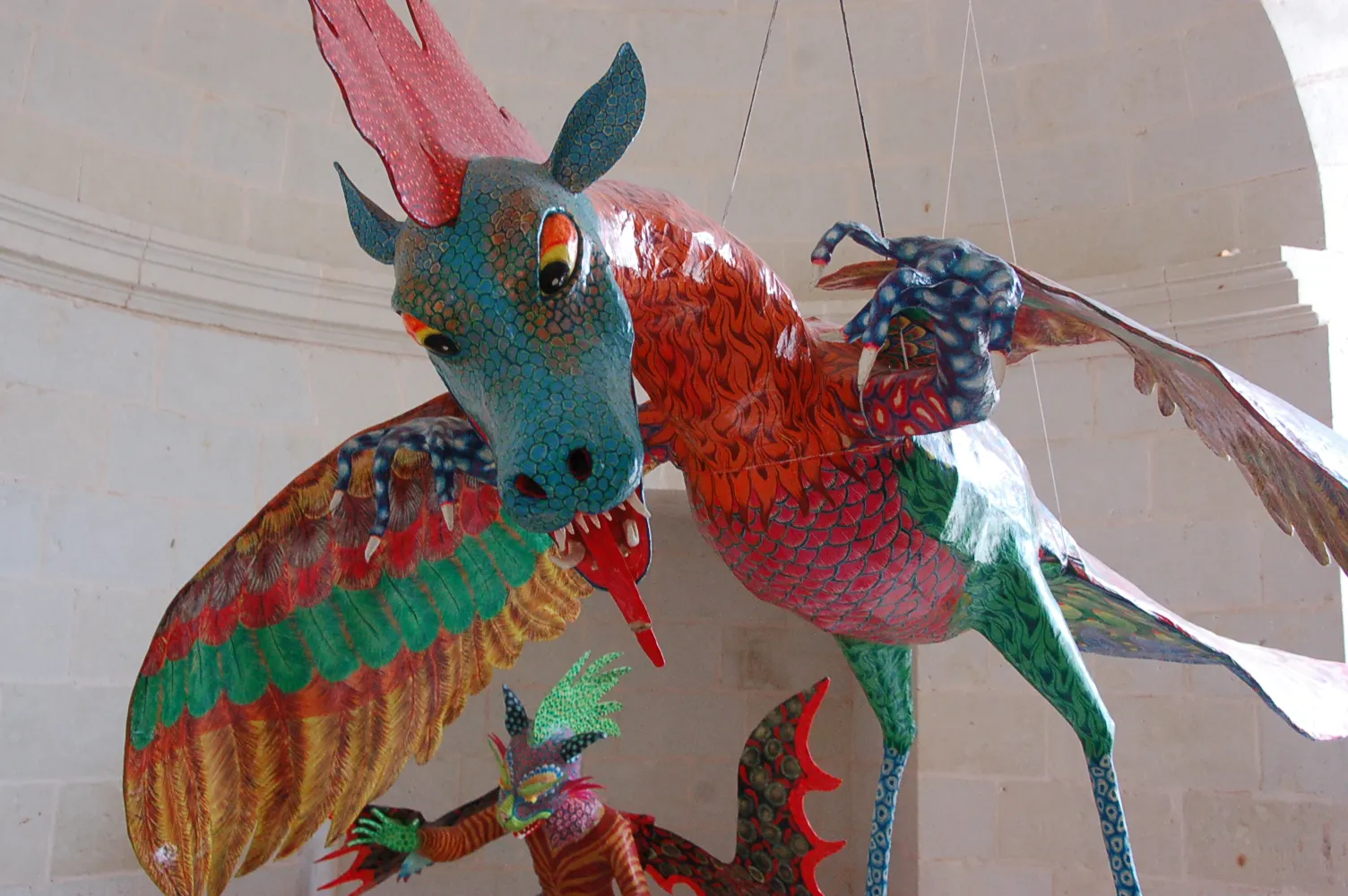
Suspended winged dragon*Felipe Linares, unclear which of the two · Alebrijes“alebrijes...felipe linares”, photograph by bob (waldopics), via Flickr (opens in a new tab) · LicenseCC BY 2.0 (opens in a new tab)
* Descriptive title, pending confirmation by the artist. Felipe Linares Mendoza’s works held by museums appear as credited links in the catalog.
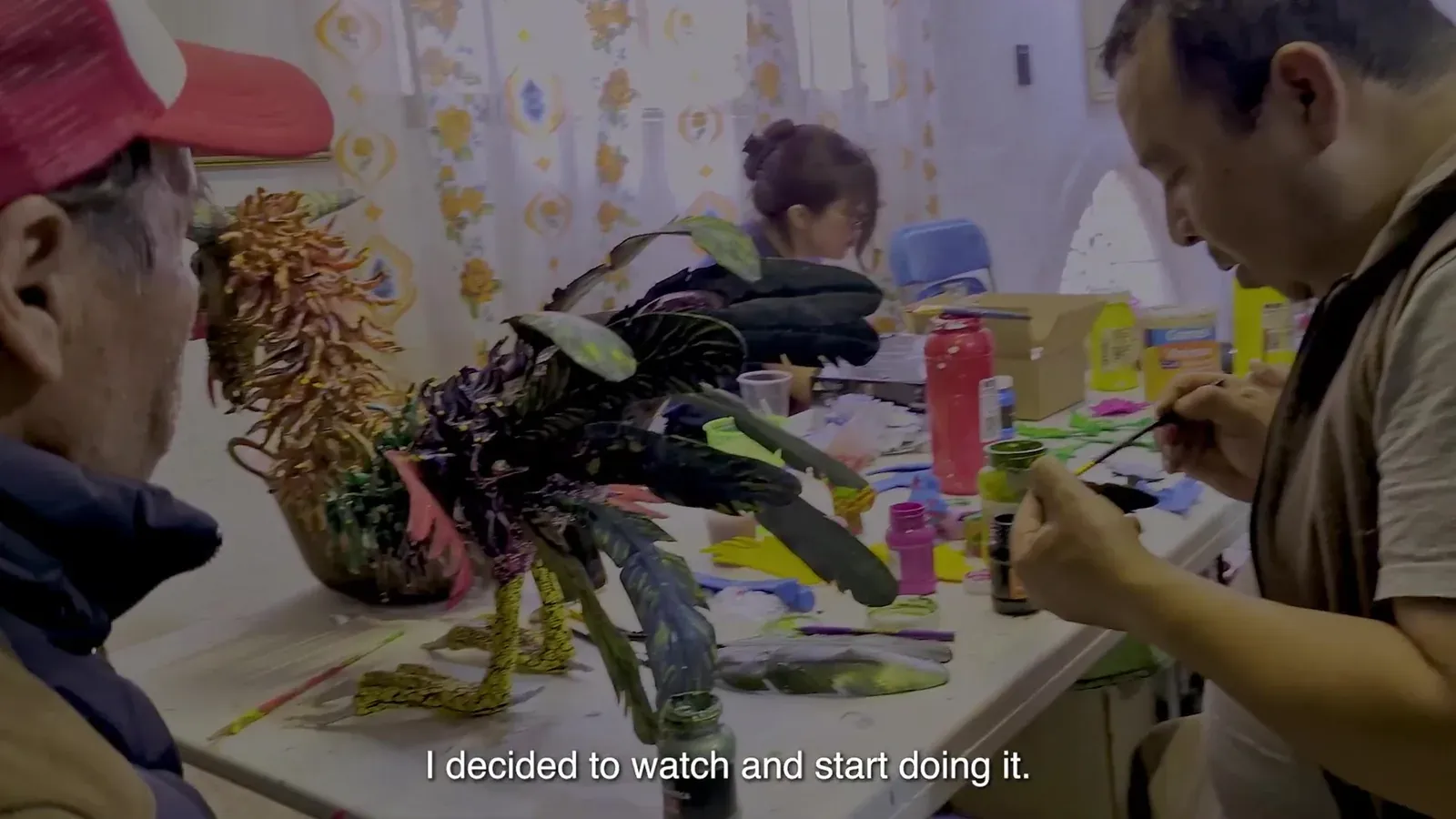
This is how a cartonería piece is built, as Felipe Linares Mendoza and his sons tell it and as the stills from the programs that have visited the workshop show it.
Newspaper, manila paper, tissue paper, kraft paper, flour-and-water paste, wire or reed for the frame, brushes and acrylic paints. It all fits on a worktable. The workshop’s rule, as Leonardo Linares Vargas explains it, is that anything that is paper is allowed and anything that is not paper is not: no polystyrene, no plastics, no fabrics, no glass eyes. The material is humble on purpose; the hands supply the extraordinary.
Each creature begins as a light frame of reed or wire that fixes the posture and supports whatever protrudes: wings, antlers, claws, tails. It is the most important decision of the piece, although no one sees it afterwards. Monumental pieces carry a tied reed armature, like the Judas figures of Holy Week.
Over the frame, layers of paper are applied with paste. There is no mold: “it is raised with paper, pure paper,” says Felipe Linares Mendoza. Each layer dries before the next, sometimes for days. With the hands and simple tools the snout, eyes and claws are refined until the surface is continuous and, in Felipe’s pieces, polished like a sculpture.
Before painting, the dry piece is covered with a coat of white that unifies the paper and leaves a clean ground for color. It is the task with which the sons began to help: Felipe Linares Vargas remembers his father asking exactly that: “help me whiten, help me decorate”.
Over the white ground, first a base color; then the large fields that distinguish each part of the body; finally, feathers, scales, frets, crests and eyes painted one by one. It is the longest stage and the one that gives each piece its character. It is also where the family recognizes the hand of Felipe Linares Mendoza: meticulous in detail, with a skill of the wrist that his son Leonardo says he has still not surpassed.
A final varnish fixes the color and gives the surface its shine; according to Leonardo, the workshop prepares its own with a formula of its own. The creature, complete, leaves the workshop with all its extensions intact: nothing is trimmed to fit in a box. A small alebrije takes fifteen to twenty days; a large one, a month or more.
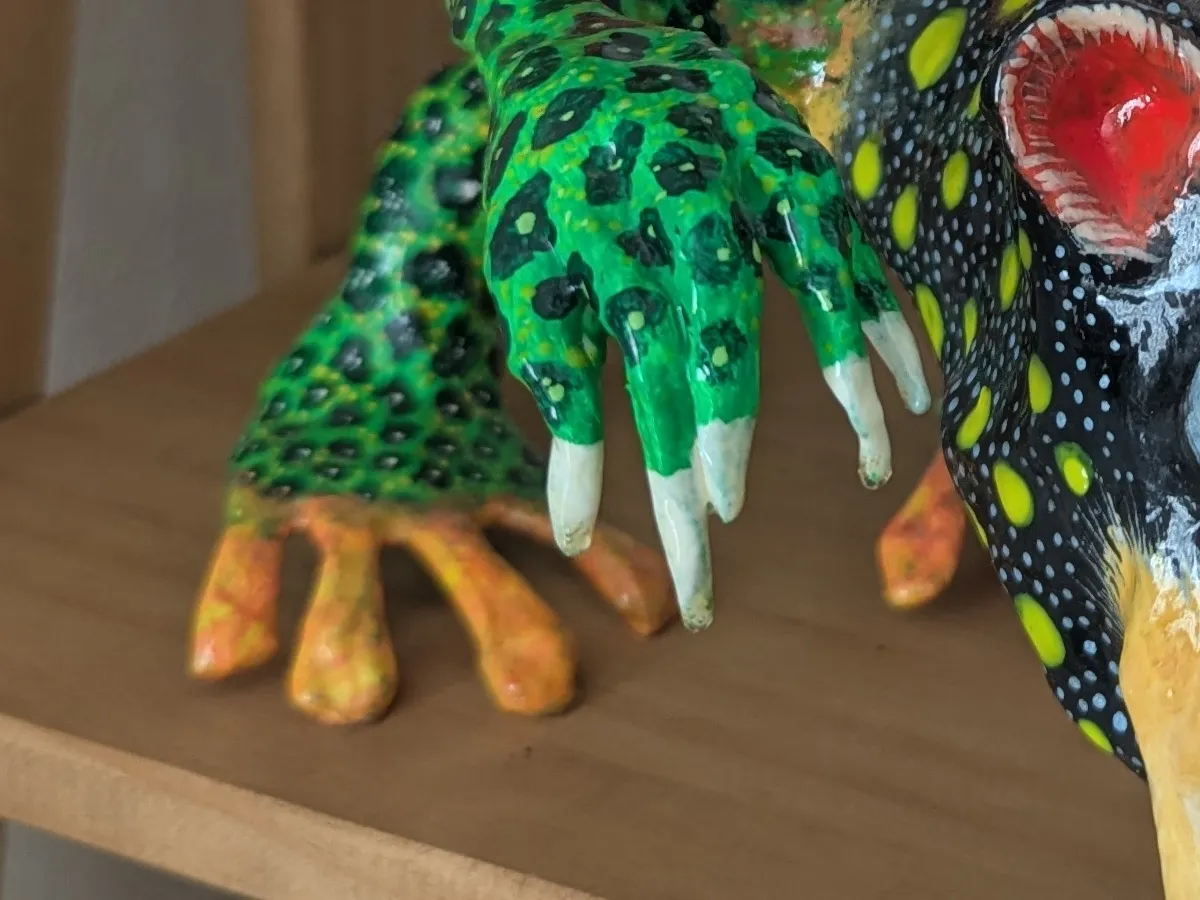
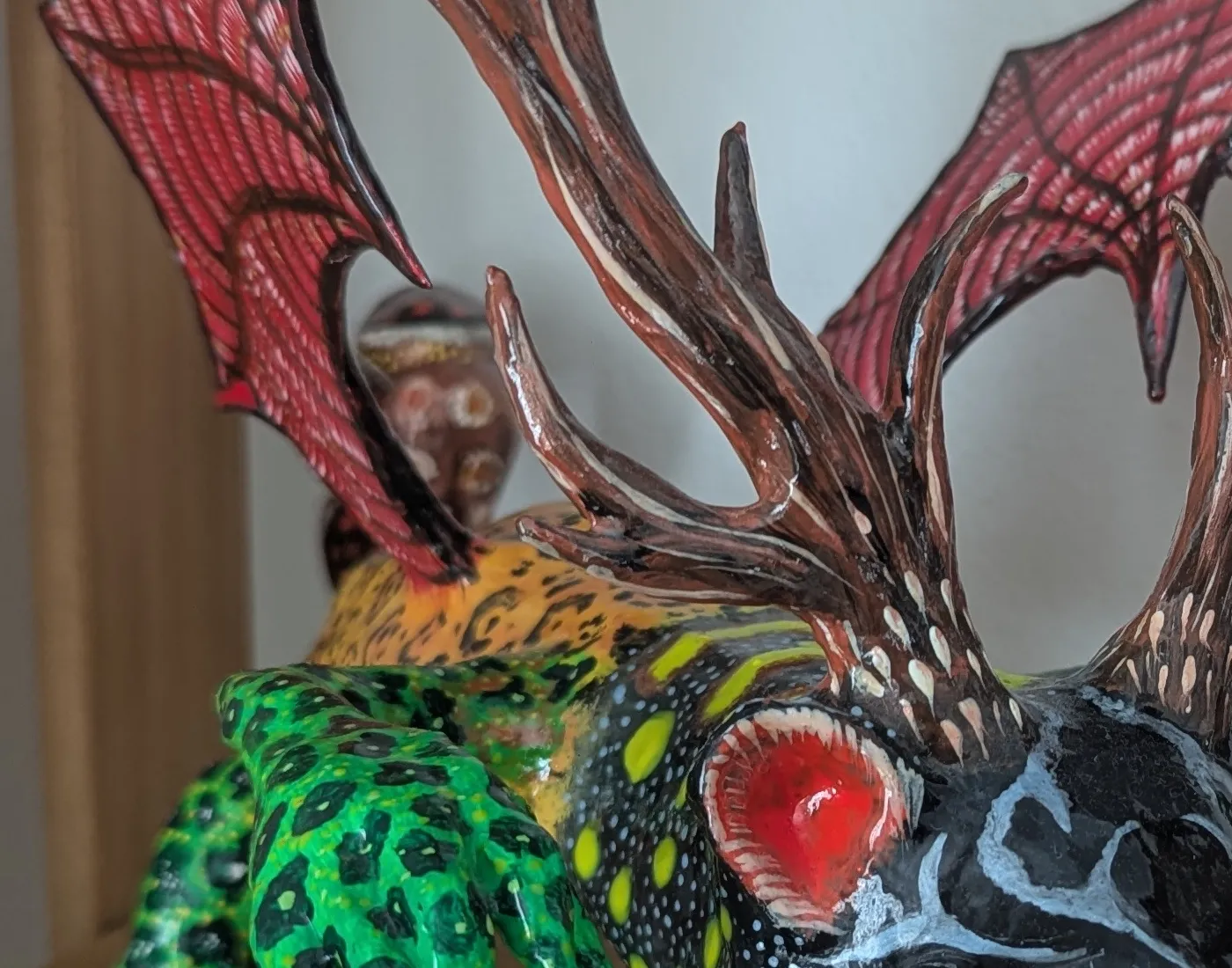
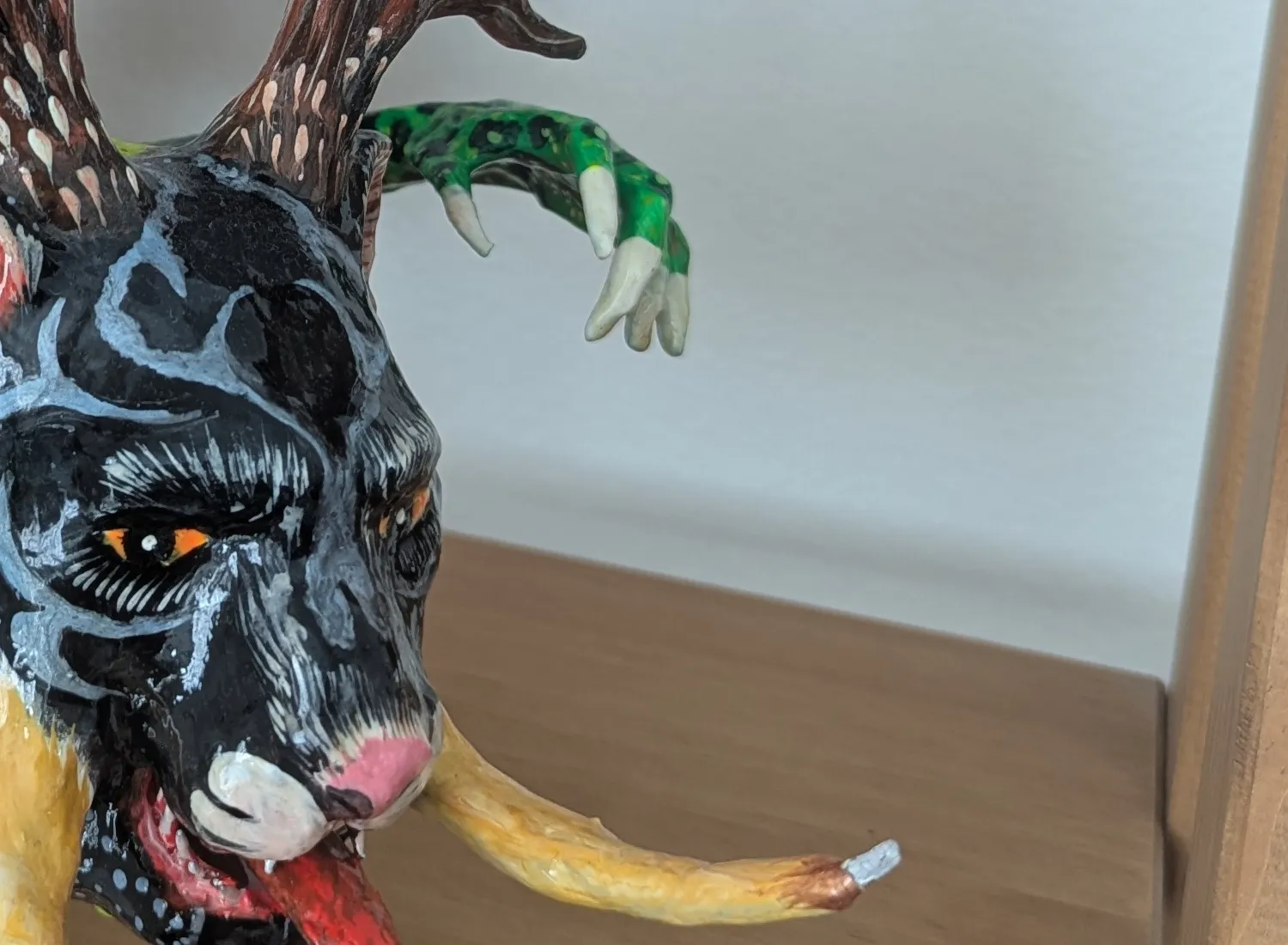
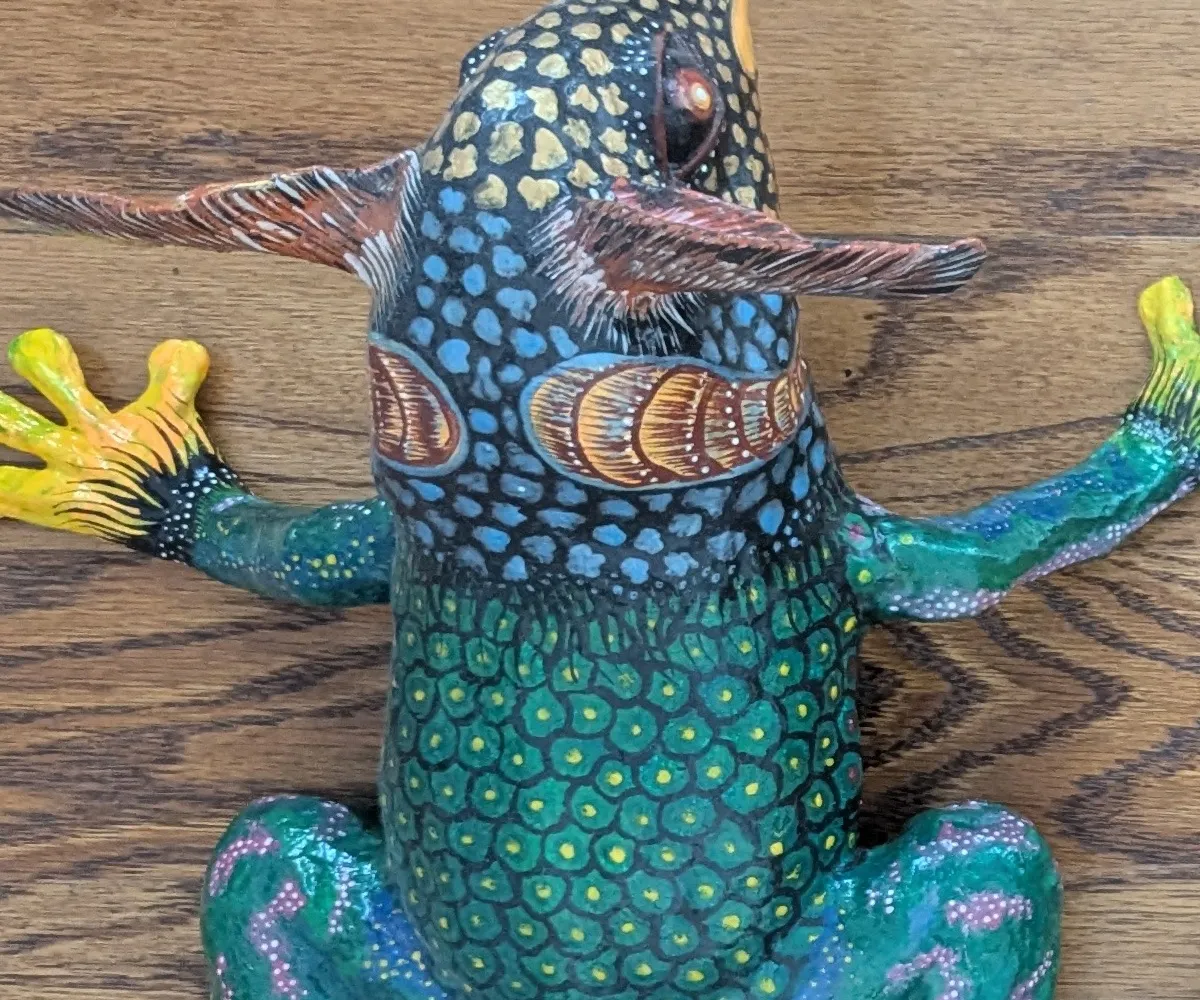
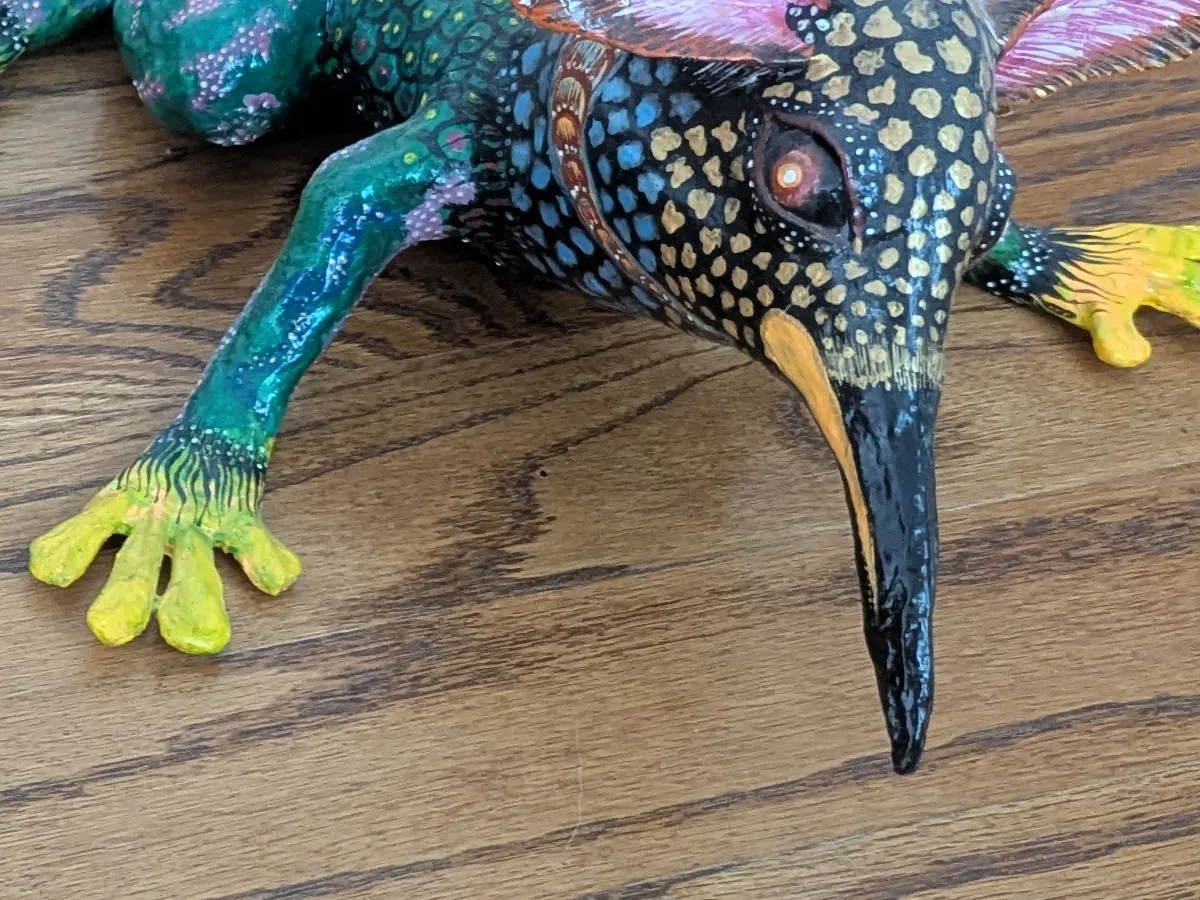
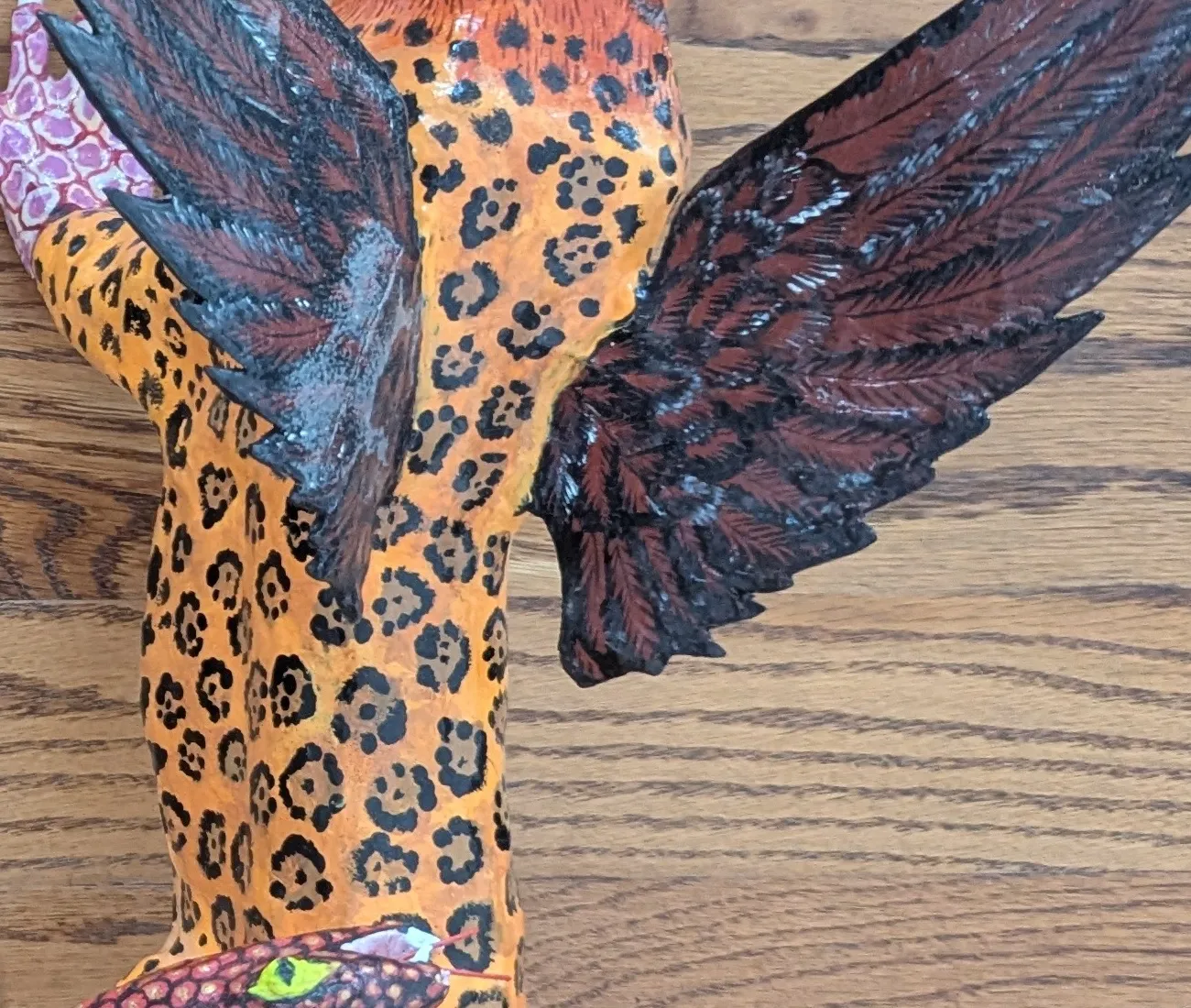
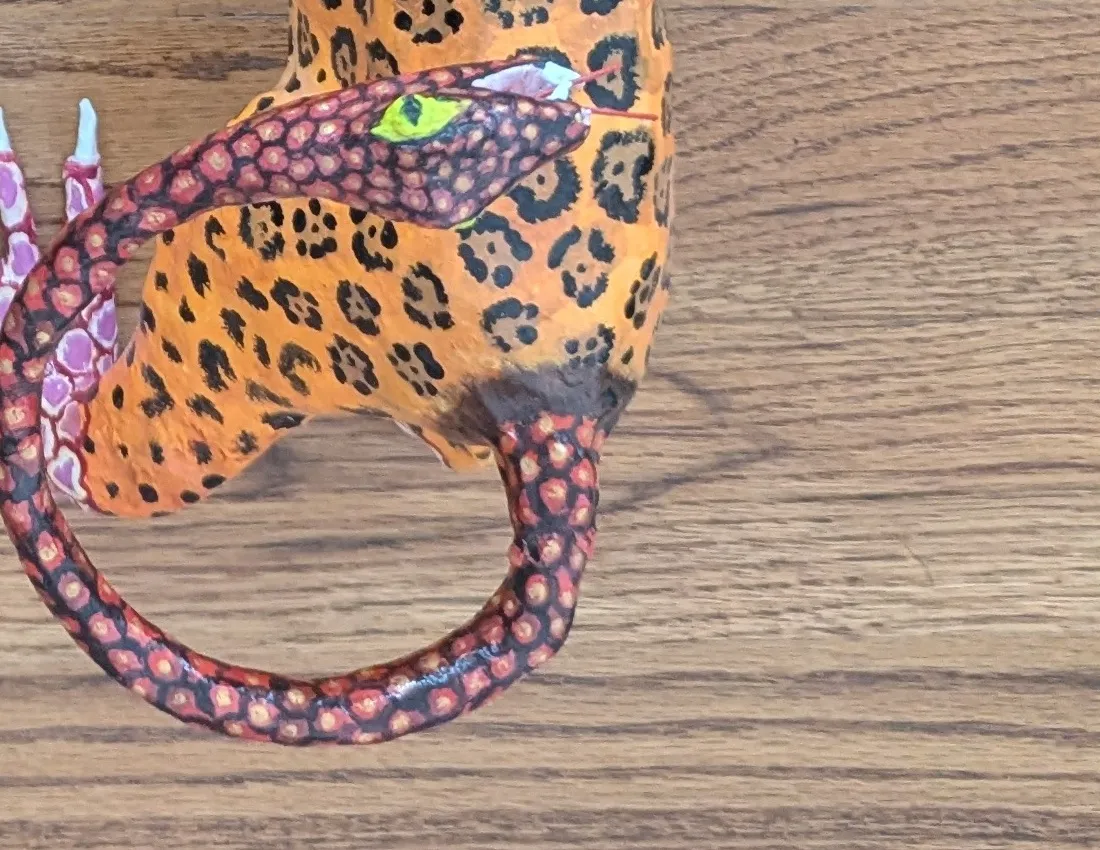
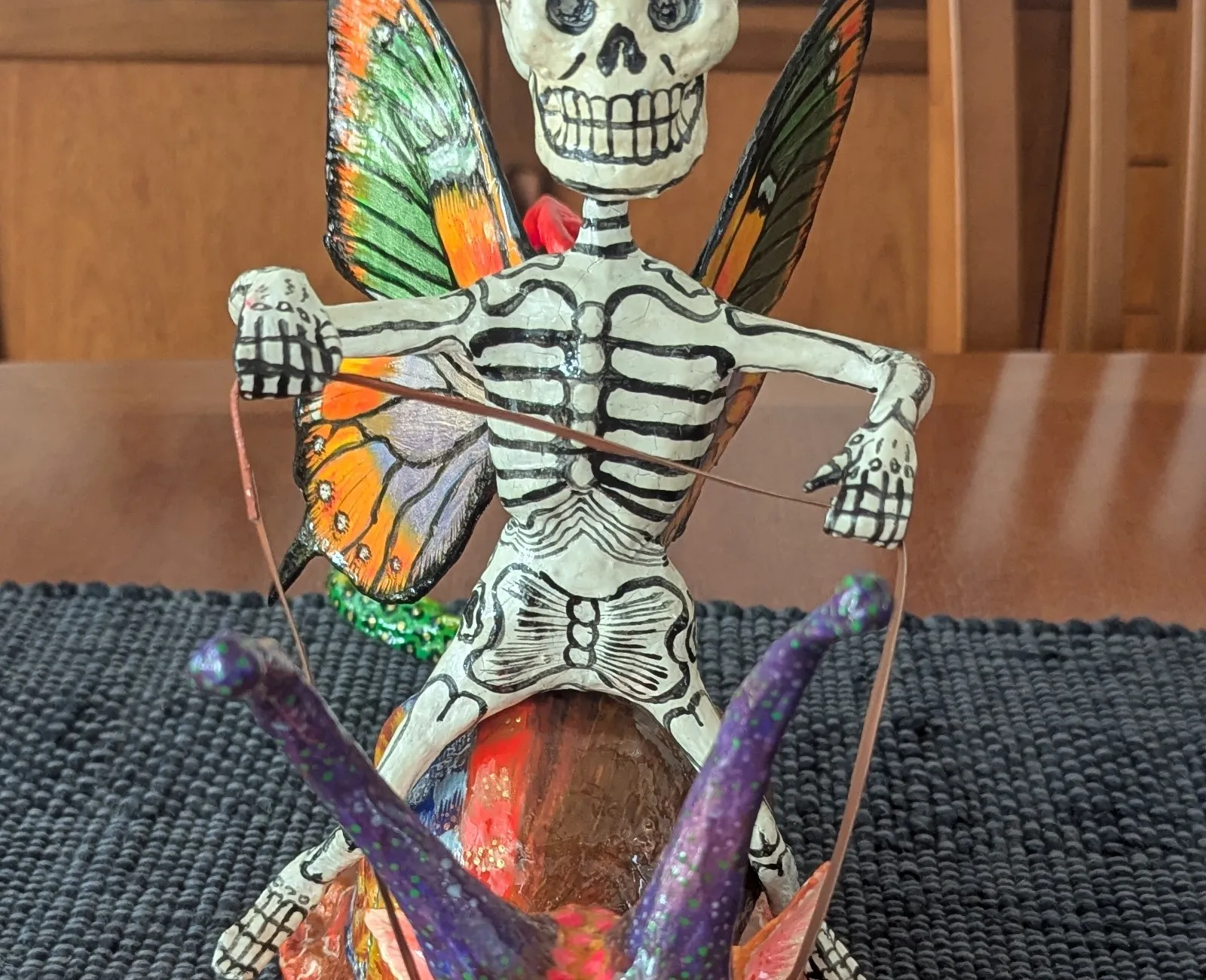
Close-ups of the painting and modeling of pieces from the family workshop.
Artisans
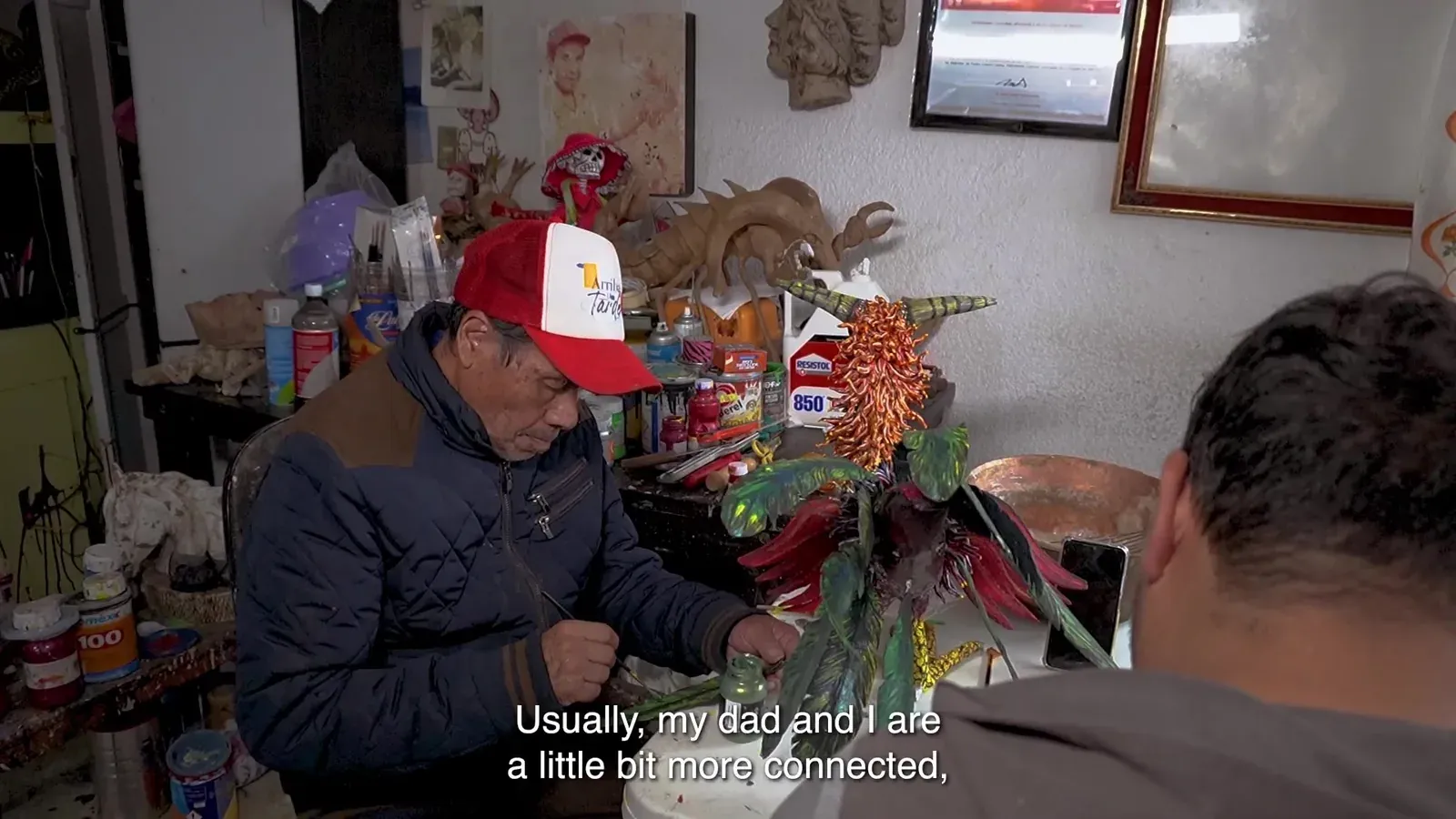
His sons learned as he did: sitting beside him. Felipe Linares Vargas remembers coming home from secondary school and his father saying “help me whiten, help me decorate”. Leonardo says he learned “fine work” from him and is still amazed by the skill with which he paints. Felipe Linares Mendoza also taught abroad: he recalls cartonería workshops in San Antonio, Texas, and demonstrations in Los Angeles, Sacramento, San Jose and Finland.
“From my father I basically learned fine work.”
Archive
A 1993 alebrije of his is in the Museo Nacional de Culturas Populares; a winged dragon, in the Brooklyn Museum; a figure, in UCLA’s Fowler Museum. In 1984 and 1985 his Posada skeletons were shown in Mexico City and New York; in 1989 he took part with his sons Leonardo and David in “Magiciens de la Terre” at the Centre Pompidou. Fomento Cultural Banamex counts him among the Grandes Maestros del Arte Popular.
Museo Nacional de Culturas Populares
Record MX-SC-MNCP-001501_A under Felipe Linares Mendoza: kraft paper, paste, wire and vinyl paints; “a feline face and wings”.
View the object recordSee on the museum siteBrooklyn Museum · New York
Papier-mâché and pigment alebrije, 62.9 × 68.6 × 39.4 cm, signed “Felipe Linares”; bequest of Richard J. Kempe (2003.29).
View the object recordSee on the museum siteCentre Pompidou · Paris, 1989
Felipe Linares and his sons Leonardo and David, in Jean-Hubert Martin’s exhibition bringing together artists from around the world.
View the recordLegacy
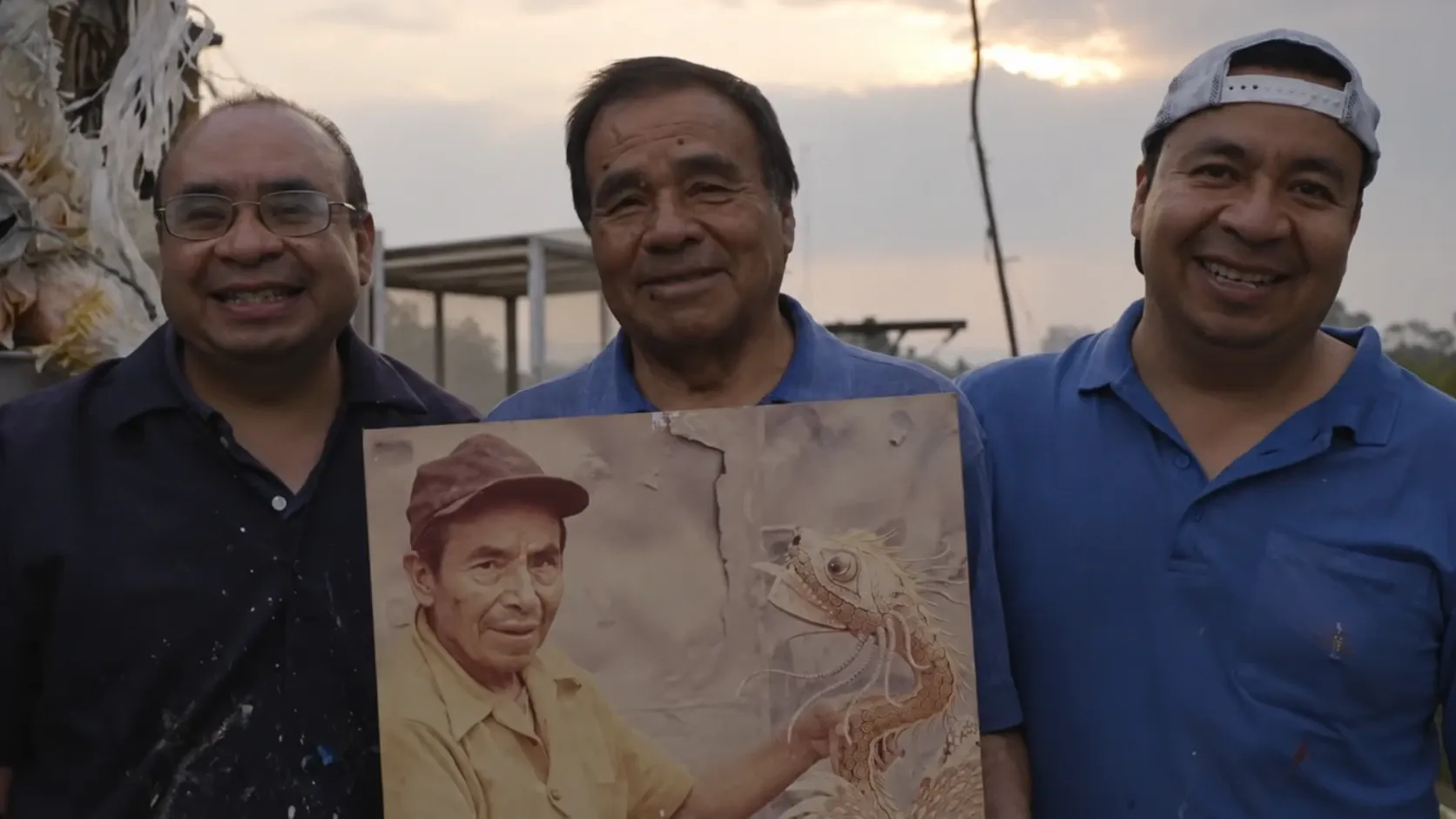
The Linares family’s work has reached museums in Mexico, the United States and Europe, but every piece is born in Mexico City, in workshops that are also homes. From don Pedro to his sons Enrique, Felipe and Miguel; from Felipe to Leonardo, Felipe and David; and now to one more generation.
“Here the only thing forbidden was to forbid.”
The workshop
The family is still in Merced Balbuena, each in their own workshop. In 2026 a traveling exhibition of the Museum of International Folk Art is touring the American Southwest with works by three generations, and Leonardo Linares Vargas received the Artisanal Career Award. If a work interests you or you want to write to the family, there is a worktable and someone who replies.
Press and publications