Artisan cartonero · Mexico City
Leonardo Linares Vargas
Son of Felipe Linares Mendoza and grandson of Pedro Linares López. The family’s public voice, a cartonería teacher in museums in Mexico and the United States, and recipient of the 2026 Artisanal Career Award.
Cartonero · son of Felipe Linares Mendoza · grandson of Pedro Linares López · Born around 1968: in 2026 he gives his age as 58. To be confirmed.
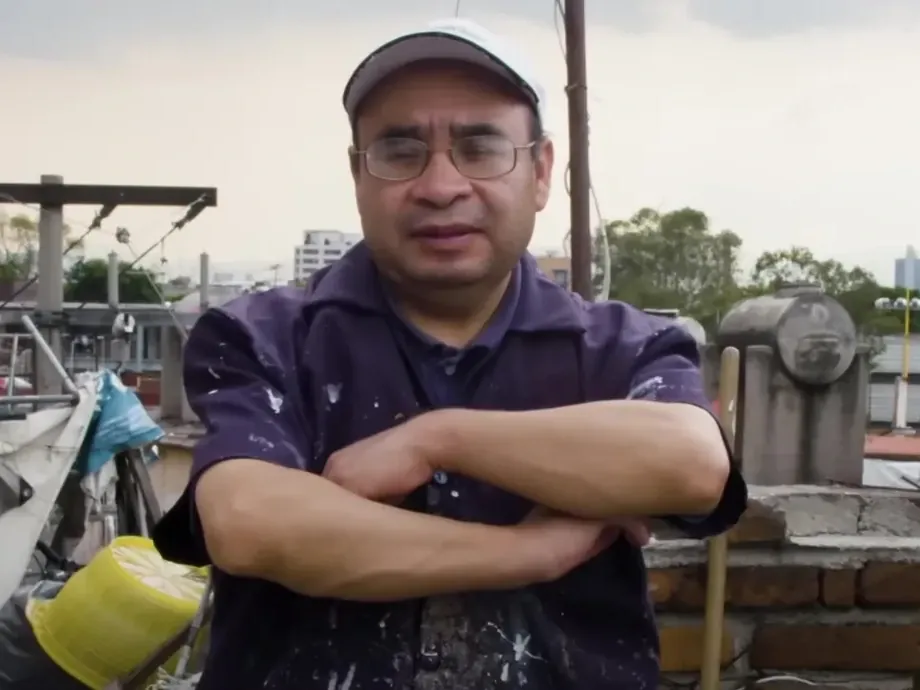
Learning by playing
Leonardo Linares Vargas was born around 1968 in Mexico City, into the family the city already identified with paper and cardboard. He learned, he says, by playing: watching his father and grandfather make figures and imitating them with paste and newspaper.
“Here the only thing forbidden was to forbid, and that is how you teach yourself, how you take shape little by little.”
Leonardo Linares Vargas, video testimony (family archive; translated)
From his father, Felipe Linares Mendoza, he acknowledges having learned “fine work”, and he is still amazed by the skill with which he paints. According to the “En Calavera” catalogue, in 1986, at eighteen, he received a national youth award for folk art and already saw teaching cartonería as his responsibility.
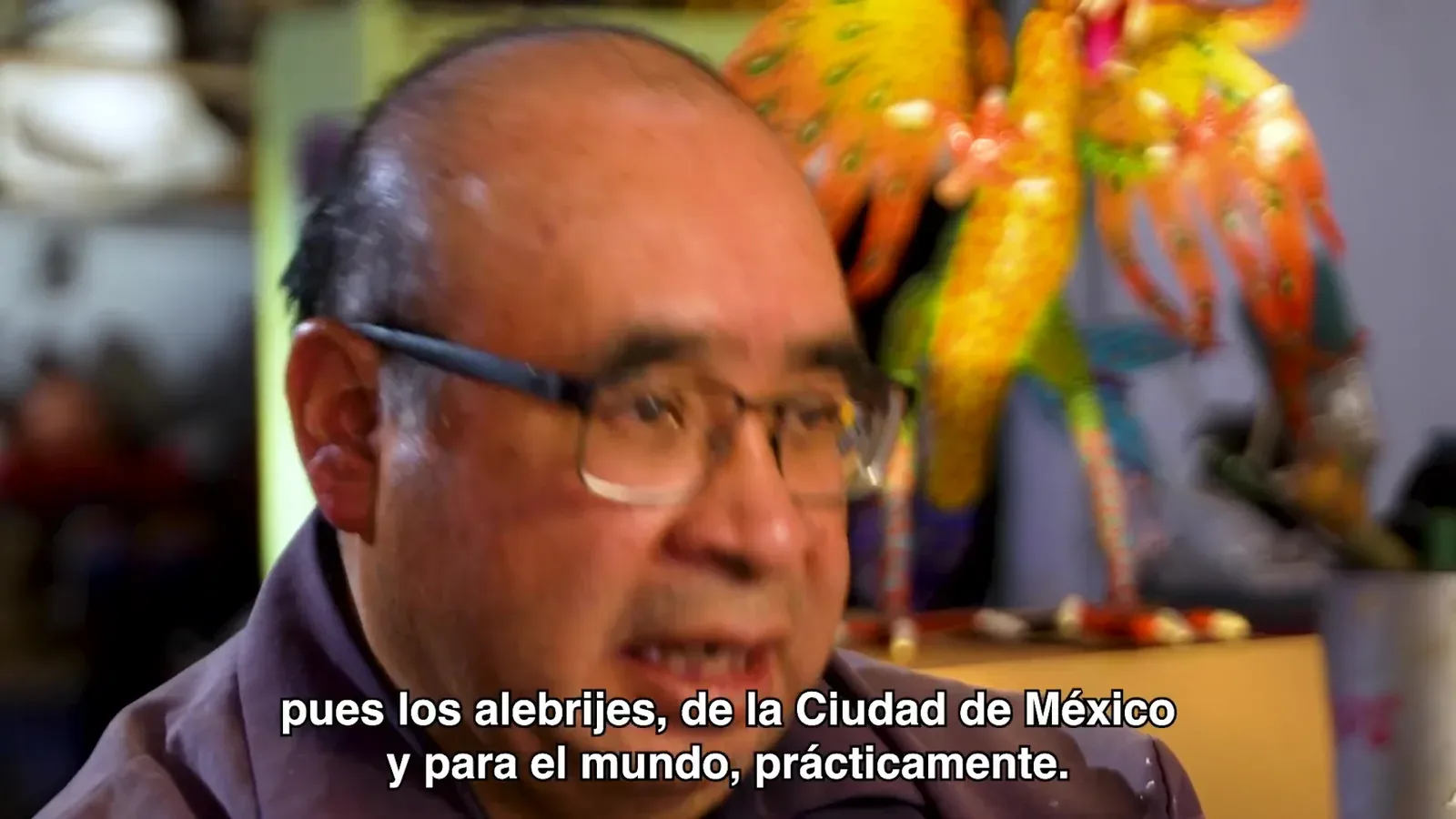
With his father in Paris
In 1989 he took part, with his father and his brother David, in “Magiciens de la Terre”, Jean-Hubert Martin’s exhibition at the Centre Pompidou. The same year he spoke of alebrijes as personal expression on “El mundo de papel de la familia Linares”, a Radio Educación program. The Museo Nacional de Culturas Populares holds his “Niño con calaverita” (1992), made with brown paper, kraft paper, cardboard rolls, paste and acrylic. Fomento Cultural Banamex counts him, with his father, among the Grandes Maestros del Arte Popular.
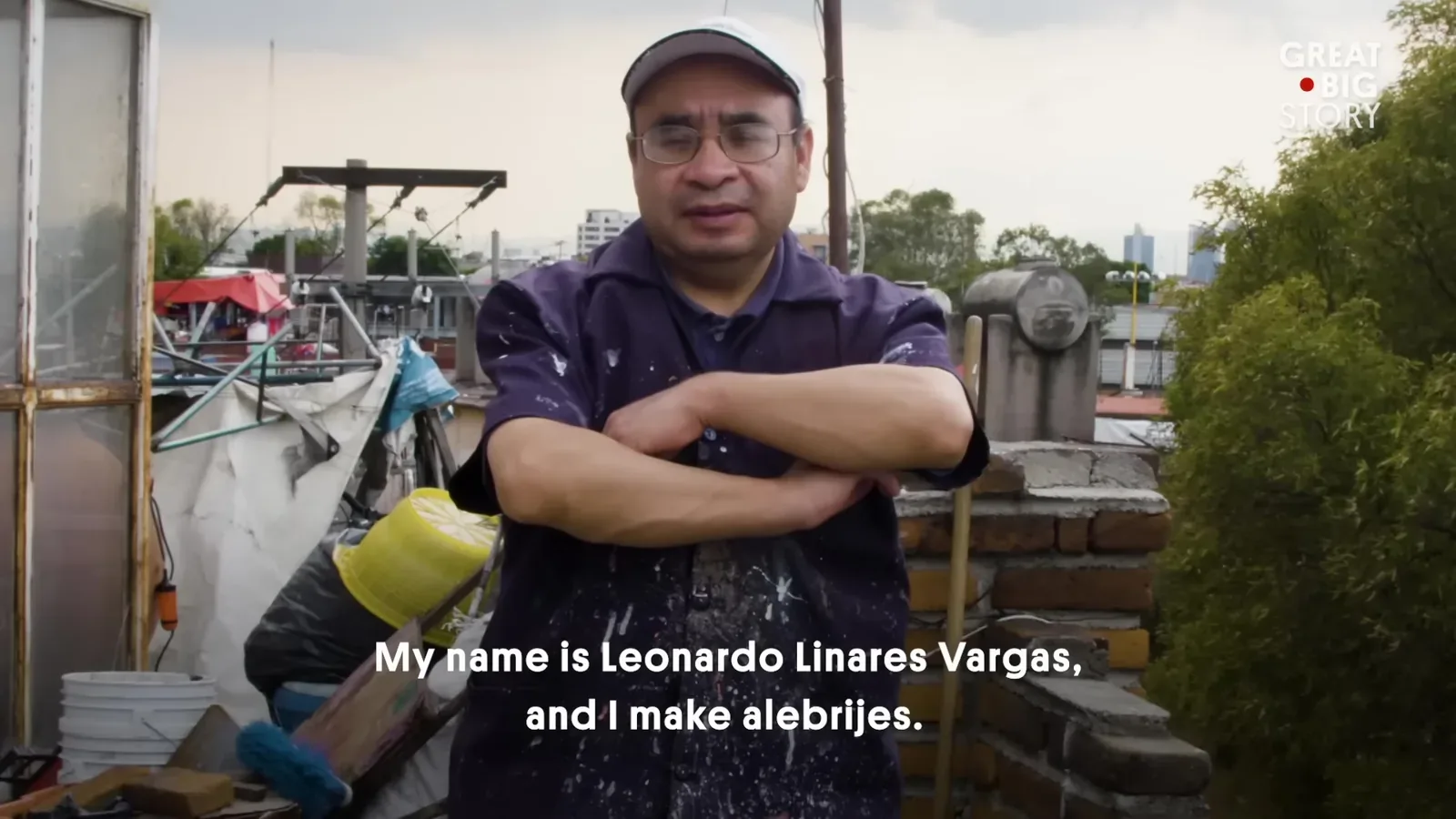
Paper only
Leonardo has explained his workshop’s rule on materials clearly: anything that is paper is allowed; anything that is not paper is not.
“You have to make everything completely, at least in our workshop, within the paper-and-cardboard technique, with newspaper, manila paper, tissue paper, kraft paper, minagris paper, all the materials that are paper.”
Leonardo Linares Vargas, interview with Capital 21 (2023; translated)
No polystyrene, no plastics, no fabrics, no glass eyes. The paints are acrylic; the varnish, he says, the workshop prepares itself with a formula it has had for years. The result he seeks he describes in three words: more movement, more looseness, more dynamism.
The family’s public voice
In October 2019, at the start of the monumental alebrije parade, he announced the declaration of alebrijes as cultural heritage of Mexico City. He has been interviewed by Siempre! (2020), Capital 21 (2023) and La Jornada (2026), and he is the one who explains to the press how the family is organized into independent workshops. In 2014 he was on the artist list of “Sinful Saints and Saintly Sinners” at UCLA’s Fowler Museum; in 2023 he painted alebrijes in public and spoke with curator Marta Turok at the Museum of International Folk Art in Santa Fe, where his pieces were part of “La Cartonería Mexicana”.
Between 2025 and 2026, monumental fiberglass reproductions based on two of his alebrijes, “Lionbull” and “Catbird”, toured public spaces in the United States. In 2026 his cat alebrije is part of “Alebrijes: A Linares Family Tradition”, the Museum of International Folk Art’s traveling exhibition, and on October 15, 2026 he received the Artisanal Career Award at the Gran Premio Nacional de Arte Popular ceremony.
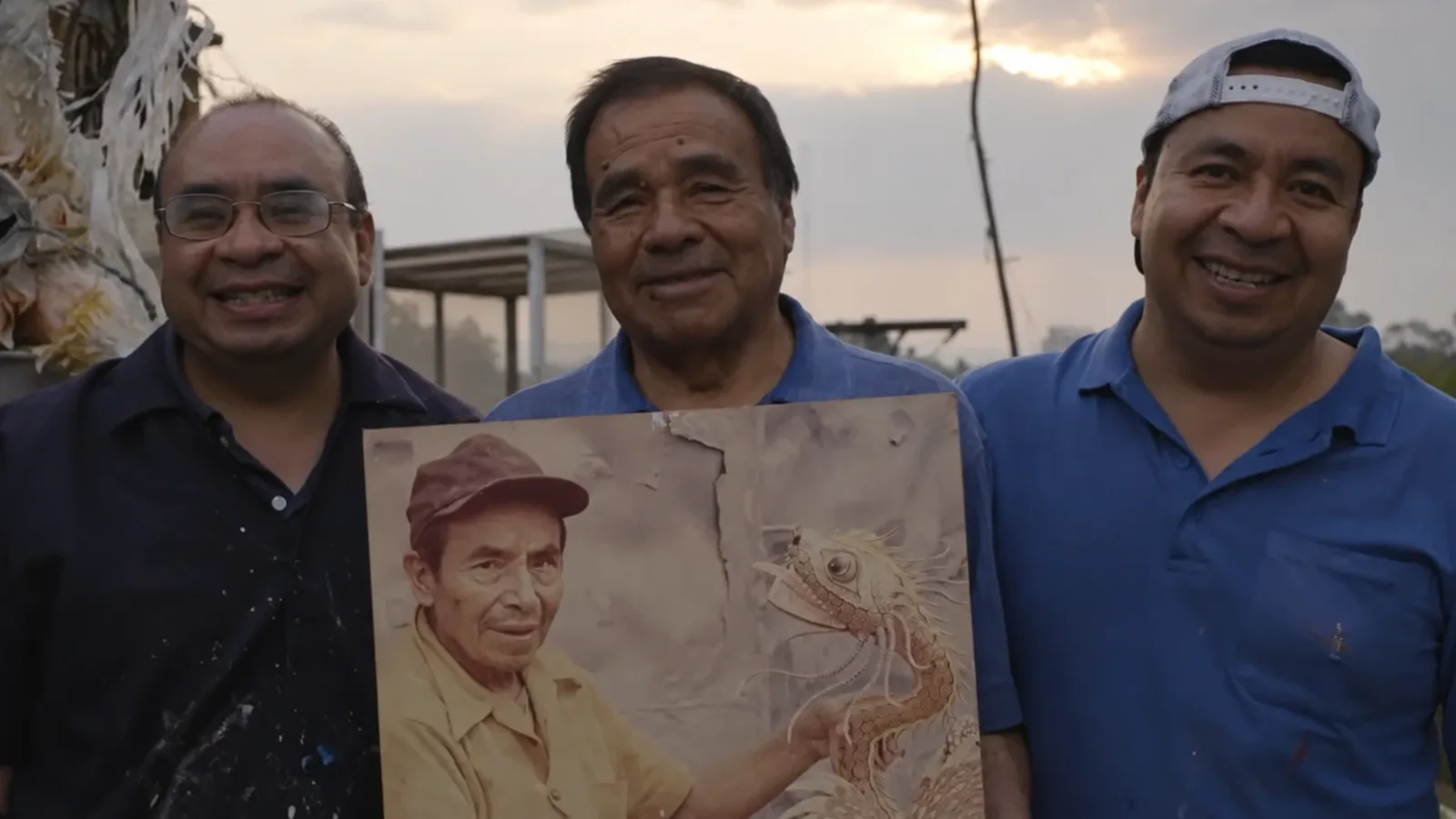
What he remembers of his grandfather
Leonardo is also the family’s public memory. He is the source of the recollections of a Mexican art exhibition in Paris in 1952 that may have included his grandfather’s alebrijes, of the Judas figures and athletes of 1968, and of Pedro Linares’s meeting with the Oaxacan carver Manuel Jiménez in 1978. This site records them as testimony and notes which ones also have documentary support.
- FatherFelipe Linares Mendoza
- GrandfatherPedro Linares López (1906–1992)
- Cartonero brothersFelipe Linares Vargas · David Linares Vargas
- WorkshopMerced Balbuena, Mexico City
Sources
- Niño con calaverita (1992) — Leonardo Linares Vargas, record MX-SC-MNCP-001943, Museo Nacional de Culturas Populares
- Magiciens de la Terre (1989), list of artists, Centre Pompidou, Catalogue des expositions
- Sinful Saints and Saintly Sinners at the Margins of the Americas, Fowler Museum at UCLA (2014)
- Of Corpse: Death and Humor in Folklore and Popular Culture (note 15 of Kristin Congdon’s chapter), Utah State University Press / Library of Congress (2003)
- Reconocen el arte popular; gana creadora guerrerense, Zócalo / Agencia Reforma (2026-10-16)
- Magia en papel y cartón, Siempre! (2020-03-14)
- Leonardo Linares, heredero de la tradición cartonera para la quema de los judas, La Jornada (2026-04-04)
- Alebrijes, patrimonio cultural de la CDMX; en exhibición hasta el 17 de noviembre, Excélsior (2019-10-20)
- Video testimonies of Leonardo Linares Vargas (Capital 21 and family interviews; family archive), Family archive (2026)
Leonardo Linares Vargas
In their own words
Literal quotes from video testimonies and the cited press, each with its source; translated here.
“My name is Leonardo Linares Vargas, I am from Mexico City and my work is to be an artisan in the paper-and-cardboard technique, now called cartonería.”
Leonardo Linares Vargas · Video testimony (family archive) · translated
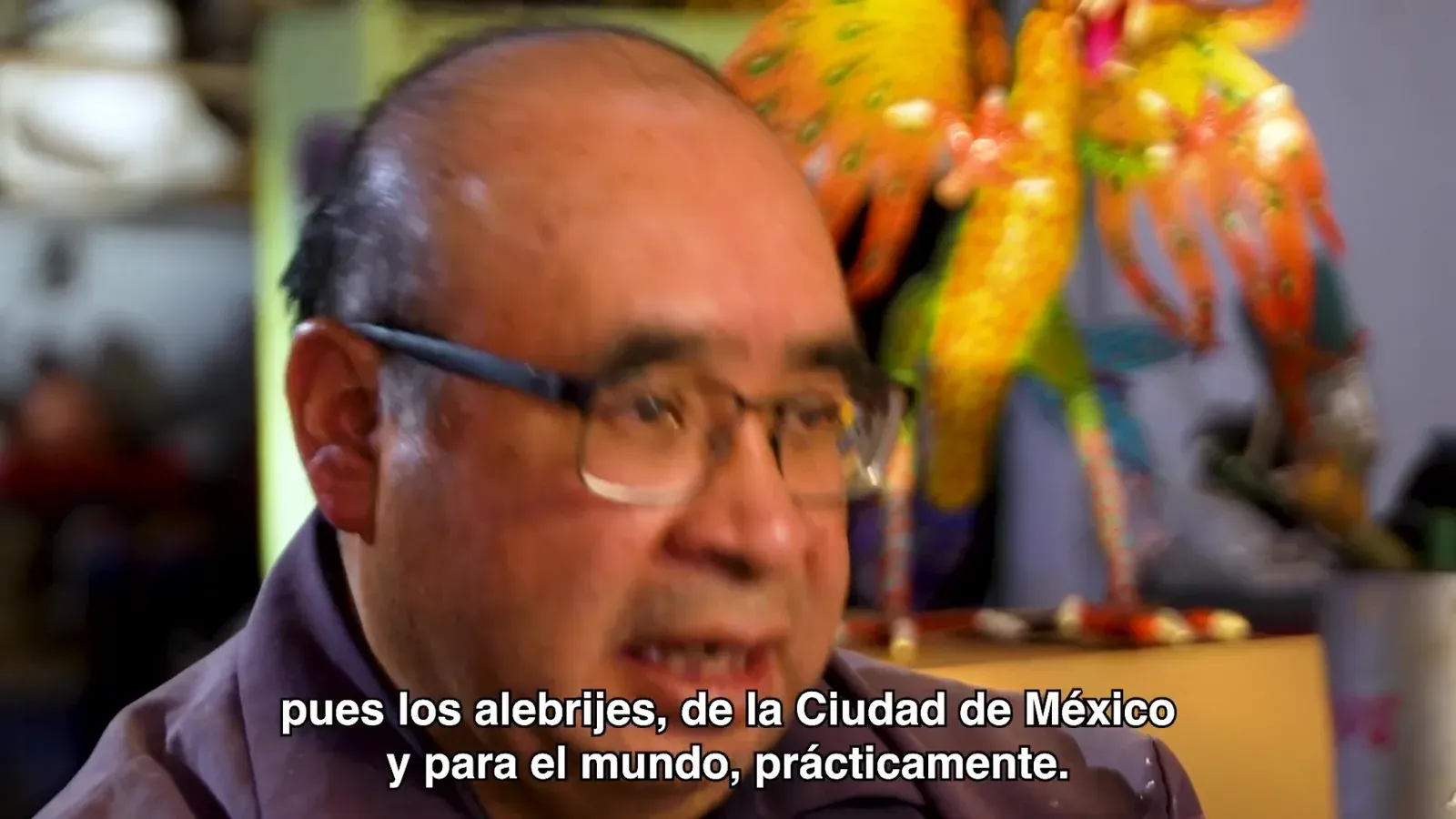
“Here the only thing forbidden was to forbid, and that is how you teach yourself, how you take shape little by little.”
Leonardo Linares Vargas · Video testimony (family archive) · translated
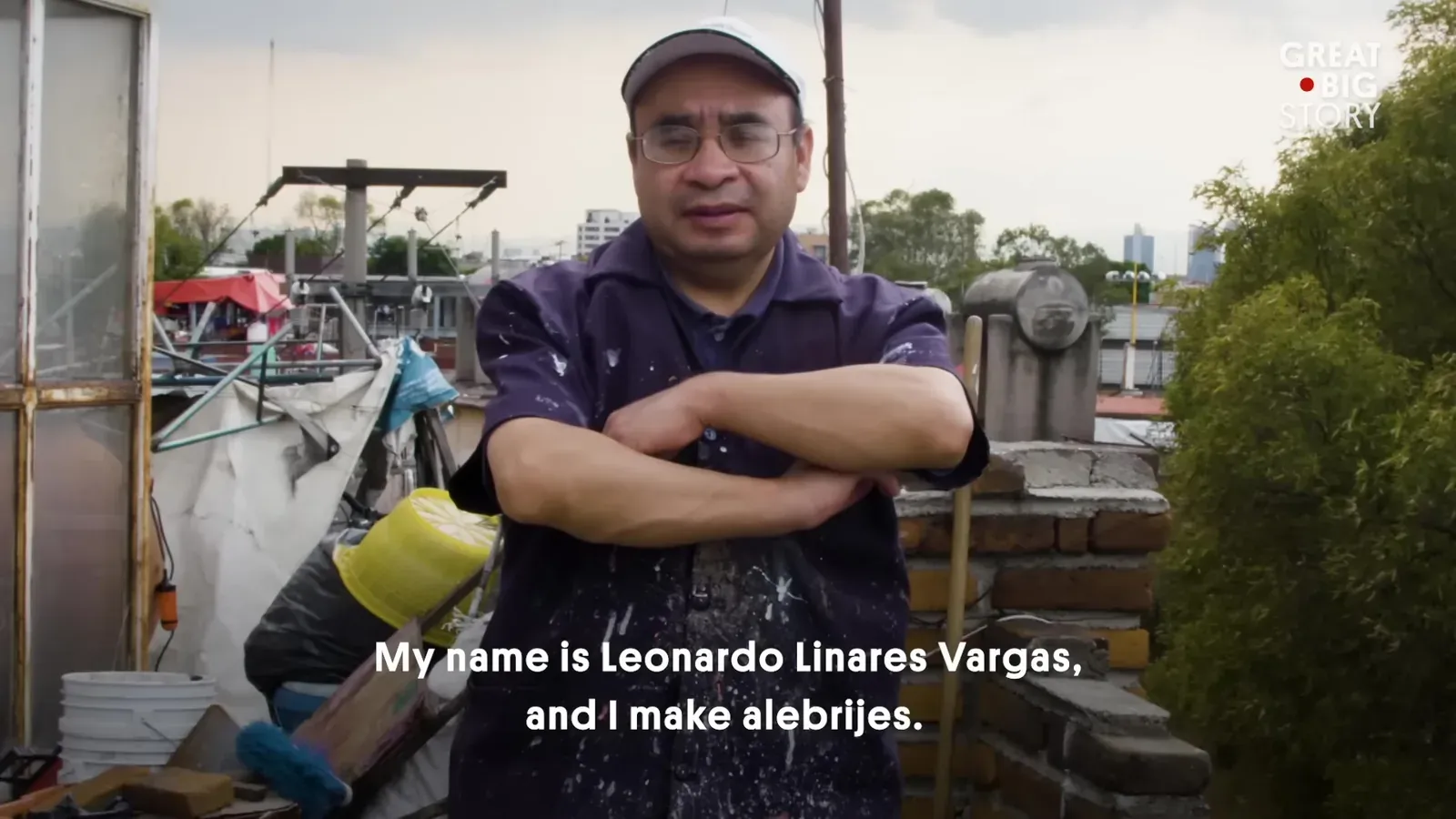
“From my father I basically learned fine work. I am still amazed by the skill he has in the wrist, in how he paints.”
Leonardo Linares Vargas · Video testimony (family archive) · translated
“An alebrije, for me, is a fantastic figure that has to carry at least three elements of earth, water, fire and air. From earth you could take a lion; from air, a bird; from fire, the bulging eyes…”
Leonardo Linares Vargas · Video testimony (family archive) · translated
“You have to make everything completely, at least in our workshop, within the paper-and-cardboard technique, with newspaper, manila paper, tissue paper, kraft paper, minagris paper, all the materials that are paper.”
Leonardo Linares Vargas · Interview with Capital 21 (2023) · translated
Programs and interviews
On video
Public programs in which this artisan appears. Linked, not hosted here; rights belong to each producer.
- Recordando el trabajo y alebrijes de Pedro LinaresCapital 21 · 2023A 56-minute interview in the workshop, in four parts; source of the materials rule and of the 1952, 1968 and 1978 recollections.Watch on youtube.com ↗
- Building Beautiful Monsters in MexicoGreat Big Story · 2018 · at 00:25Introduces himself by name; his portrait on this site is a still from this video.Watch on youtube.com ↗
- Alebrijes de Pedro Linares, artesanías mexicanasSecretaría de Cultura de México · 2026 · at 00:25Name card “Leonardo Linares, Artesano”.Watch on youtube.com ↗
- Leonardo Linares, el heredero de los alebrijesDistrito Arte · 2015A 47-second clip in his workshop.Watch on youtube.com ↗
- Alebrijes: A Linares Family TraditionMuseum of International Folk Art · 2026Name card “Leonardo Linares Vargas, Artisan”.Watch on youtube.com ↗
- El mundo de papel de la familia LinaresRadio Educación · 1989He speaks of alebrijes as personal expression; public record, audio on request.Watch on catalogoradioeducacion.cultura.gob.mx ↗
Works
Attributed works
Each record states its degree of attribution and its sources.
-
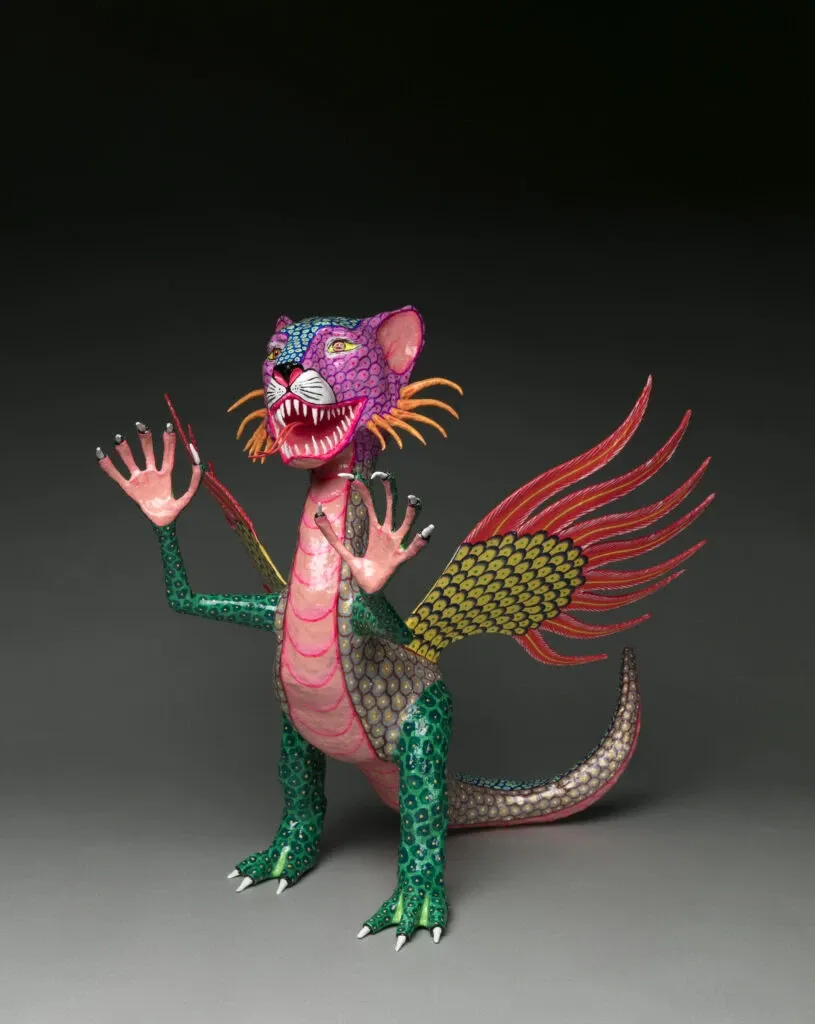
Lion with wings2025
- Boy with a little skull1992 · Museo Nacional de Culturas Populares, Mexico CitySee it at the museum : Boy with a little skull (opens in a new tab)
Archive
Documented records
Exhibitions, collections, press and recognitions in which this artisan appears, with each record’s level of evidence.
- 1986
- 1989Institutional record
- 1989Institutional record
- 1994
- 2003Institutional record
- 2014
- 2019
- 2020
- 2022
- 2023
- 2023
- 2025
- 2026
- 2026Institutional record
“Alebrijes: A Linares Family Tradition”, traveling exhibition
- 2026
- 2026