The master
Felipe Linares Mendoza
Son of Pedro Linares López, he learned the craft playing with paste and paper; he has worked paper since 1947 and carried the alebrijes toward sculpture and meticulous painting.
Master cartonero · son of Pedro Linares López · father of Leonardo, Felipe and David Linares Vargas · Born around 1936, as recorded by the Brooklyn Museum and the Fowler Museum; the Museo Nacional de Culturas Populares record gives his age as 56 in 1993. To be confirmed with the family.
A childhood among paper and cardboard
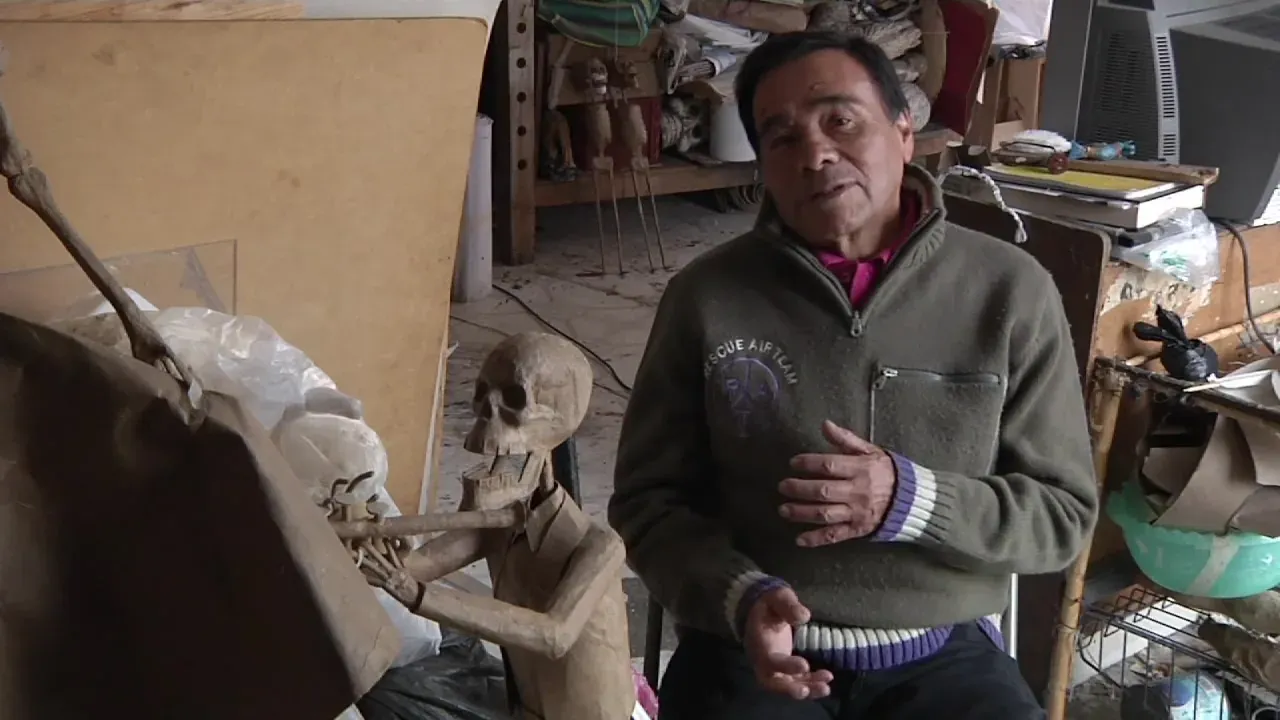
Felipe Linares Mendoza was born in 1936 in Mexico City. His father, Pedro Linares López, was a cartonero in La Merced, as Don Pedro’s father and grandfather had been. The house-workshop made Judas figures for Holy Week, skeletons for November, masks, hats for September 15 and figures for the fireworks makers. The work followed the rhythm of the festivals.
Felipe does not remember lessons. He remembers watching his father work and wanting to do the same.
“I saw how my father worked the paper and to me it felt like a game, like playing with the paste and the paper. I must have been about 10 when I started working.”
Felipe Linares Mendoza, video testimony (family archive; translated)
When the alebrijes appeared
Around 1936, at thirty, Don Pedro fell seriously ill. The family says he was in a coma and that in his delirium he saw creatures shouting one word: alebrijes. Felipe remembers the first figure his father made on recovering: “a strange thing”, with a monkey’s face, painted in dark colors so it would look as ugly as he had seen it.
The sources do not agree on the year the alebrijes appeared. Felipe places it “until 1947”; in another interview he says “around 1948”; his son Leonardo also speaks of 1947. This site fixes no single year: the illness is placed around 1936 and the first alebrijes, according to the family, around 1947–1948.
For the workshop the change was practical as well as artistic. Until then Don Pedro’s customers were mostly pyrotechnicians and the work was seasonal.
“Until my father started making the alebrijes. Then we had work all year round, it was no longer seasonal. I liked it more because it was like putting more creativity into the work.”
Felipe Linares Mendoza, video testimony (family archive; translated)
The first alebrije he remembers
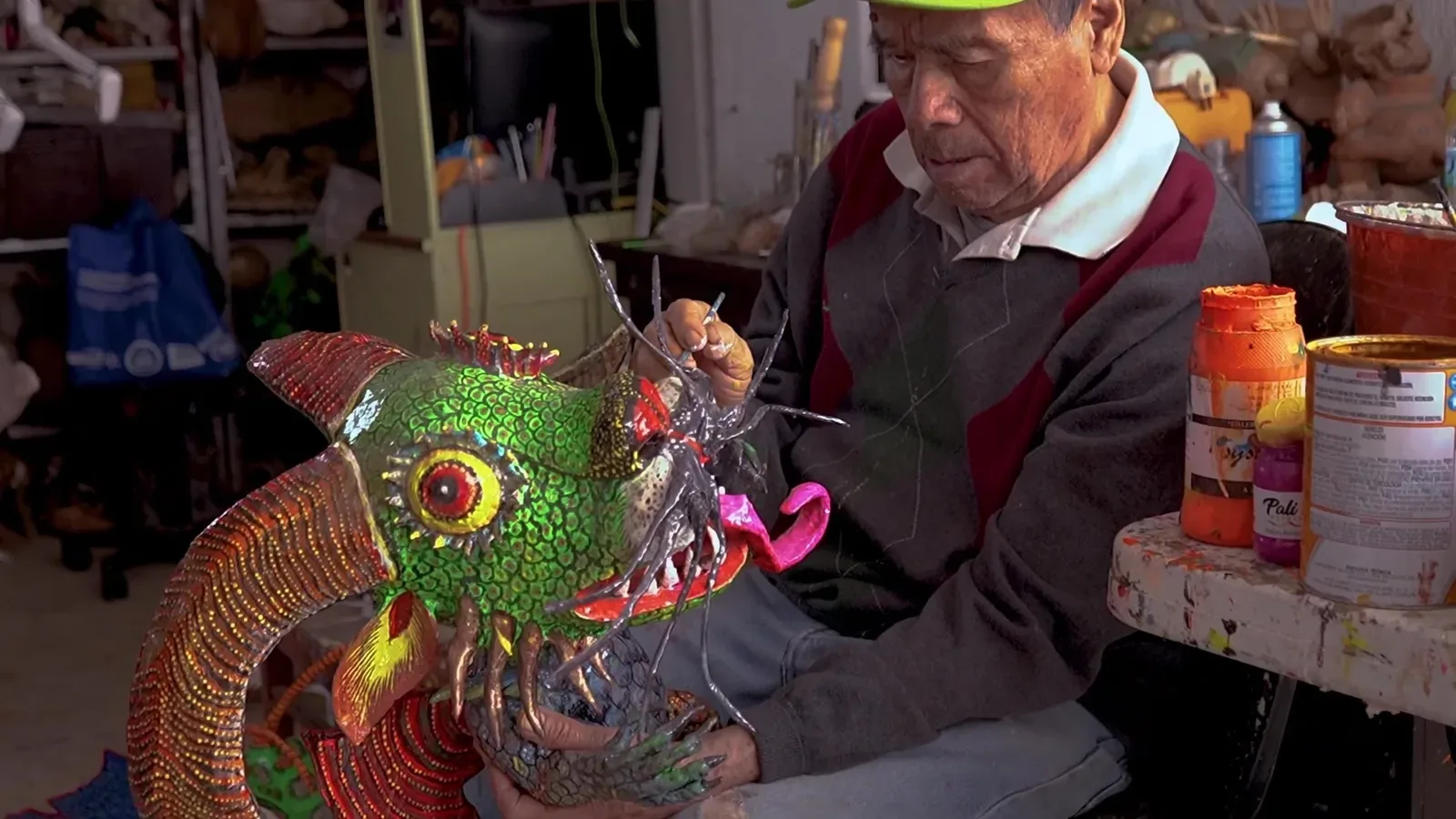
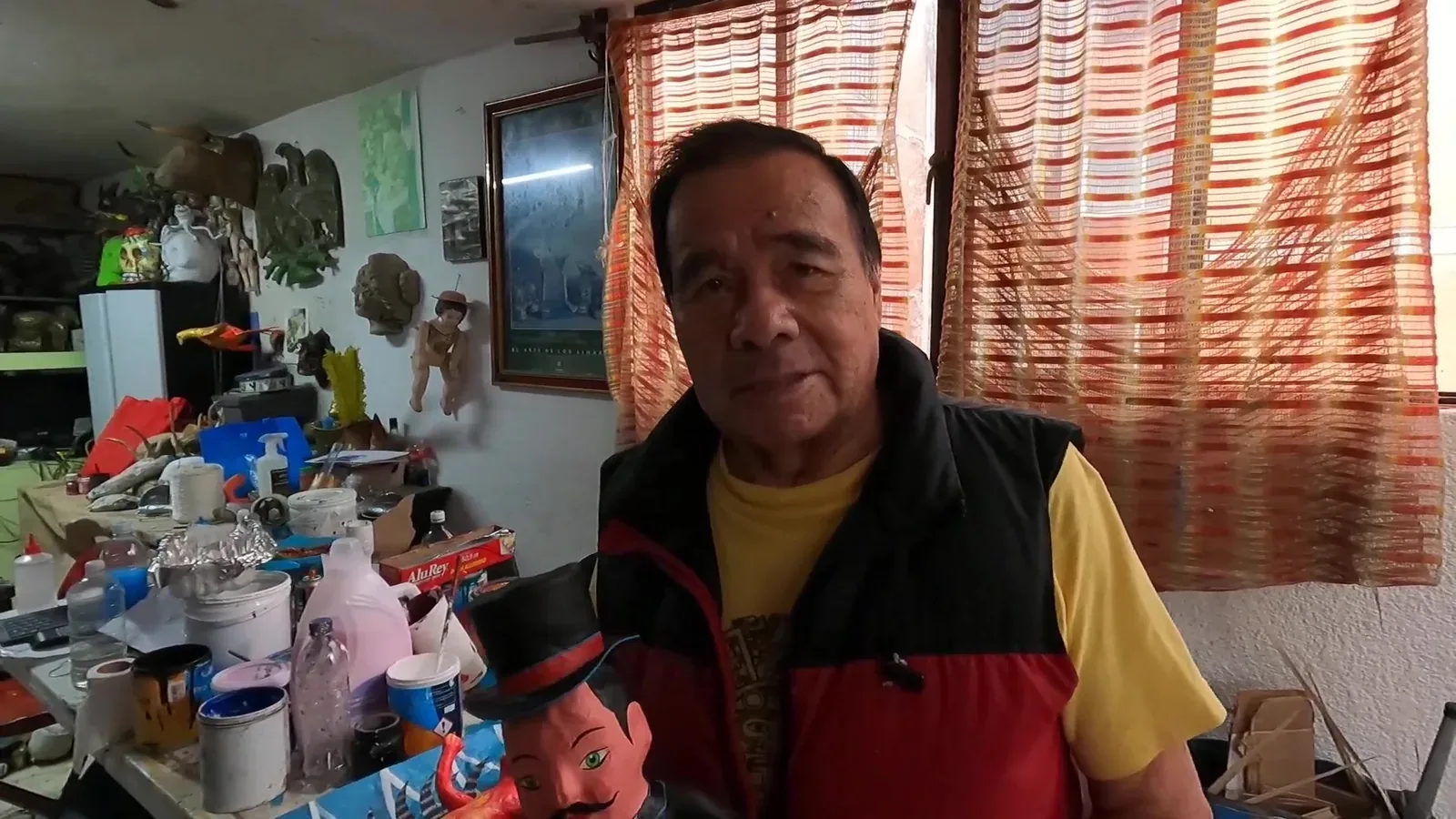
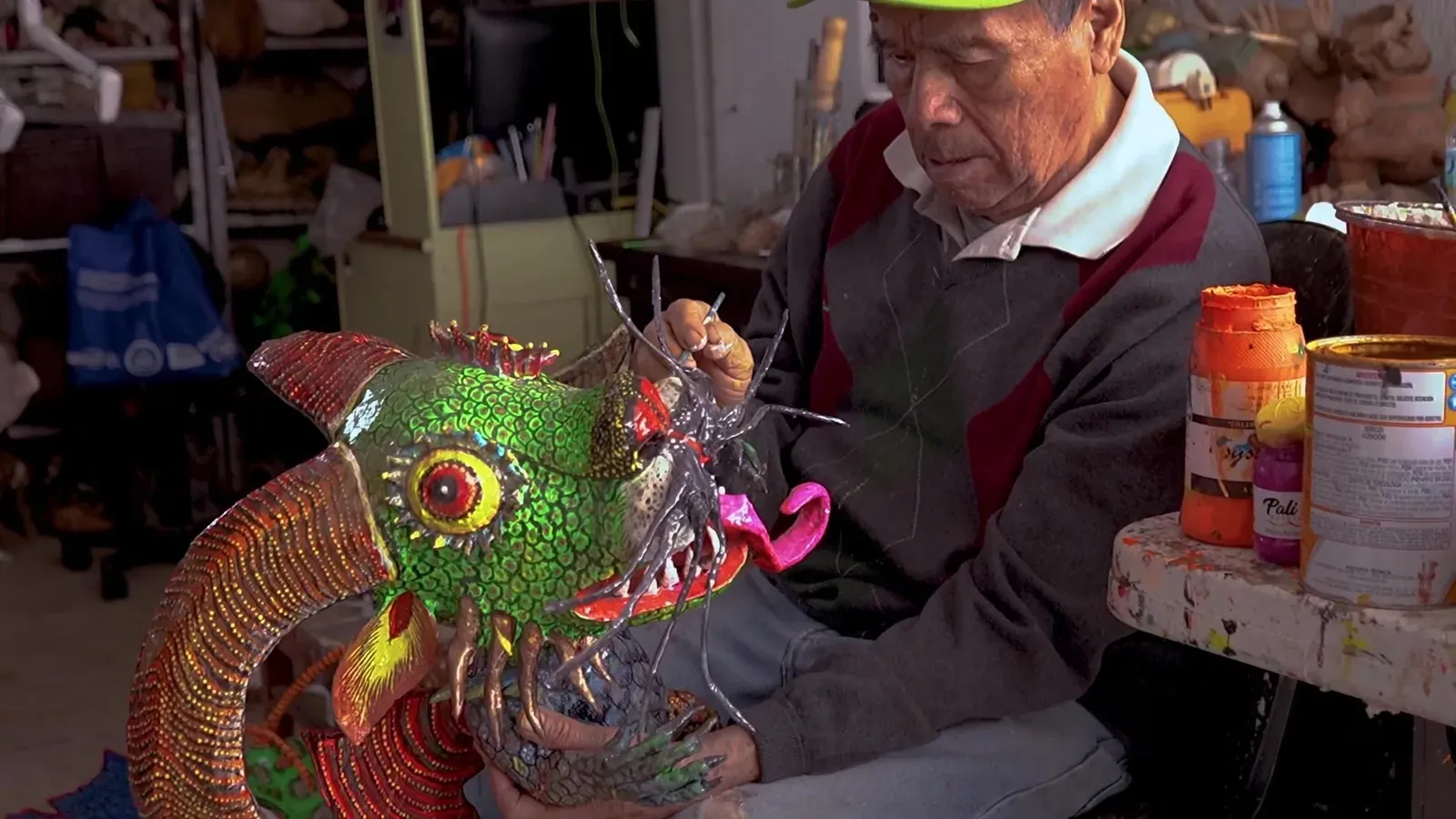
Felipe began working on his own while still young, “because I was older now and I needed money”. He watched his father’s alebrijes and set out to add more to them: horns, scales, whatever came to mind. The first one he made, he says, had an armadillo body, a rooster head and a skull mounted on top.
“I watched what my father did and always tried to do it better.”
Felipe Linares Mendoza, video testimony (family archive; translated)
He also remembers a museum director who saw one of his figures in the workshop, asked what it was and took it away; later, he says, the director came back for more because they were being requested in England, the United States, Canada and France. It is his recollection, with no documentary record; it appears here as what it is.
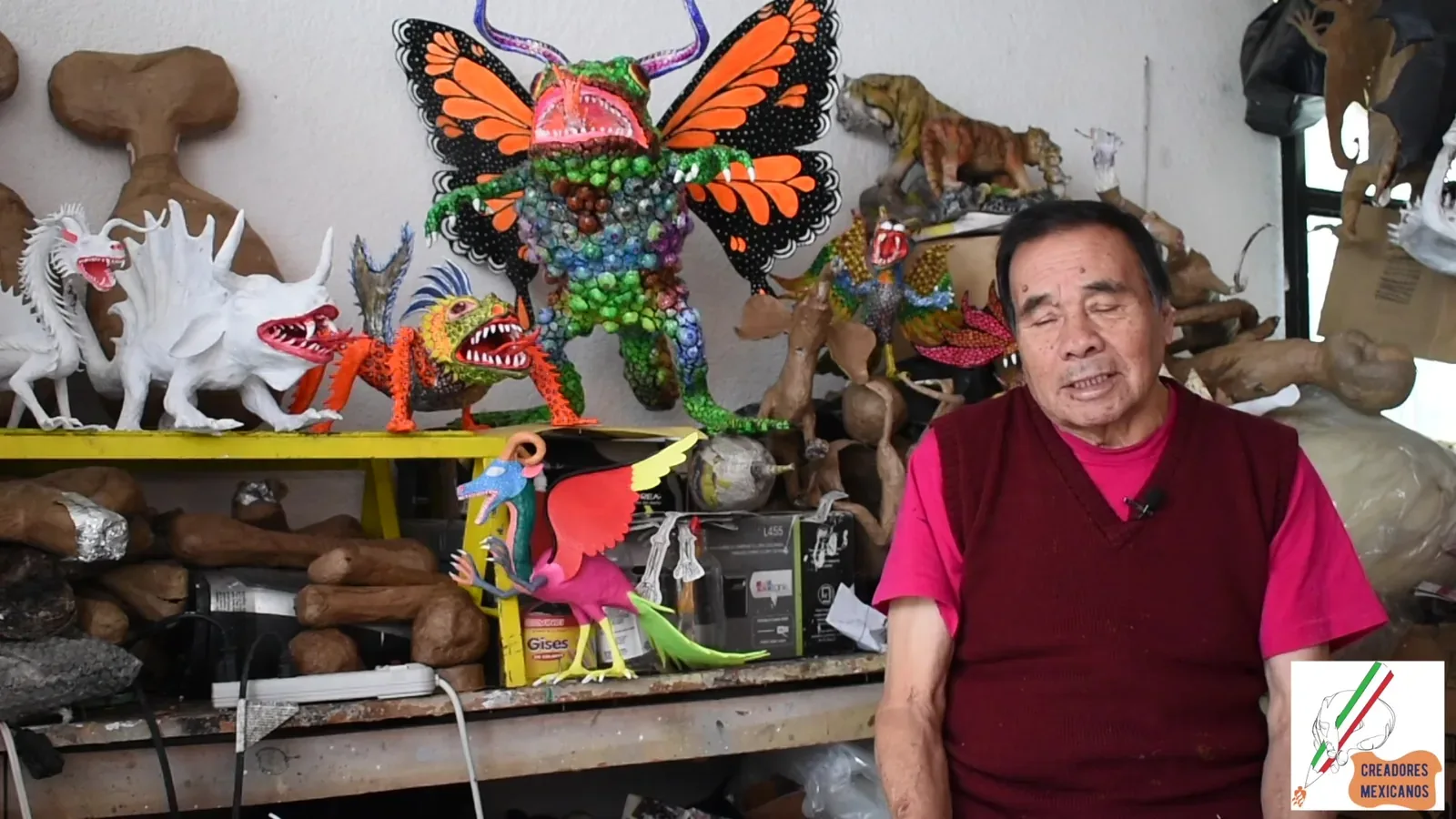
A language of his own
What Felipe added to the alebrije is best described by those who work beside him. In 2026 his son Leonardo summed it up in one sentence for a Mexico City newspaper.
“My father, Felipe, contributes above all the polish, working them as if they were sculptures; he is meticulous in the detail of the painting.”
Leonardo Linares Vargas, in La Jornada, April 4, 2026 (translated)
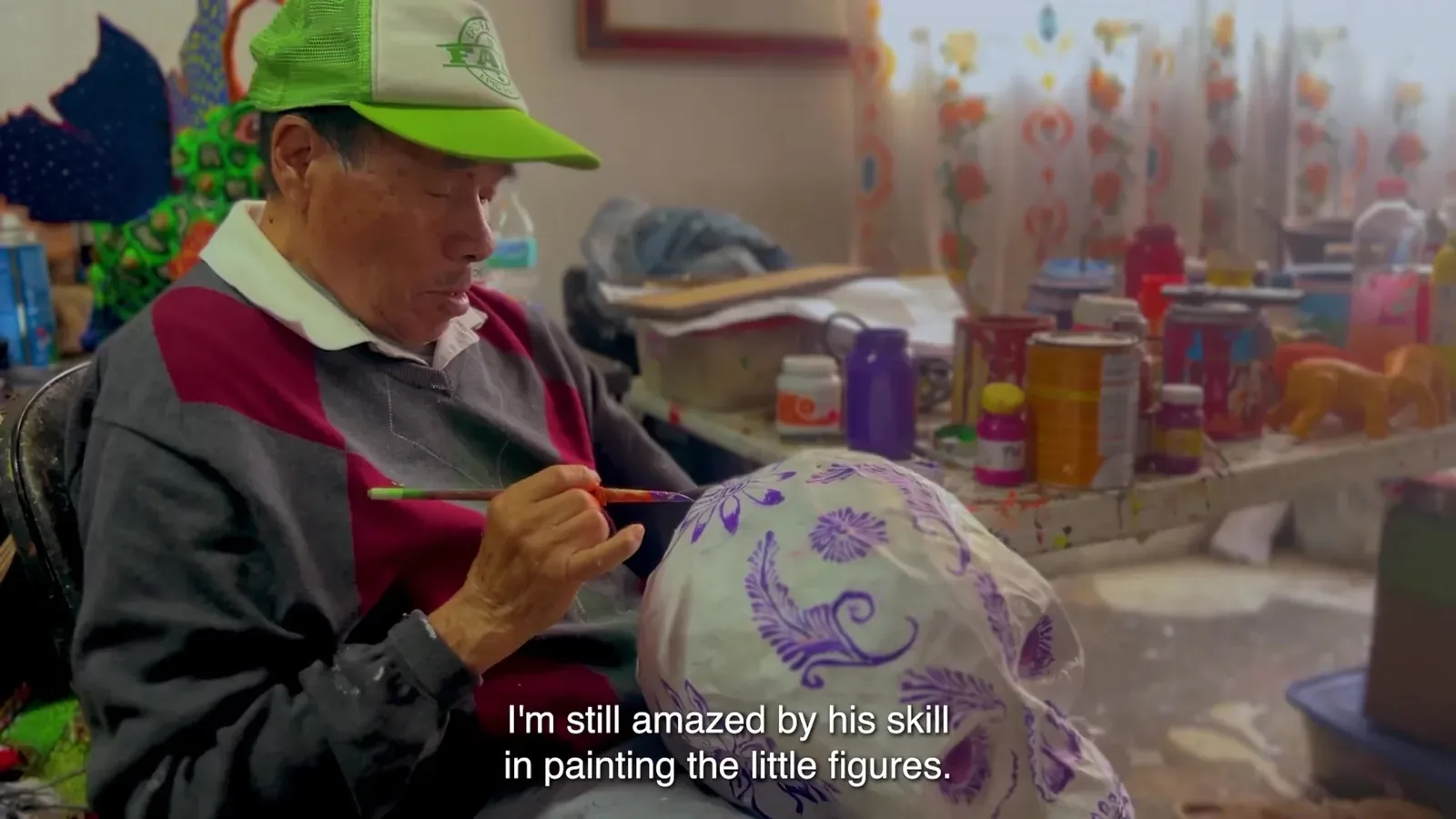
The documented pieces confirm it: a winged dragon of paper and pigment in the Brooklyn Museum, an alebrije with “a feline face and wings” in the Museo Nacional de Culturas Populares, a figure in the Fowler Museum. Workshop photographs show polished surfaces, feathers painted one by one, scales, crests and eyes that give each creature an expression.
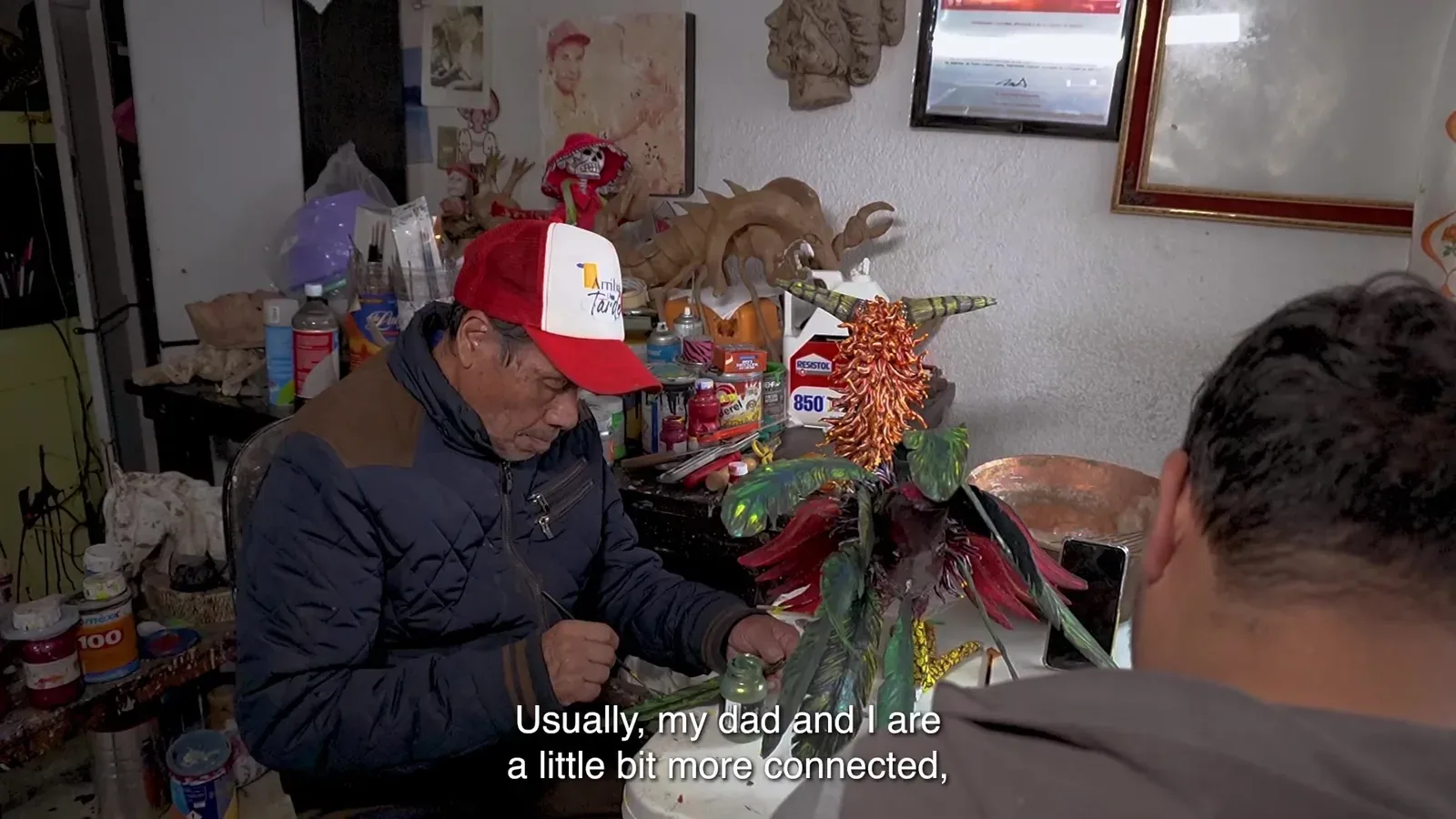
From the workshop to other audiences
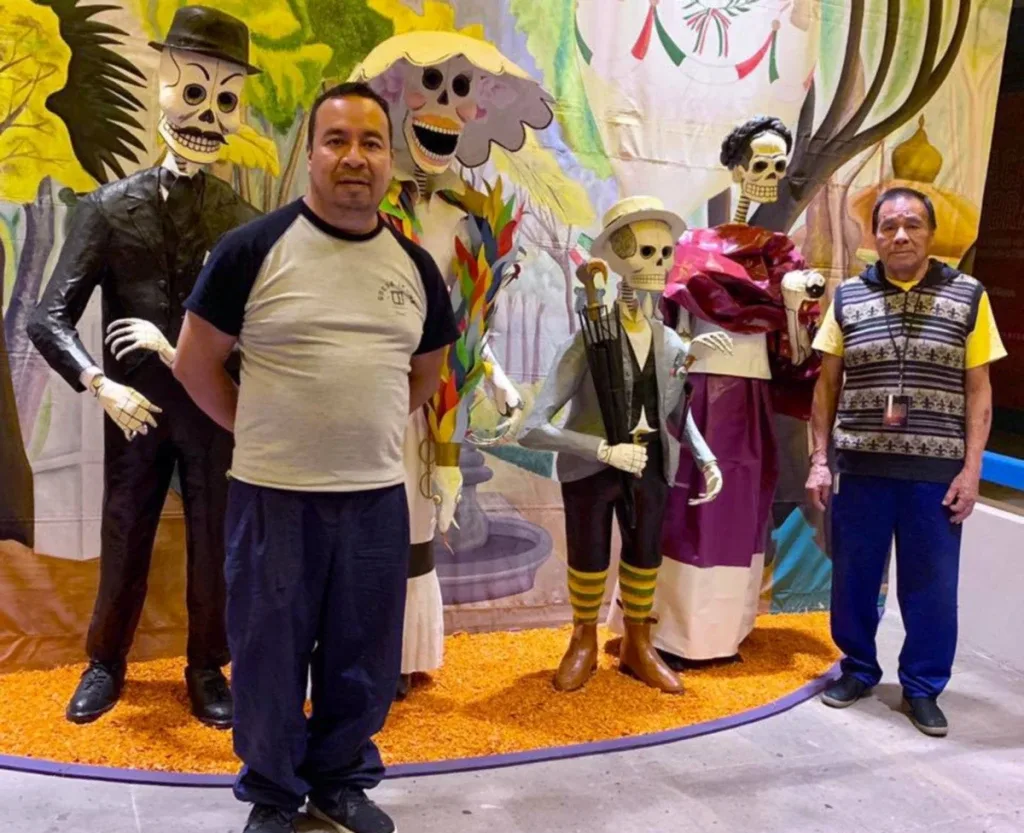
The earliest documented exhibition with Felipe at its center dates from 1984: José Guadalupe Posada’s skeletons interpreted in cartonería by “Felipe Linares and his sons”, at the Museo Nacional de Artes e Industrias Populares; the following year the show traveled to New York. For the Day of the Dead in 1986 he was commissioned to make a scene about the 1985 earthquake. In 1989 he took part with Leonardo and David in “Magiciens de la Terre” at the Centre Pompidou in Paris, and that same year he spoke about the role of color on a Radio Educación program.
Beyond the records, Felipe remembers his own travels: a cartonería workshop in San Antonio, Texas, and demonstrations in Los Angeles, Sacramento, San Jose and Finland. They are his recollections; this site’s archive marks them as testimony.
“We take great satisfaction in making our work known in other countries very far away.”
Felipe Linares Mendoza, video testimony (family archive; translated)
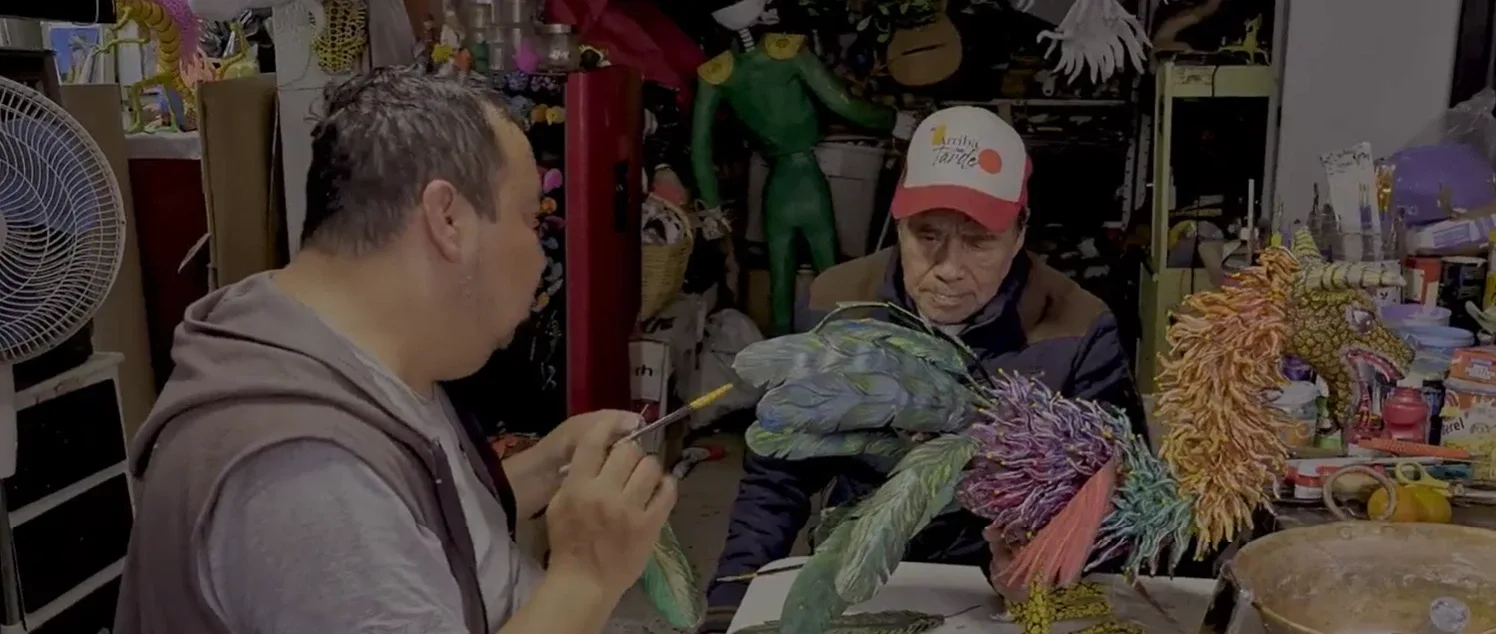
Teaching
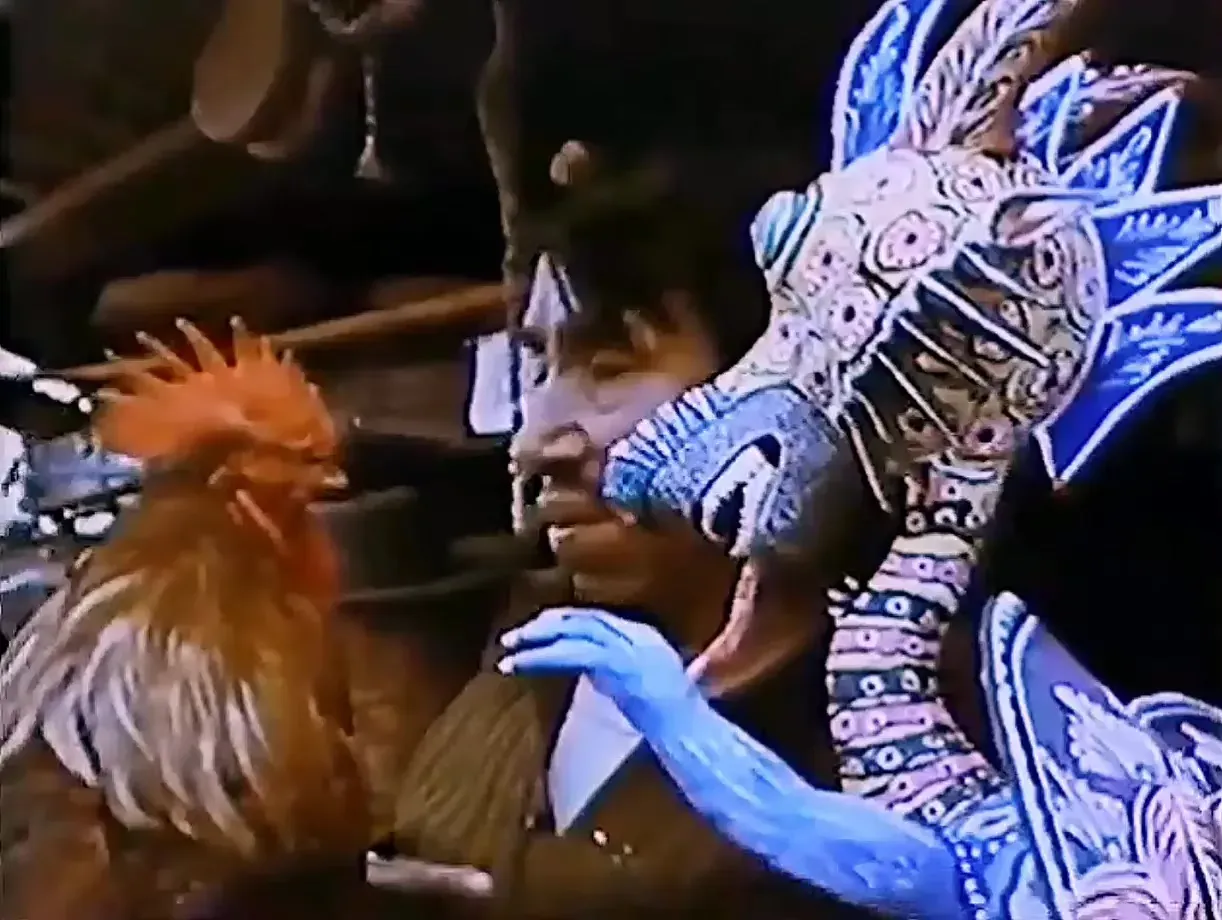
His sons learned as he had learned. Felipe Linares Vargas came home from secondary school, sat beside his father and was given tasks: “help me whiten, help me decorate”. A rooster alebrije, Barbas, was born from the collaboration between the two: the son wanted to make a little rooster like the household pet and the father suggested giving it a lion’s head “so it looks strong, imposing”.
“From my father I basically learned fine work. I am still amazed by the skill he has in the wrist, in how he paints. That is what I still cannot surpass.”
Leonardo Linares Vargas, video testimony (family archive; translated)
Felipe has his own definition of the craft: patience, enjoying the work and affection for the piece, wanting it “to come out well so the customer is happy”.
What the work shows
The works attributed to Felipe Linares Mendoza on this site are those museums record under his name and those the family or the press assign to him; each record states its degree of attribution. A 1993 alebrije in the Museo Nacional de Culturas Populares, made with kraft paper, paste, wire and vinyl paints, is the most complete institutional record. The Brooklyn Museum holds a winged dragon signed “Felipe Linares”. UCLA’s Fowler Museum has a figure whose accession number dates from 1991. A 1972 skull in the National Museum of the American Indian is pending verification.
The pieces photographed for the previous version of this site belong to his son Felipe Linares Vargas and remain his; nothing has been reassigned.
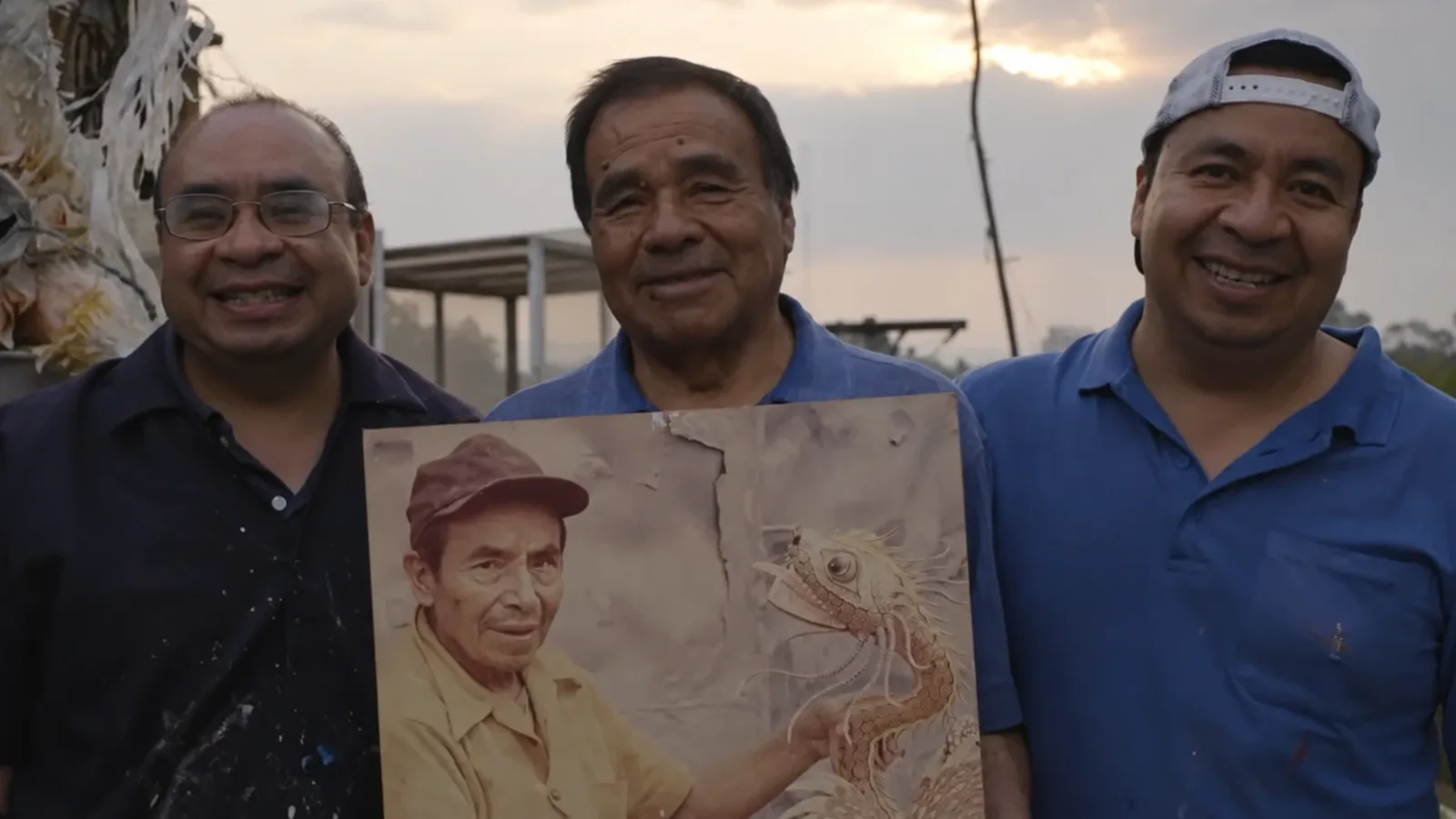
Sources for this biography
The facts on this page come from the video testimonies of Felipe Linares Mendoza, Leonardo Linares Vargas and Felipe Linares Vargas (family archive), from the collection records of the Museo Nacional de Culturas Populares, the Brooklyn Museum and the Fowler Museum, from the Centre Pompidou catalogue, from the Radio Educación catalogue, from “En Calavera” (Susan N. Masuoka, 1994) as cited in “Of Corpse” (2003), from La Jornada (2026) and from the Sistema de Información Cultural. This site’s archive links every record to its source and states its level of evidence. Family recollection is presented as recollection; what remains to be confirmed, as pending.
- Born1936, Mexico City
- FatherPedro Linares López (1906–1992)
- Cartonero sonsFelipe Linares Vargas · Leonardo Linares Vargas · David Linares Vargas
- WorkshopMerced Balbuena, Mexico City
Felipe Linares Mendoza
In their own words
Literal quotes from video testimonies and the cited press, each with its source; translated here.
“I saw how my father worked the paper and to me it felt like a game, like playing with the paste and the paper.”
Felipe Linares Mendoza · Video testimony (family archive) · translated
“I watched what my father did and always tried to do it better.”
Felipe Linares Mendoza · Video testimony (family archive) · translated
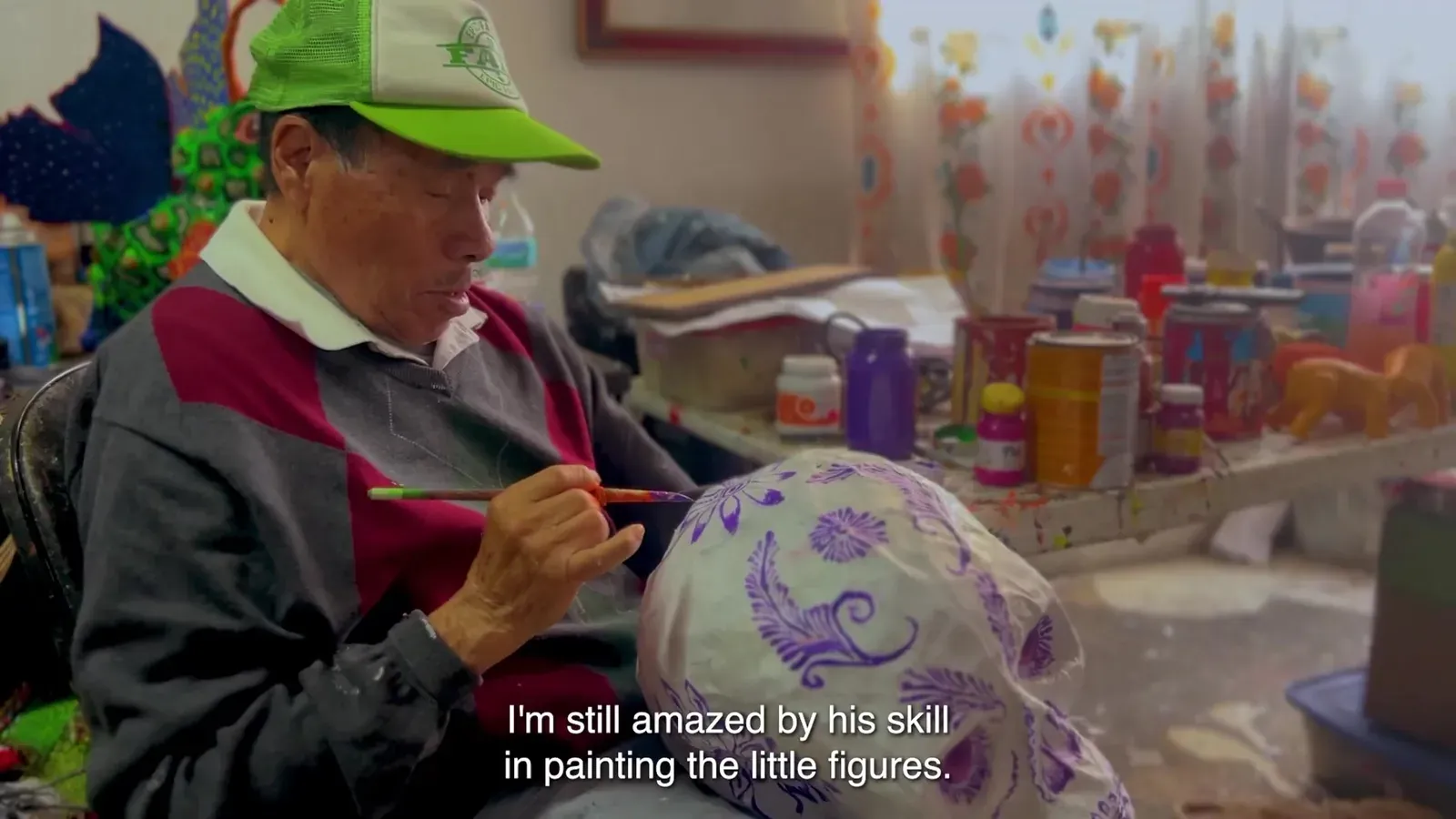
“To make an alebrije there is no mold, there is nothing. It is raised with paper, pure paper.”
Felipe Linares Mendoza · Video “Soy creador mexicano” (family archive) · translated
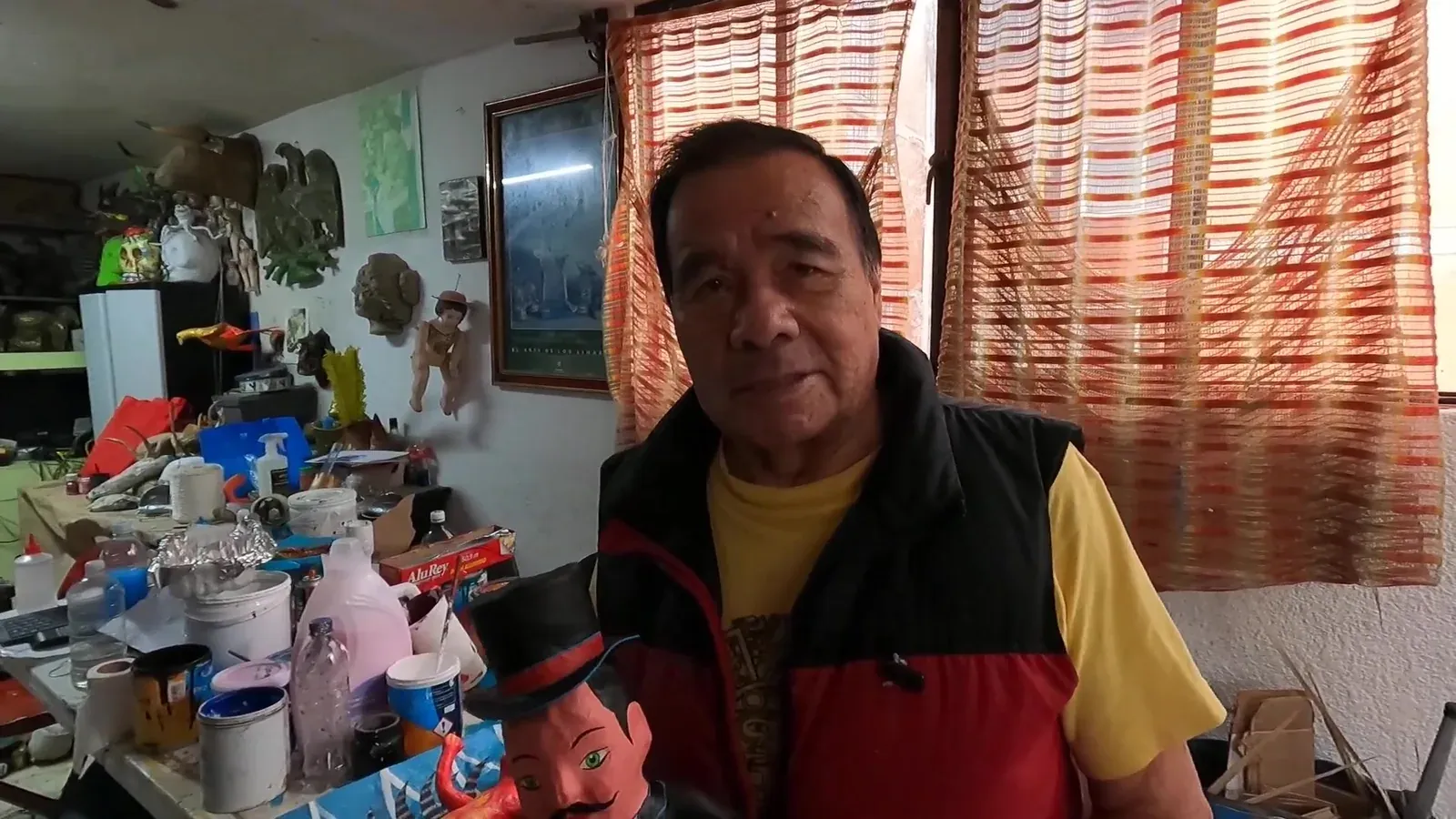
“Being a good artisan means having patience and enjoying what you make.”
Felipe Linares Mendoza · Video testimony (family archive) · translated
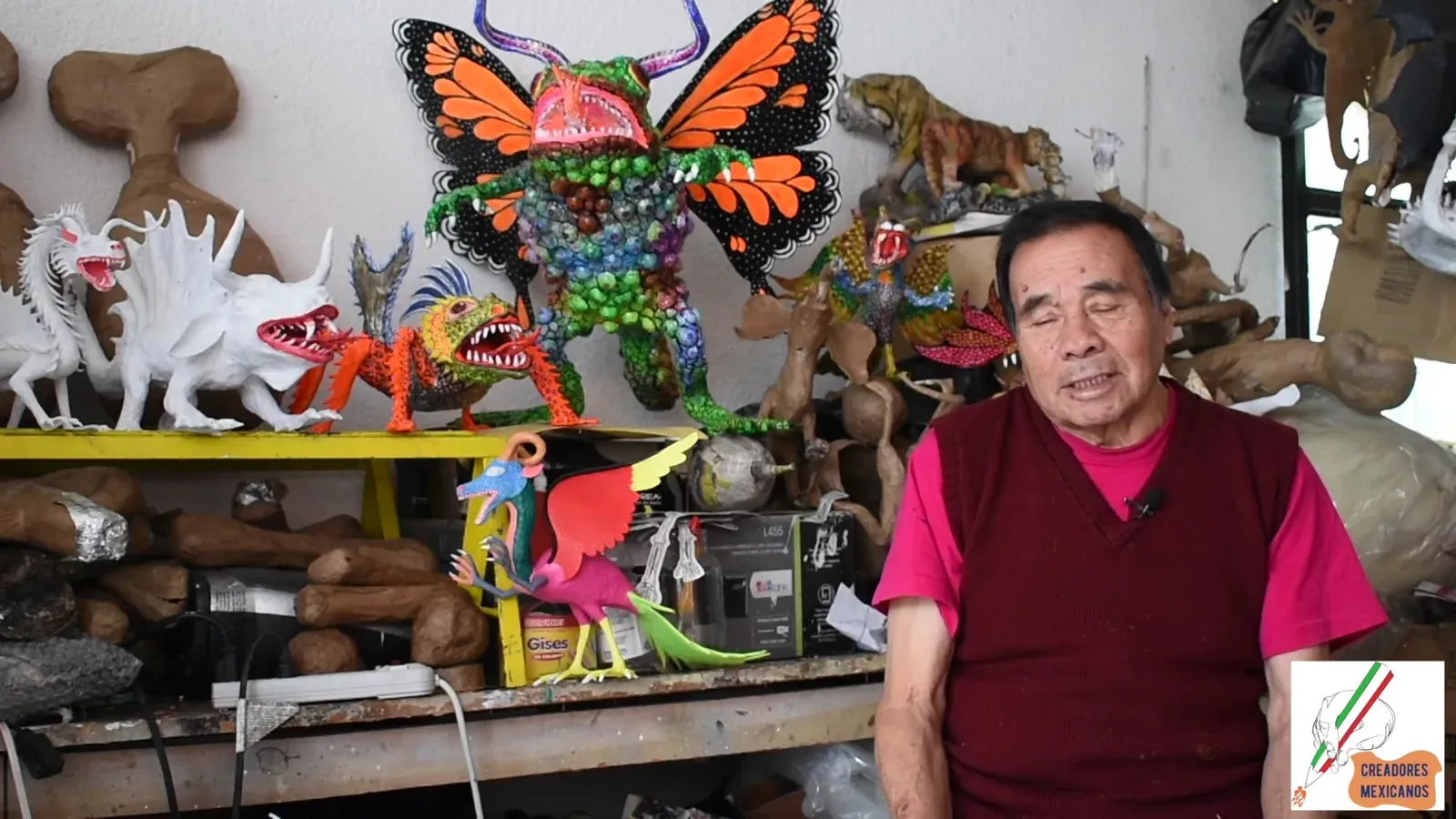
“We take great satisfaction in making our work known in other countries very far away.”
Felipe Linares Mendoza · Video testimony (family archive) · translated
Programs and interviews
On video
Public programs in which this artisan appears. Linked, not hosted here; rights belong to each producer.
- El brillo de los años, capítulo 4: Felipe Linares MendozaMXPlusAround 2013 (season 1); broadcast date to be confirmed. This site’s main portrait is a still from this episode.Watch on mxplus.tv ↗
- Itinerario: Felipe Linares. AlebrijesCanal Once · 2016 · at 01:30Name card “Felipe Linares, Artesano Cartonero”.Watch on youtube.com ↗
- Alebrijes: A Linares Family TraditionMuseum of International Folk Art · 2026 · at 02:55Name card “Felipe Linares Mendoza, Artisan” at 03:10; with his son Felipe at the table at 05:55.Watch on youtube.com ↗
- Los originales Alebrijes, familia LinaresPlus Ultra MX · 2021 · at 00:10Introduced by name; the home page hero is a still from this program.Watch on youtube.com ↗
- #CreadoresMexicanos: Familia LinaresEl Tizoncito · 2019 · at 00:10Name card “Felipe Linares”.Watch on youtube.com ↗
- El mundo de papel de la familia LinaresRadio Educación · 198926-minute radio program; the catalogue record is public and the audio is requested from the station.Watch on catalogoradioeducacion.cultura.gob.mx ↗
Timeline
Documented milestones
The archive records that name Felipe Linares Mendoza, each with its level of evidence. Family recollection is marked as testimony.
- 1936Institutional record
Born in Mexico City (birth year as given by the Brooklyn Museum and Fowler Museum records).
- c. 1946Family testimony
Begins working paper at about ten, watching his father; “since 1947”, by his own account, he works the paper craft. Later, undated, he works on his own.
- 1972
- 1984
- 1985
- 1986Bibliography
- 1989Institutional record
- 1989Institutional record
- 1993Institutional record
- 1994
- 2003Institutional record
- 2013
- 2016
- 2026
Works
Documented works
The pieces museums record under Felipe Linares Mendoza appear as credited links to each institution; this site does not reproduce their photographs.
-
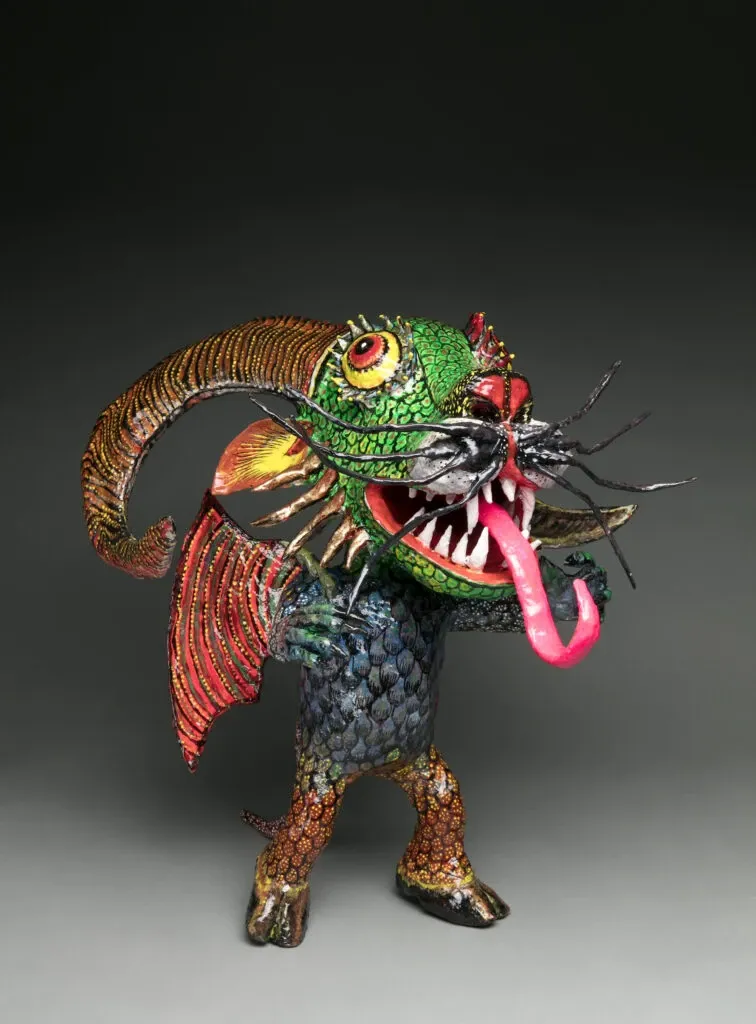
Goat horns2025
- Alebrije1993 · Museo Nacional de Culturas Populares, Mexico CitySee it at the museum : Alebrije (opens in a new tab)
- Winged Dragon (Alebrije)Brooklyn Museum, New York (Arts of the Americas)See it at the museum : Winged Dragon (Alebrije) (opens in a new tab)
- Figure (alebrije)Fowler Museum at UCLA, Los AngelesSee it at the museum : Figure (alebrije) (opens in a new tab)
- Skull for Day of the Dead celebration1972 · Smithsonian, National Museum of the American Indian, WashingtonSee it at the museum : Skull for Day of the Dead celebration (opens in a new tab)
Sources
- Alebrije (1993) — Felipe Linares Mendoza, record MX-SC-MNCP-001501_A, Museo Nacional de Culturas Populares
- Winged Dragon (Alebrije), Felipe Linares (born 1936), 2003.29, Brooklyn Museum
- Figure (alebrije), Felipe Linares (b. 1936), X91.240A-D, Fowler Museum at UCLA
- Magiciens de la Terre (1989), list of artists, Centre Pompidou, Catalogue des expositions
- Cartonería — Panorámica de arte popular, Sistema de Información Cultural, Secretaría de Cultura
- Of Corpse: Death and Humor in Folklore and Popular Culture (notes 15 and 16 of Kristin Congdon’s chapter), Utah State University Press / Library of Congress (2003)
- Leonardo Linares, heredero de la tradición cartonera para la quema de los judas, La Jornada (2026-04-04)
- El mundo de papel de la familia Linares, Radio Educación (1989-10-24)
- Calaveras — Felipe Linares, Asociación de Amigos del MAP / Google Arts & Culture
- Video testimonies of Felipe Linares Mendoza, Felipe Linares Vargas and Leonardo Linares Vargas (family archive), Family archive (2026)